Bowl of Ammonia
Posted: March 19, 2026 Filed under: Child Centered Activities 1 Comment
Here at the Art Farm Homeschool Academy, I wear multiple hats, and some days require me to switch back and forth rapidly. On Wednesday, I worked as Headmaster, Serpent of Caesar, pest control carpenter, and then Science Assistant.
As the Serpent of Caesar, acting for and on behalf of a private school, I am knee deep in a lawsuit concerning its building with a leaking roof. Ongoing for more than a year, it has been an all consuming slog, even though mine is a part-time job.
Late in the game now, we are working on a settlement where the roofer will repair its work. Lawsuits are essentially about money – a battle to get the insurance companies to open their coffers – and so an in-kind repair, at no cost, is highly unusual. The attorney – whom I shall call Themis – has said in 40 years of construction litigation, she has never seen a defendant offer to repair its failure. That would seem generous, but the quid pro quo is that the roofer wants a release from all future claims concerning its work, and that legal document is no small task to wordsmith.
Themis and I have been working toward that, and on Wednesday, surprisingly, the roofer’s attorney agreed to our proposed language. What had progressed very slowly suddenly went live, and I needed the Board to approve or reject the Agreement.
Over morning coffee, while work emails sailed inbound, I had been organizing my son’s day. For language arts, his assignment was to read from “Letters to his Son by the Earl of Chesterfield on the Fine Art of becoming a MAN OF THE WORLD and a GENTLEMAN.” The letters, written from 1739 until 1771, by the Right Honorable Earl to his illegitimate son served as a guide to etiquette and insights about diplomacy, politics and “the pursuit of excellence.” The Earl’s son, born of a commoner, would never be fully accepted into aristocratic society, but the father was committed to his hope. The Magister assigned for my son Letter III that describes the virtues of learning Greek, rather than Latin.
Pray mind your Greek particularly; for to know Greek very well is to be really learned: there is no great credit in knowing Latin, for everybody knows it; and it is only a shame not to know it. Besides that, you will understand Latin a great deal the better for understanding Greek very well; a great number of Latin words, especially the technical words, being derived from the Greek.
So, while my Son read Lord Chesterfield, I worked on the legal settlement, until, at 10am, when my son and the Magister had their class on the Greek accent rules, I changed hats, became pest control carpenter and went outside to check on our house.
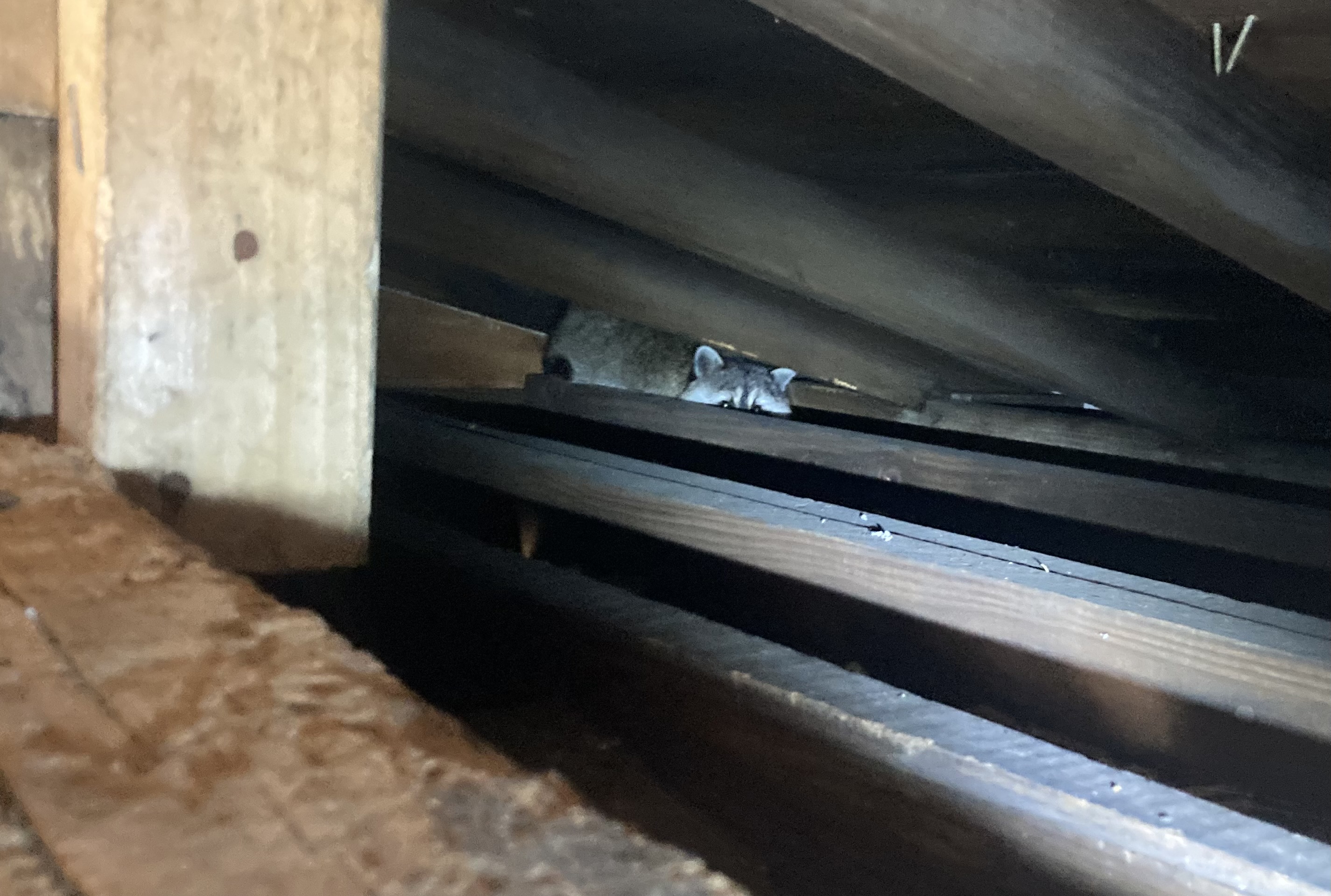
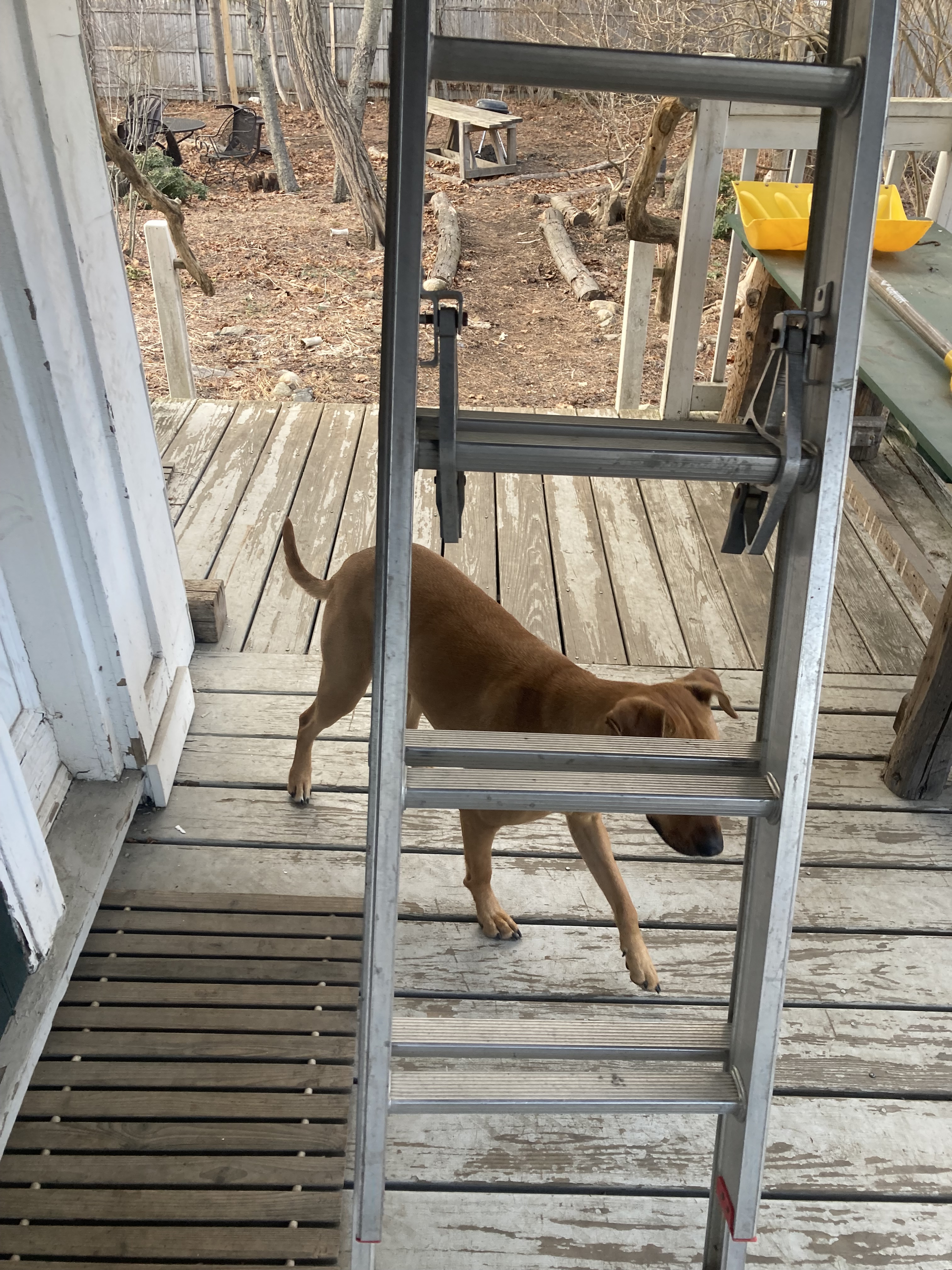
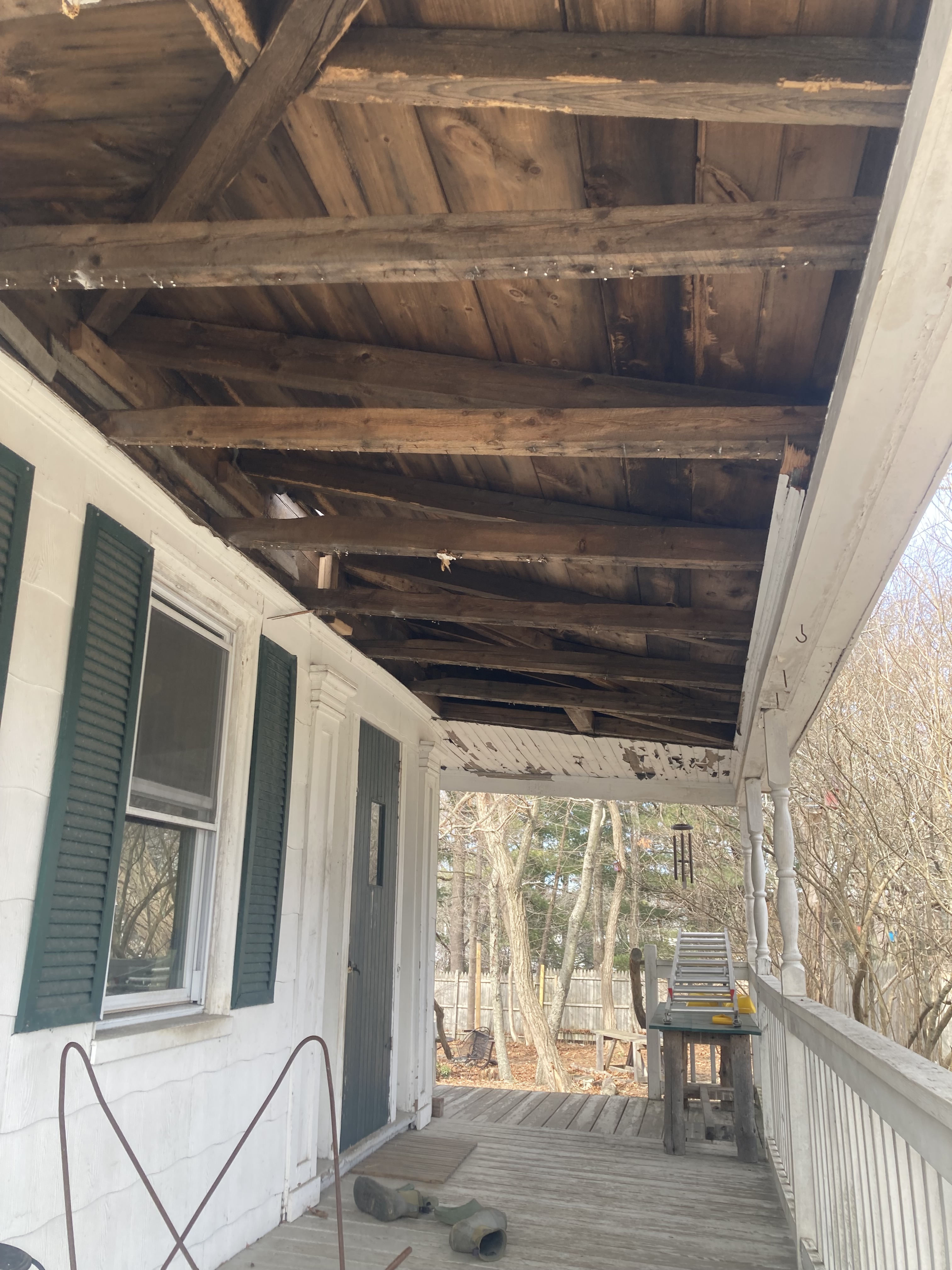
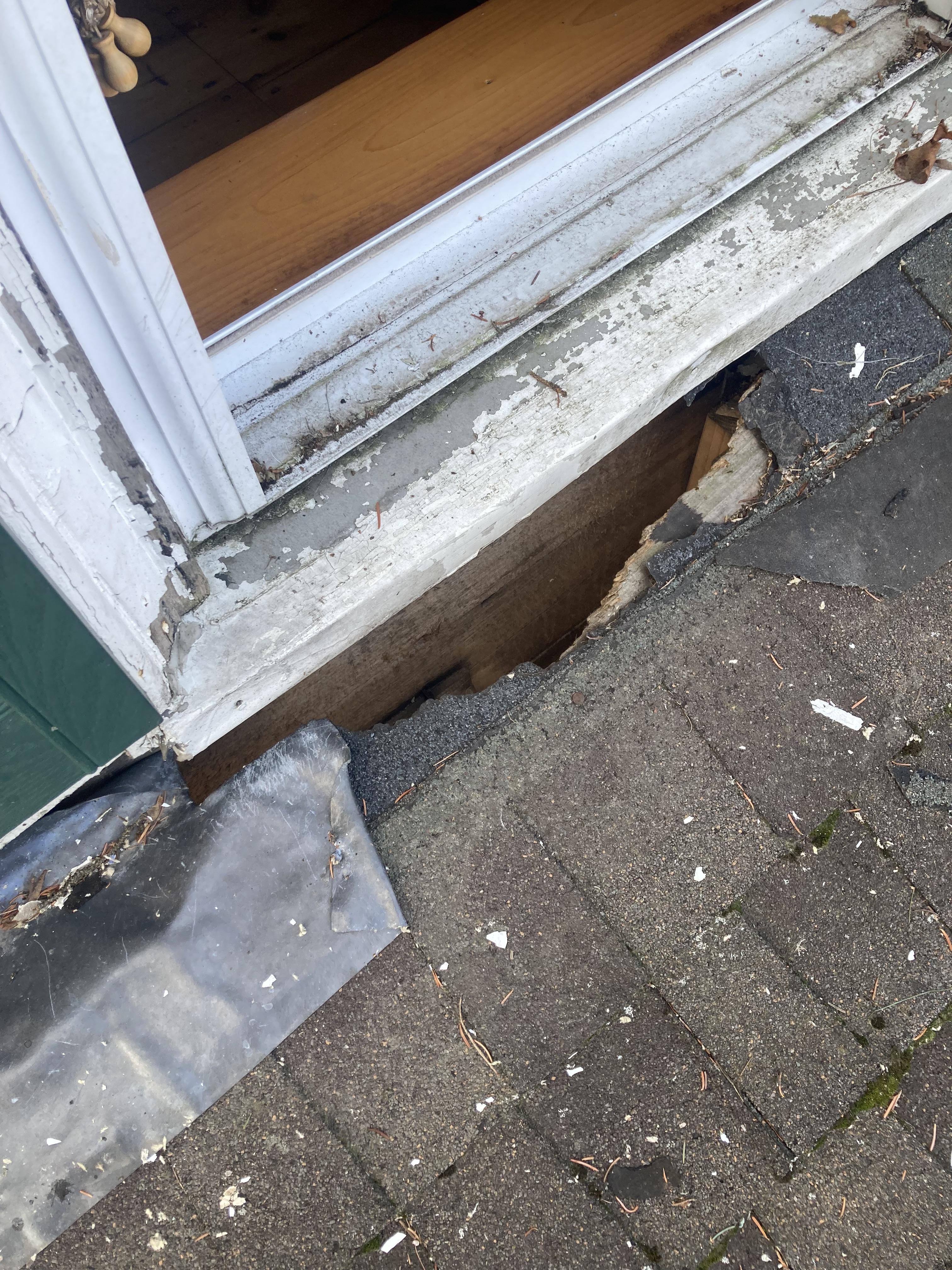
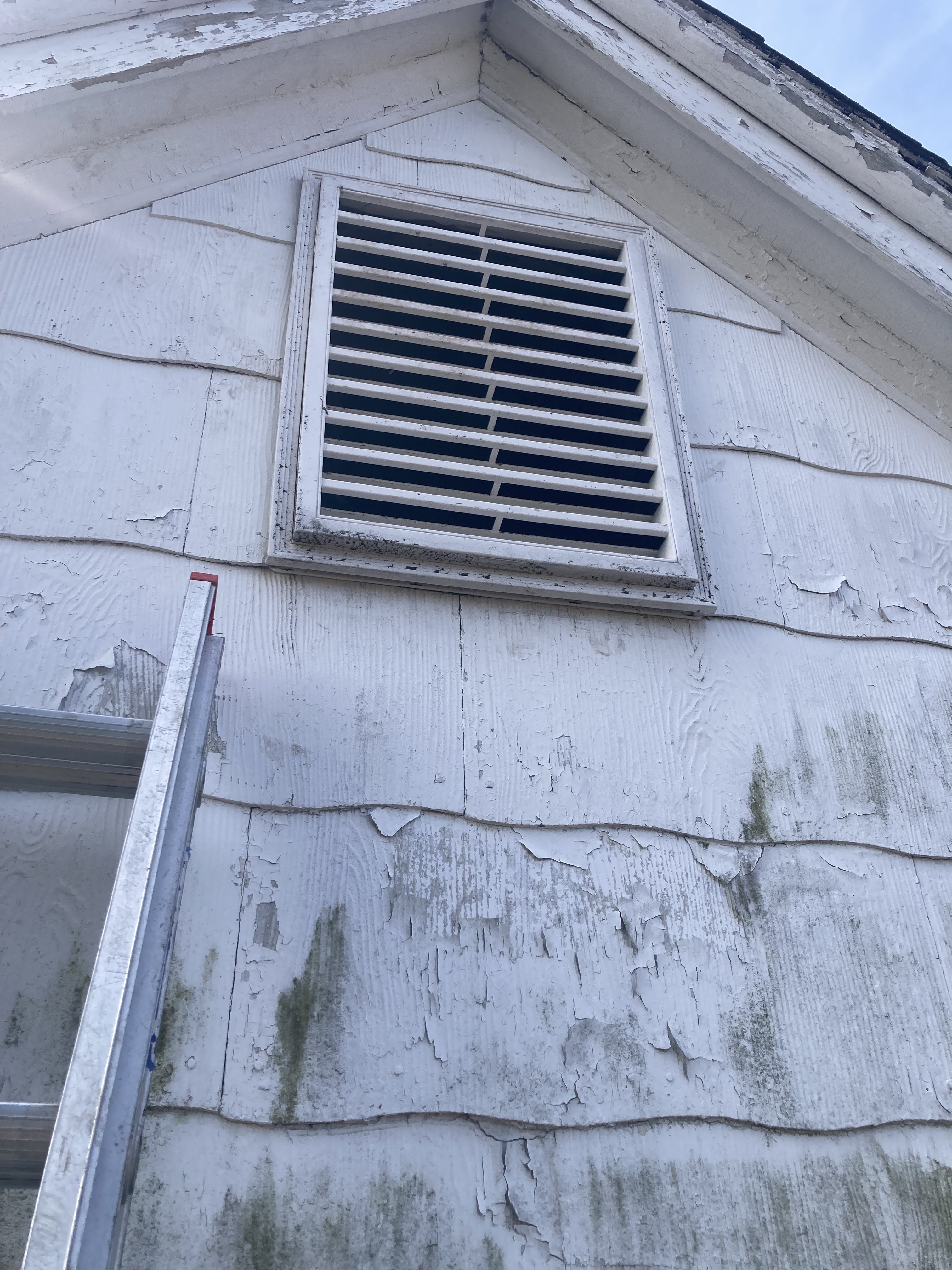
My daughter had heard something scratching up in the attic above her bedroom. A serious problem. The attic vent had come loose, which left a gaping hole into which some rodent had entered. My only choice was to haul out the ladder, set it upon the porch roof, climb up to see who was there, and put the vent back in place. But raccoons had lived in the porch ceiling last summer, and eaten through both the asphalt shingles as well as the boarding below. Climbing up a ladder set upon the roof was fraught with risk but that rodent needed to go and the vent needed to be put back.
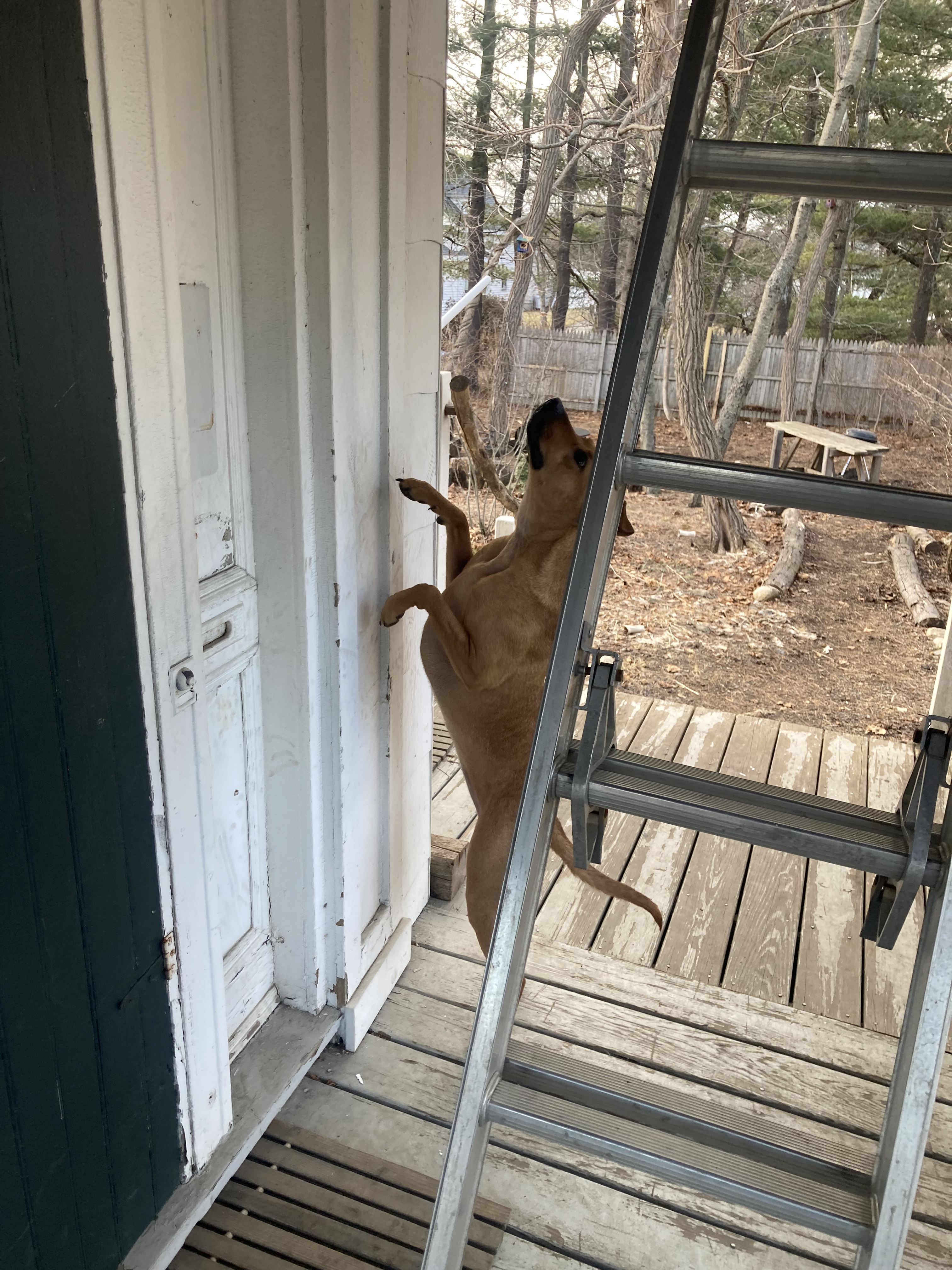
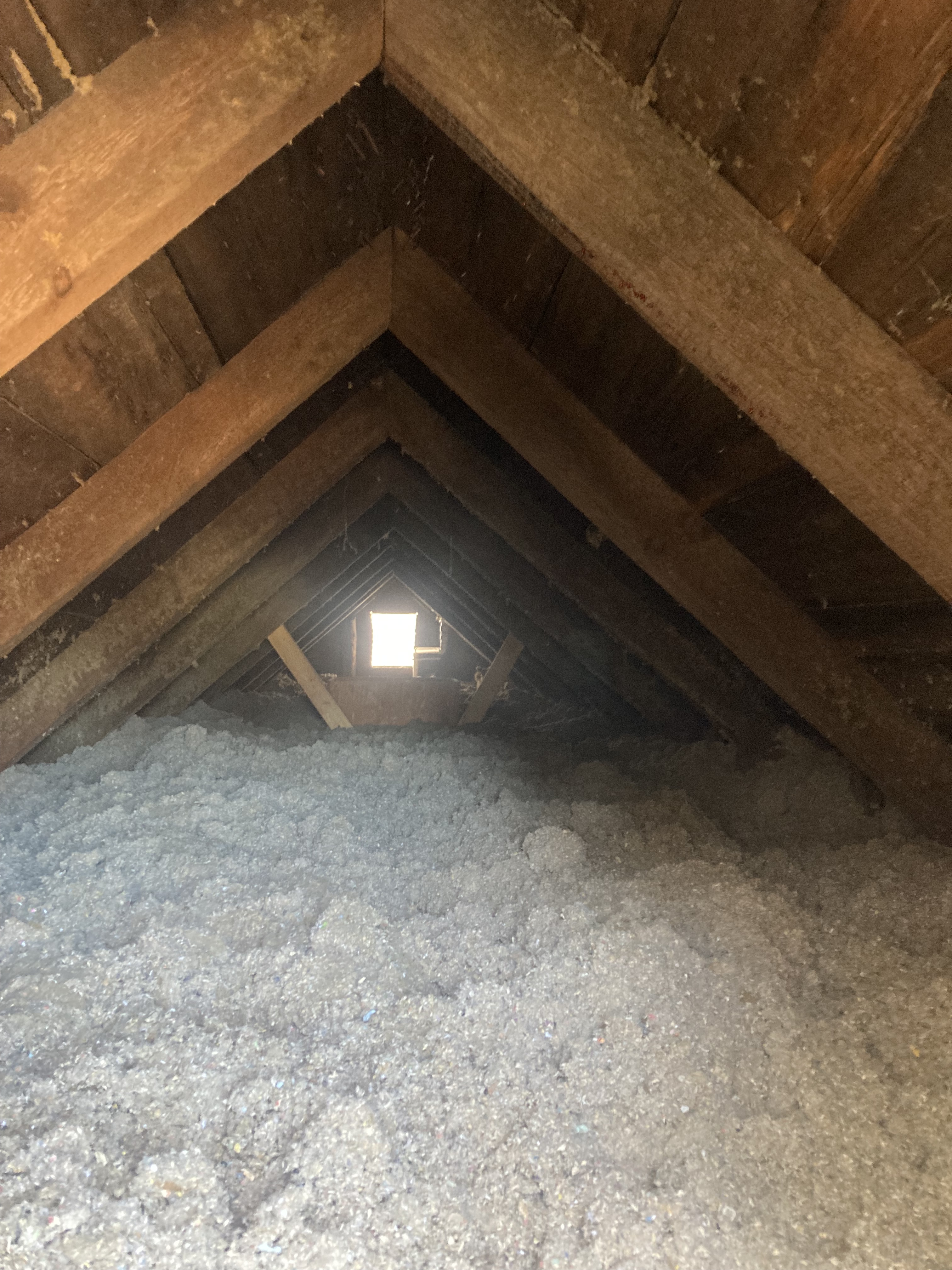
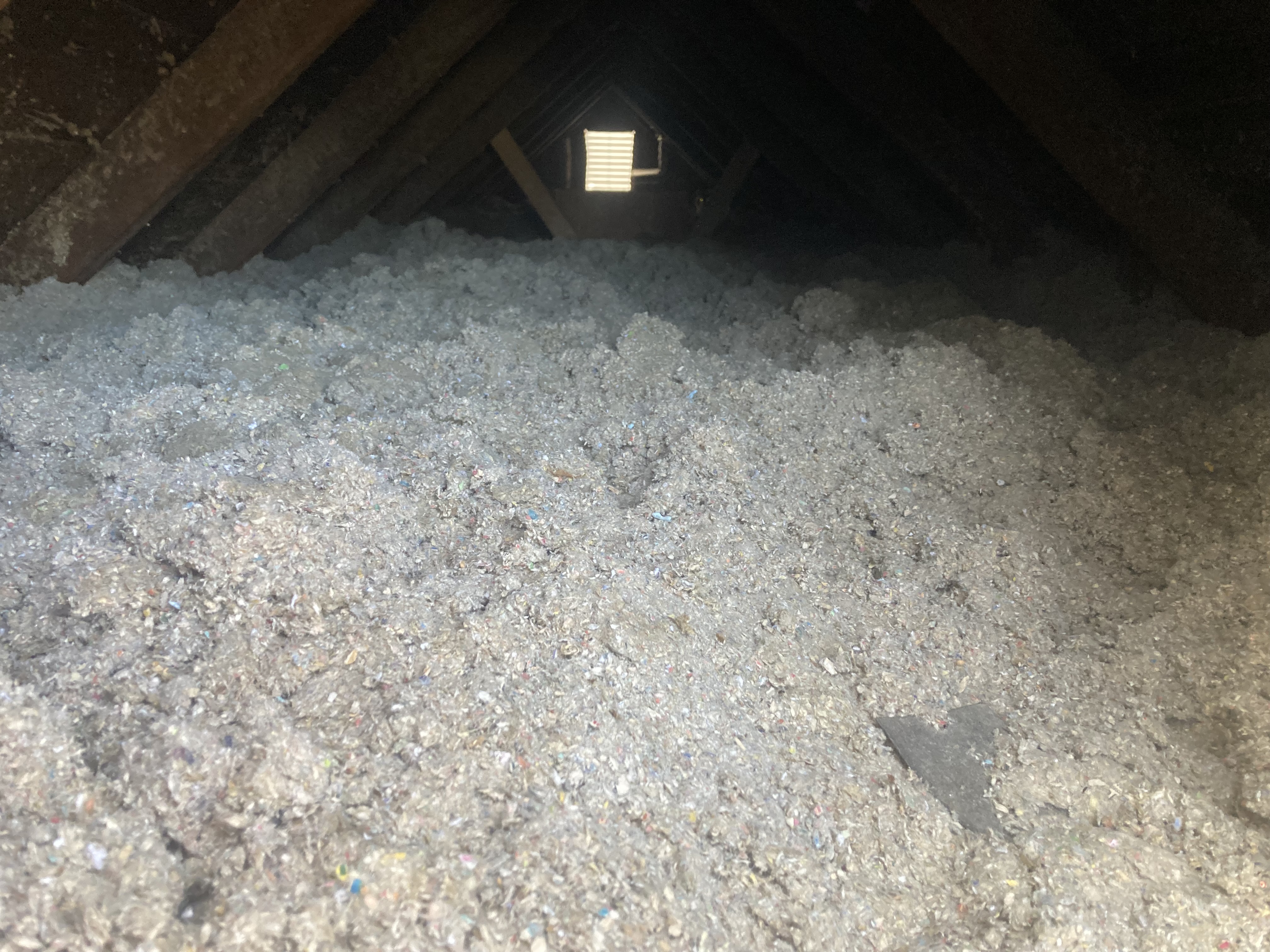
The attic was empty, so I reattached the vent cover, but noticed a raccoon had taken up residence elsewhere. They had left the attic – which was good – but moved above the porch ceiling – not good. Our Pit Bull-Rottweiler rescue puppy was going ballistic at the sound of my climbing above, plus the smell of the Raccoon overhead.
Pit Bulls are descended from the Greek Molossian “dogs of war” while Rottweilers are from the drover dogs of the Roman legion, used to herd cattle to feed the elite soldiers as they crossed the Alps into Germany. Pit Bulls are ferociously loyal to their owner, so our puppy was literally climbing the walls to protect me.
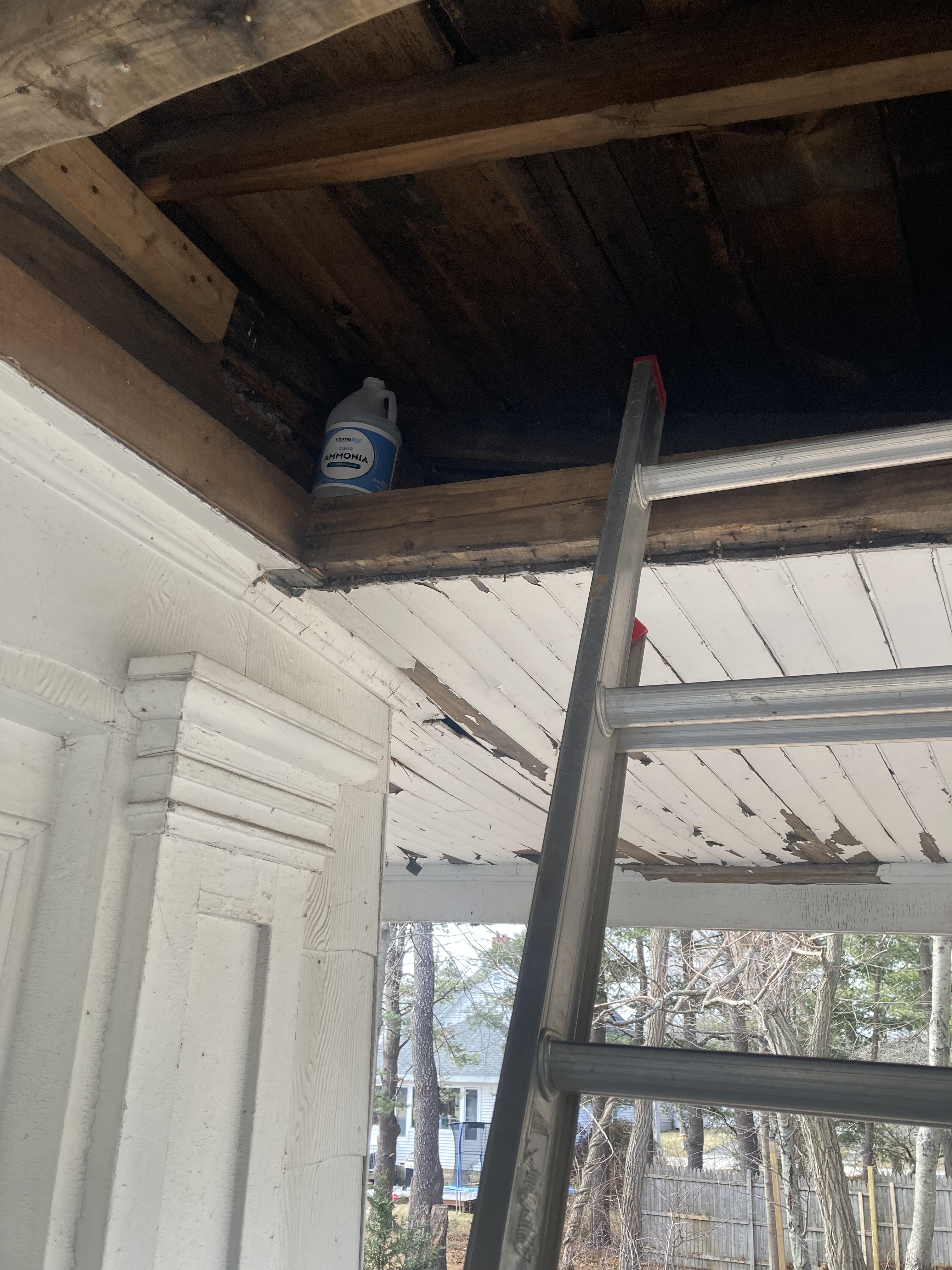
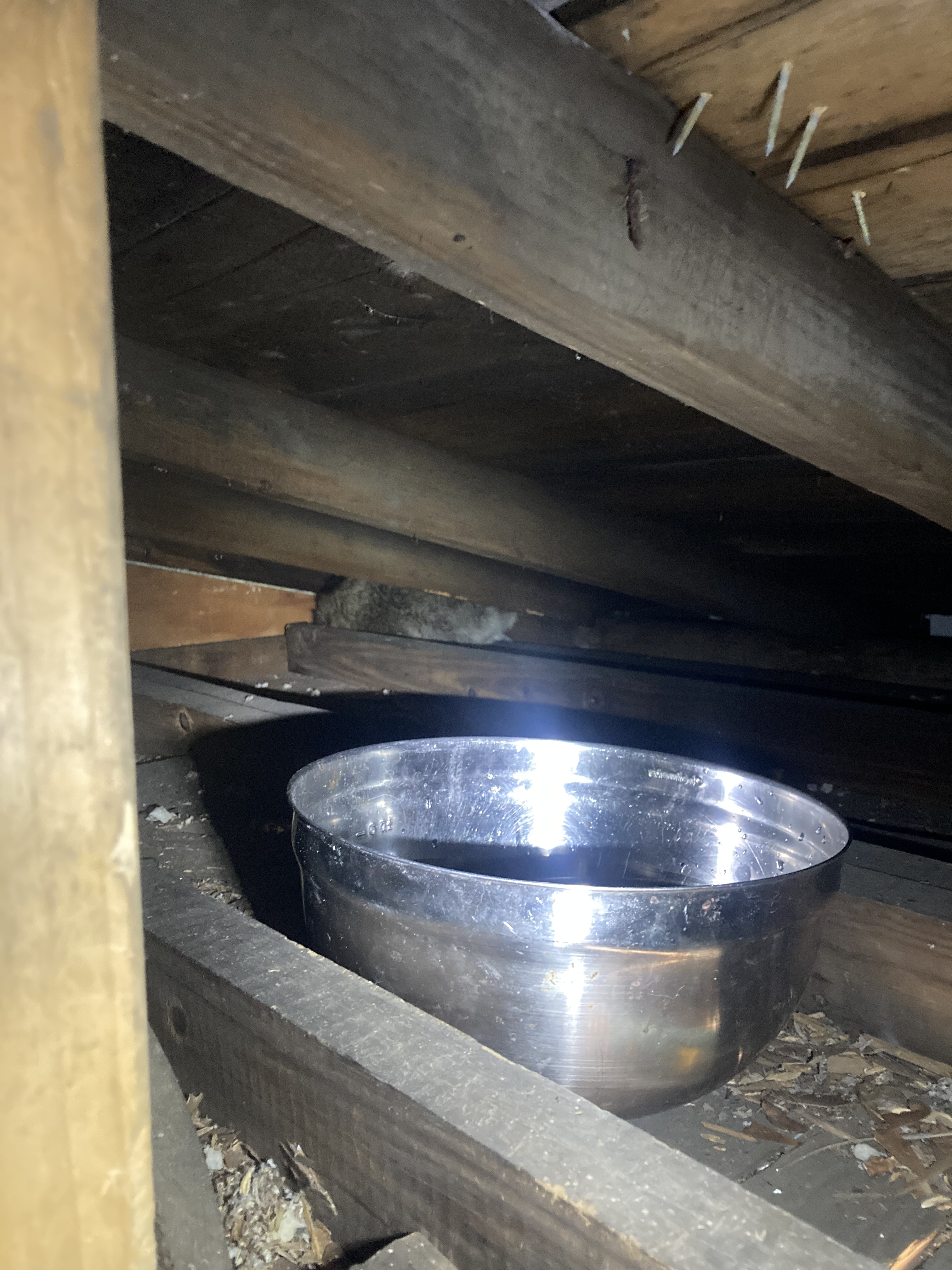
Raccoons are awfully cute, but we do not want them living in our house. Eviction was needed. A friend, from Vermont, told me that ammonia poured into a bowl is the trick because the rodent will move to get away from that smell. So as our puppy howled running to and fro, I climbed up and poured one gallon of ammonia into a metal bowl set above the porch ceiling. The Raccoon huddled in the far corner, hiding. The ammonia worked. The porch is vacant again. Truth is stranger than fiction. I still need to close off the porch ceiling, but things have calmed down.
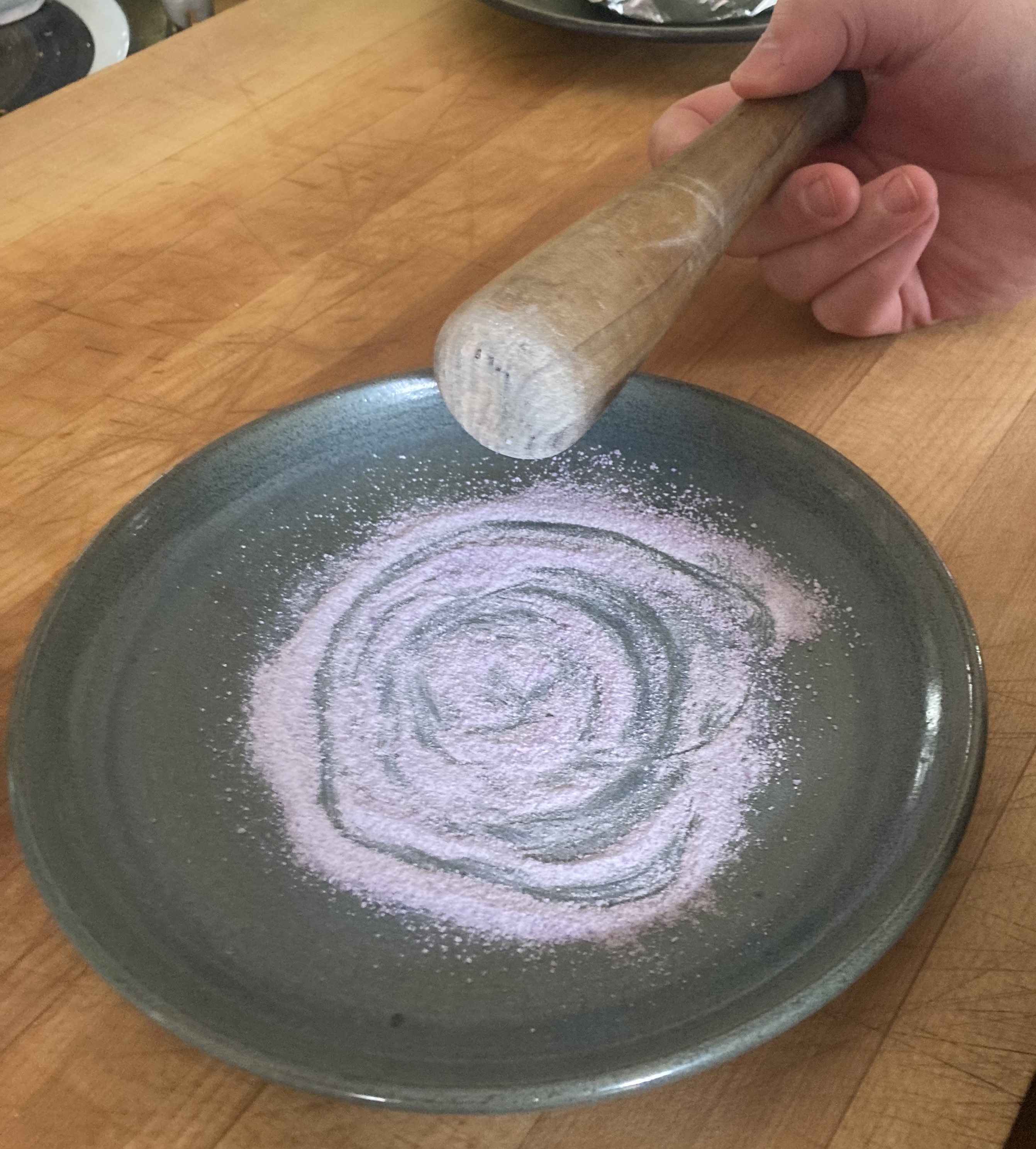
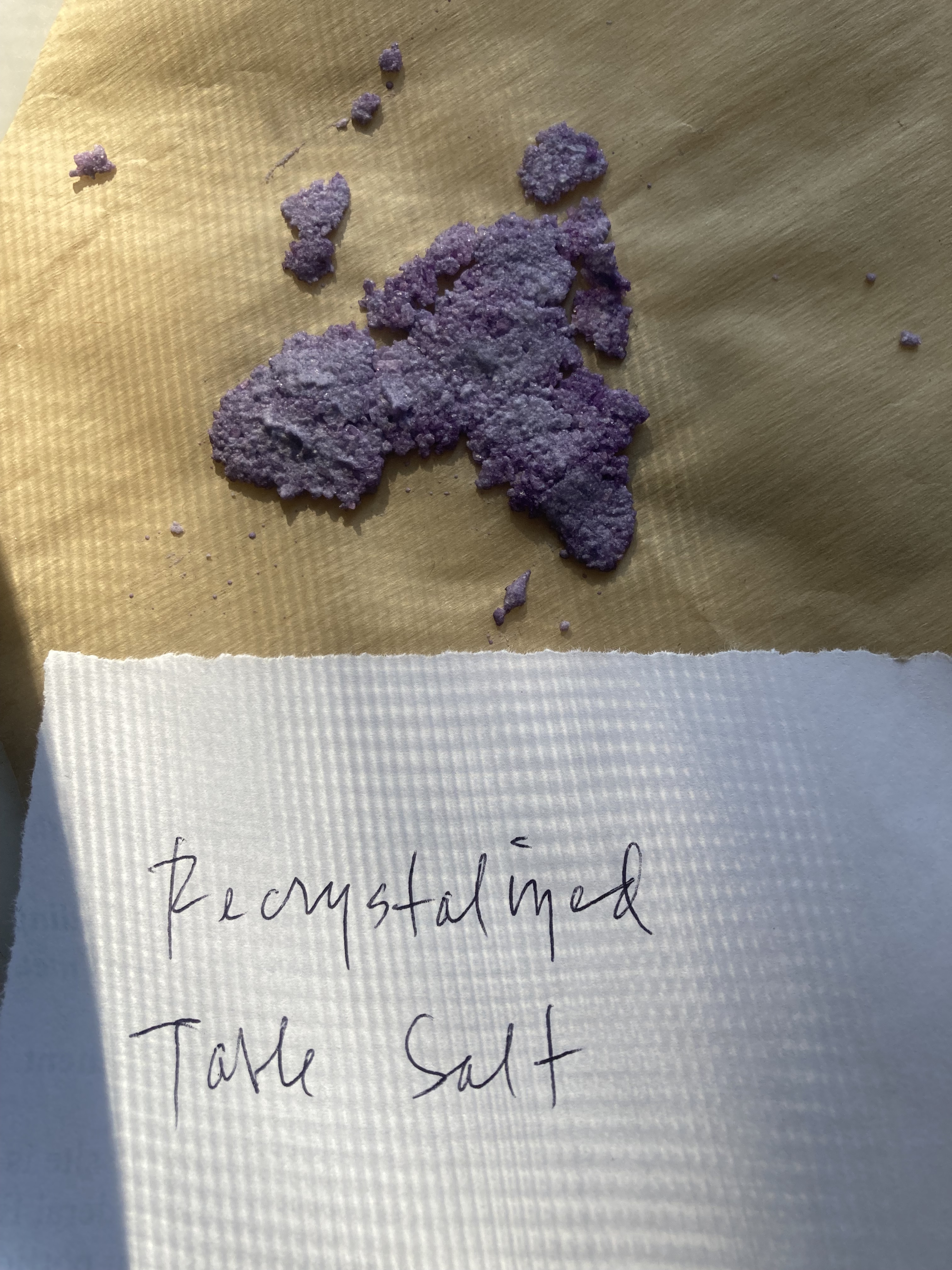
Having finished the eviction, I went inside to work more on the lawsuit plus to help with science, which included recrystallizing kosher salt from our Red Cabbage Ph experiment. In my son’s last class the Mother Tree had taught, “Ph is a measure of hydrogen in solution. Solvent + Solute = Solution. Something that is water soluble is hydrophilic. Something that is not water soluble is hydrophobic. For the Ph Solvent is the water and Solute is the stuff added to create the solution. Water is what communicates to life.” Let’s communicate to life!
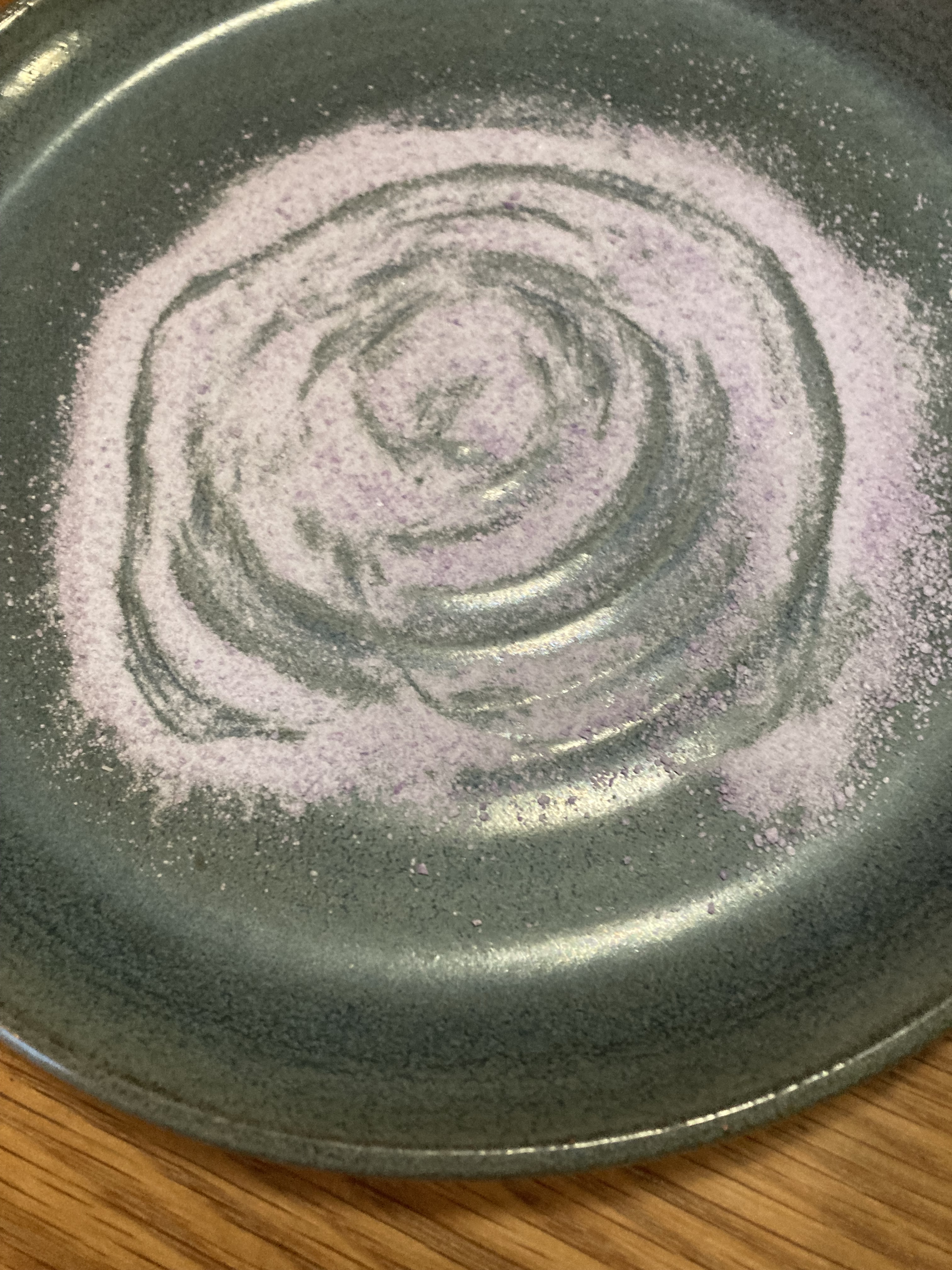
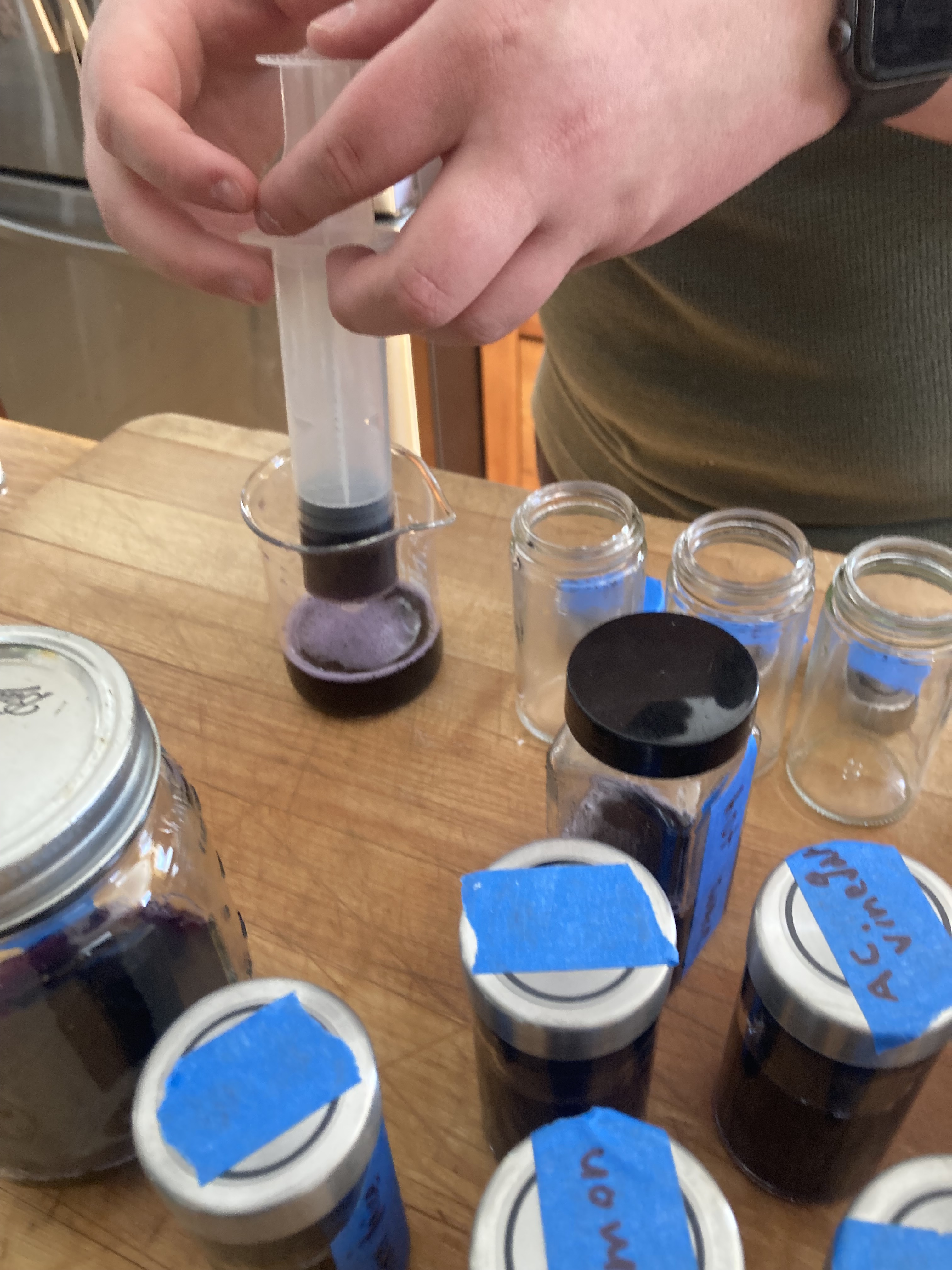
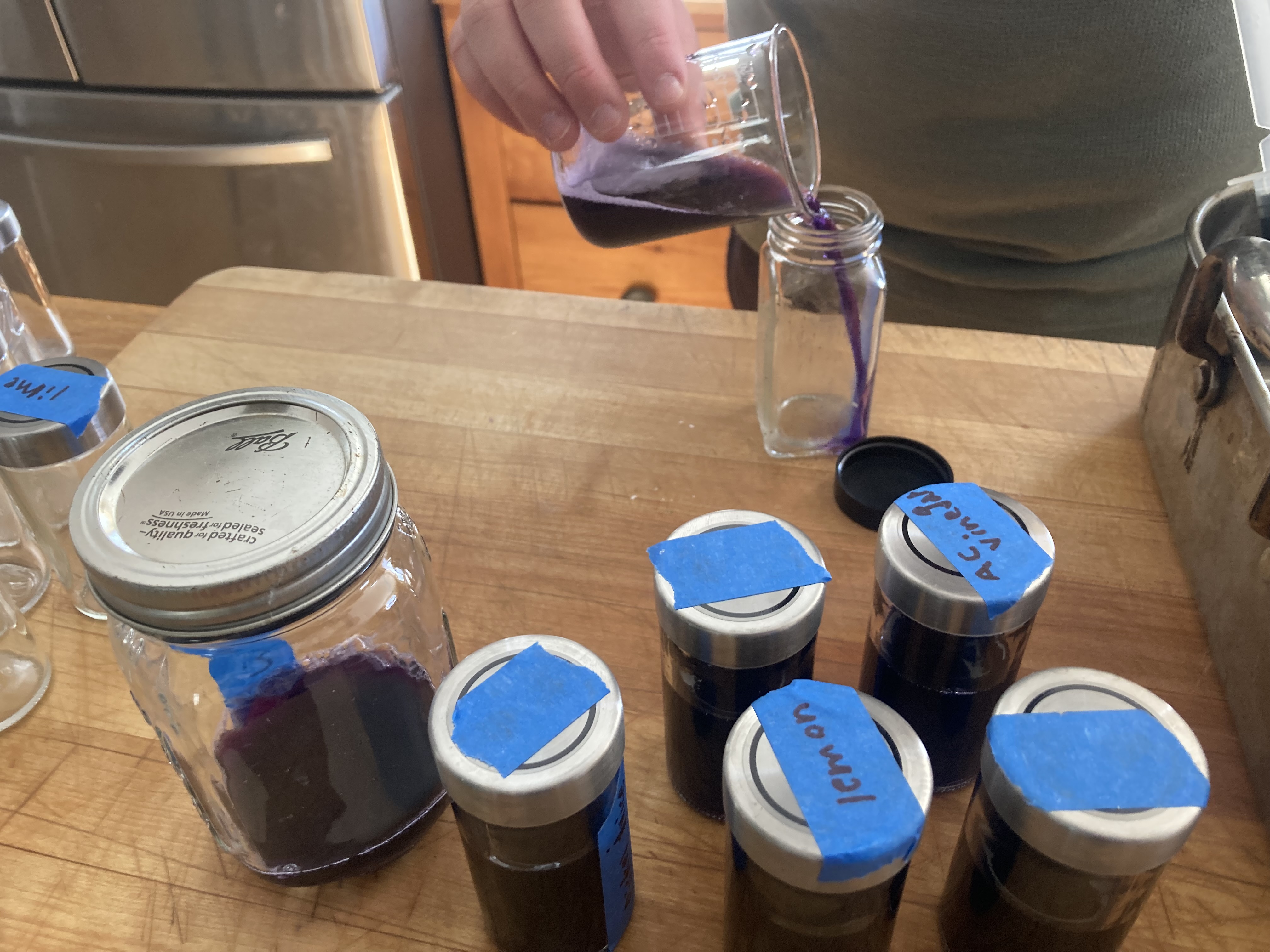
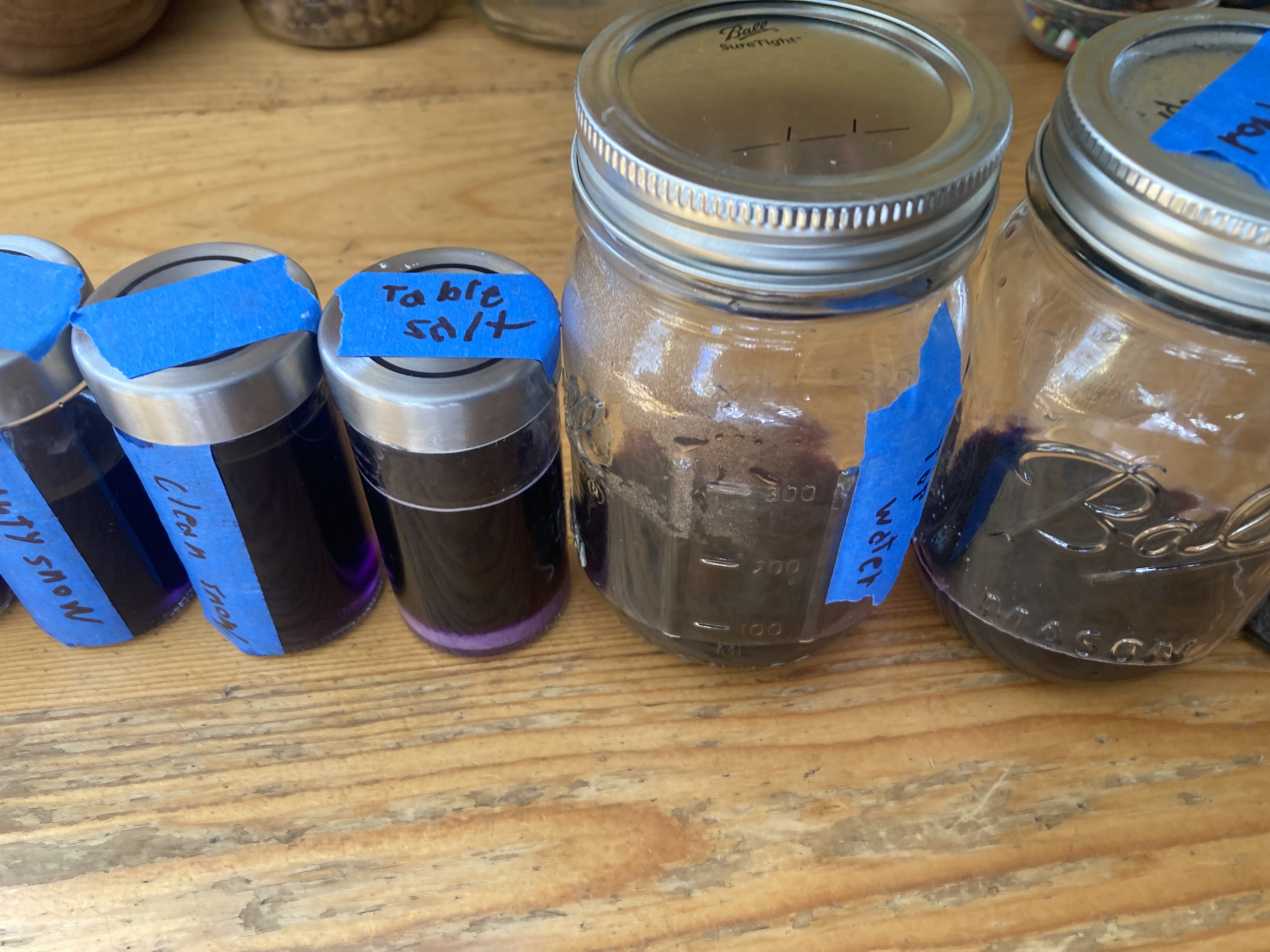
My son poured the red cabbage solvent from the jar, which left the solute – the purple salt – at the bottom. He scraped that out, spread it upon a plate to dry, then used a mortar and pestle to break the hardened salt. Admiring his creation, he commented, “We took table salt which is a solid. Put it in a red cabbage liquid. Turned some amount into a liquid. Took it out and turned it back into a solid, by using gas, an evaporation, which is covering all three states of matter: liquid, solid and gas.” I could not, in my wildest dreams, conjure that sentence so I am learning that he is factually correct. The homeschooling goes surprisingly well lately.
It is a curious fact that I am able to do this because I have a part time job, and am not allowed – by law – to earn much income. Social Security functions by a little known algorithm >62 + <18 = 2.027x, where FRA is 67. I am older than 62 and my son is 13. Both he and I receive benefits, with a cap on my income until I reach full retirement age (FRA). If you exceed that cap, the clawback is draconian, which means, in a culture driven to maximize income at all costs, my path is different. Time is on my side, plus just enough income, and time, for parenting as for life, is worth more than its weight in gold.
Lord Chesterfield taught that time was the most precious asset, its “true value” was to “snatch, seize and enjoy every moment.” We are in agreement.
__________________________________
Spring has sprung! Happy first Friday! Carpe diem!!!



Building Models to a T
Posted: March 13, 2026 Filed under: Chronicles of a First Time Parent 4 Comments
The son of a carpenter, he had an 8th grade education. Then he took night school classes for business and stenography, until at age 17, began work as stenographer for the Pocachontas Fuel Company in Cincinnati, Ohio. He described his boss as “the dean among smokeless coal producers and the local distributors never took decisive action without first consulting him.”
With the Dean’s approval, he moved to the Queen City Coal Company as stenographer and part-time salesman, riding the electric rail lines to make his sales calls. On his first day, he boarded the 6:00 am train and, at the Mers Coal Yard, sold a carload of New River Mine coal on his very first call.
In 1914, at age 19, he paid $675 to buy his first car, a Ford Model T. Ohio had license plates then but no drivers licenses until 1918. His sales territory expanded to southern Indiana towns along the Baltimore & Ohio railroad, and as far east as Columbus, Ohio. Roads were occasionally paved with bricks, but the vast majority of intercity roads were made of gravel, crushed stone or dirt. With a cruising speed of 20 miles per hour, sales calls were an all day odyssey beyond the reach of any telephones.

In June 1914, Archduke Ferdinand was assassinated and the “War to end all wars” began. Our 19-year old hero drove 140 miles – which took more than 7 hours – to Camp Sherman to enlist in the US Army. While at Camp Sherman, Edwin Forbes Glenn, Chief of Staff of the Department of the East, asked, “Can anyone write shorthand?” Our hero, named John, rose his hand and was put to work. Upon completing the task, General Glenn dictated a letter to Newton D. Baker, Secretary of the War in Washington DC whereby he appointed John as his personal secretary with the title of “Army Field Clerk.”
Edwin Forbes Glenn was soon promoted to rank of Brigadier General, and subsequently a two-star Major General as commander of the 83rd Infantry Division. John was stationed in Le Mans, France and became Chief Clerk for the American Military Training Center with duties of entertainment and shipment of troops to the Western front line. During the War, the 83rd Infantry Division supplied over 195,000 officers and enlisted men as replacements in France without seeing action as a complete formation.
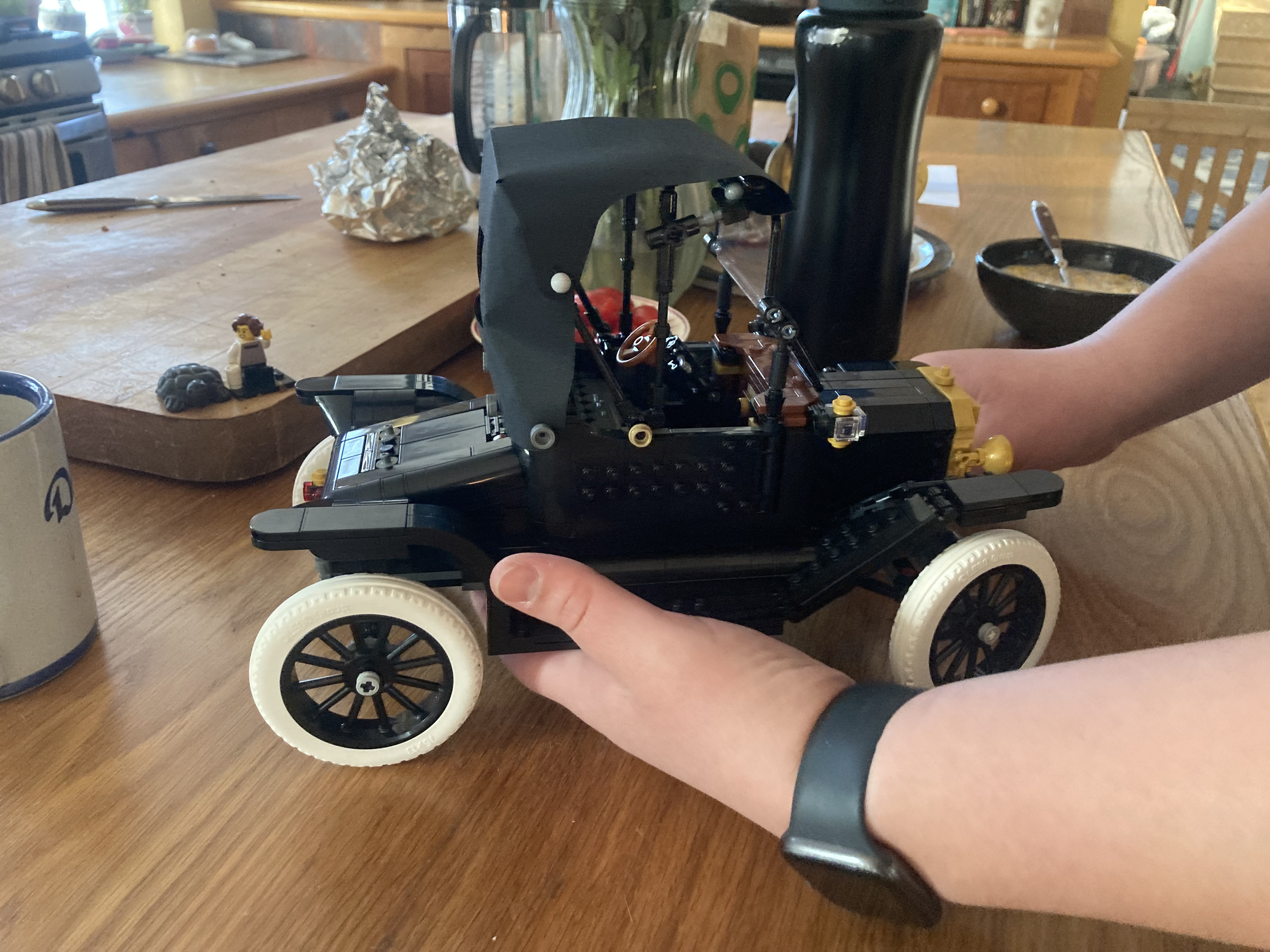
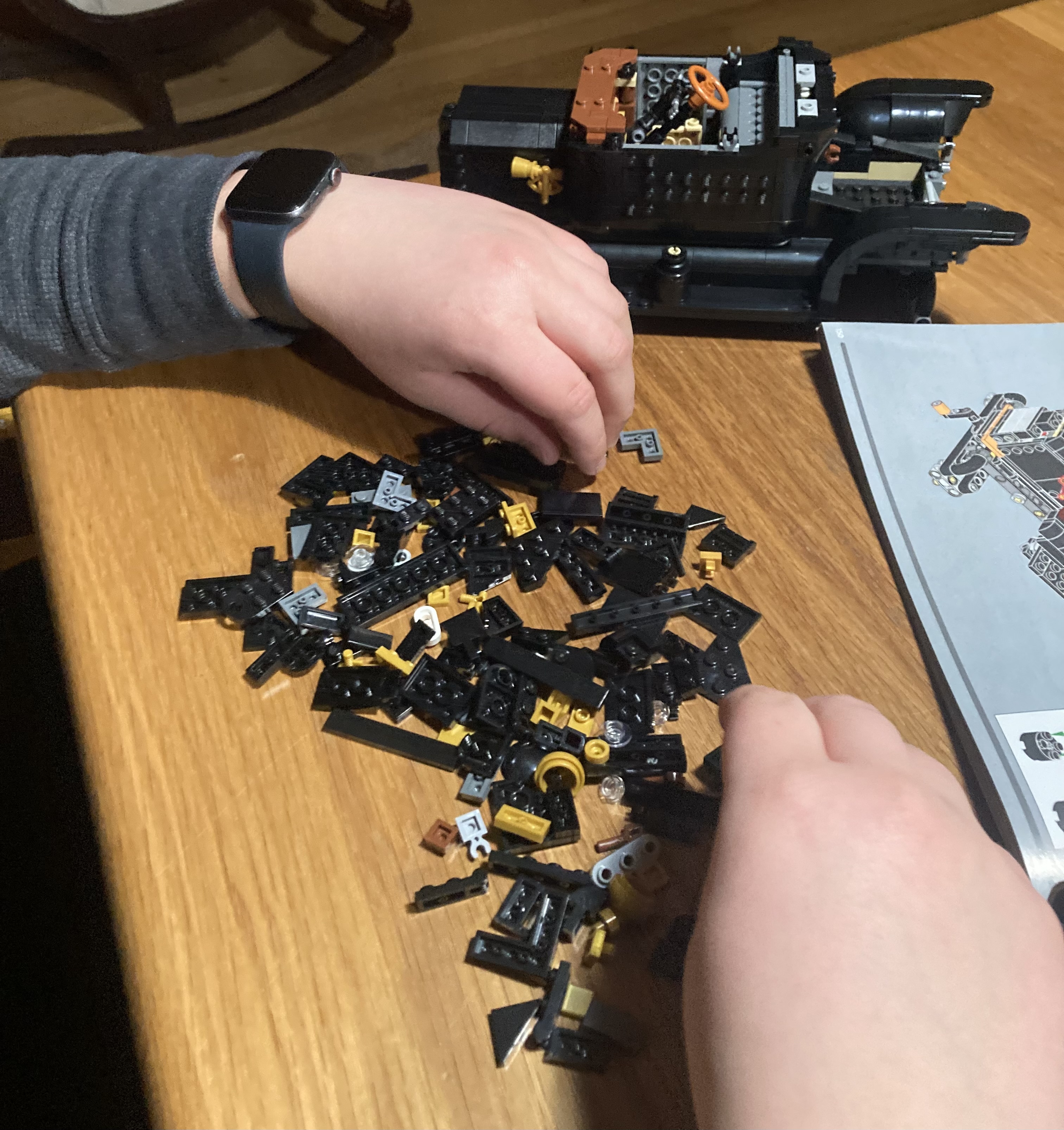
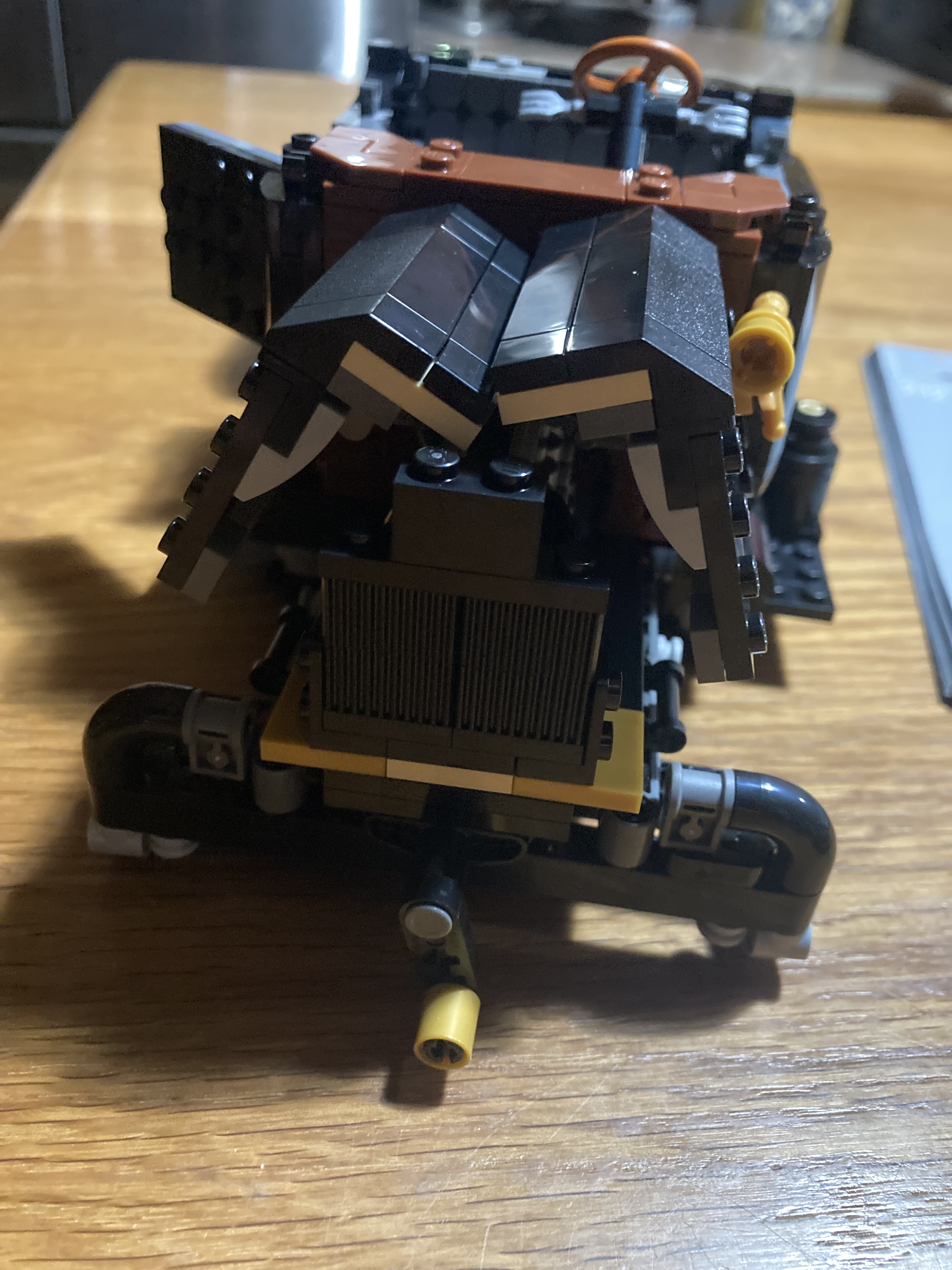
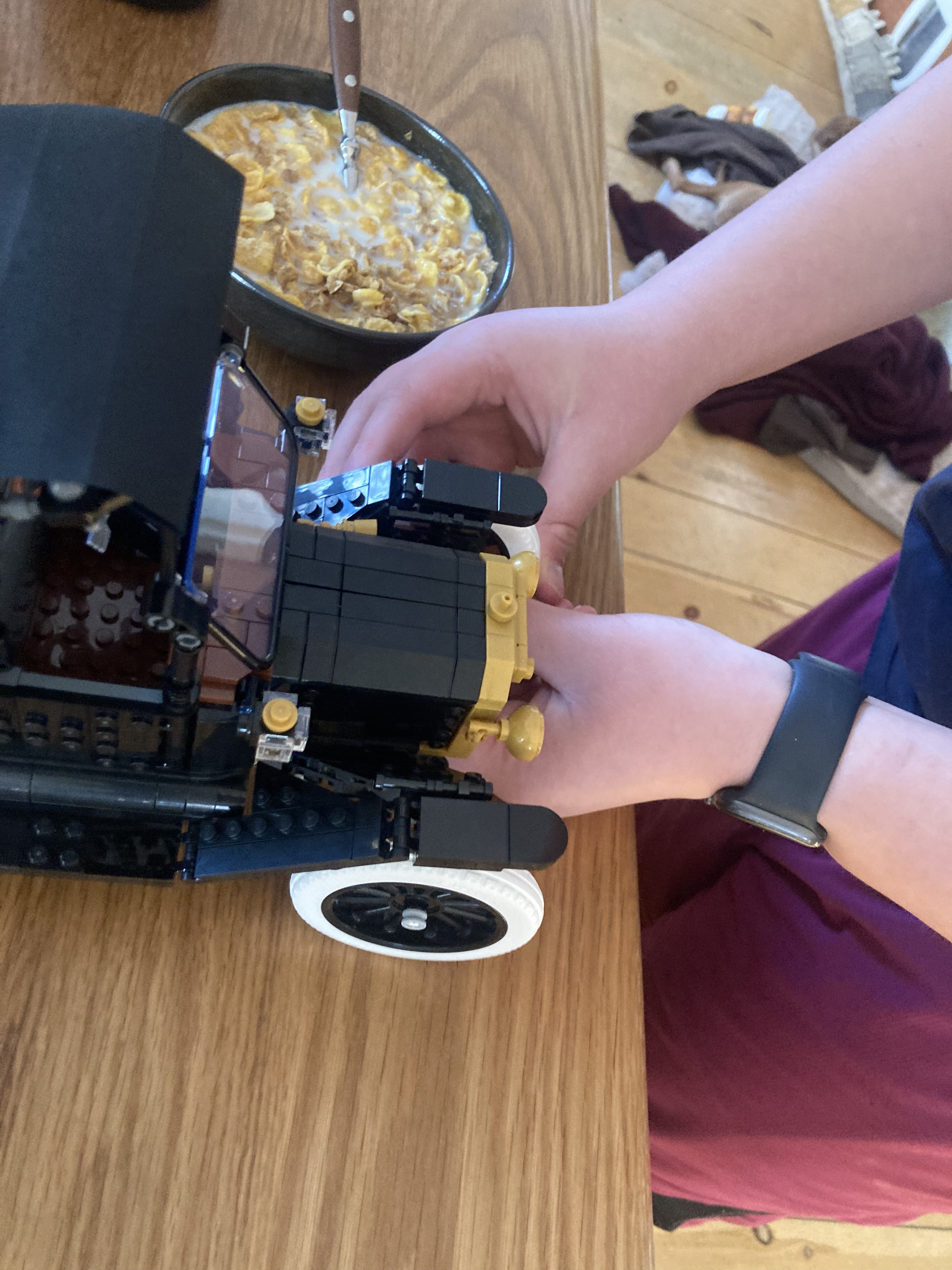
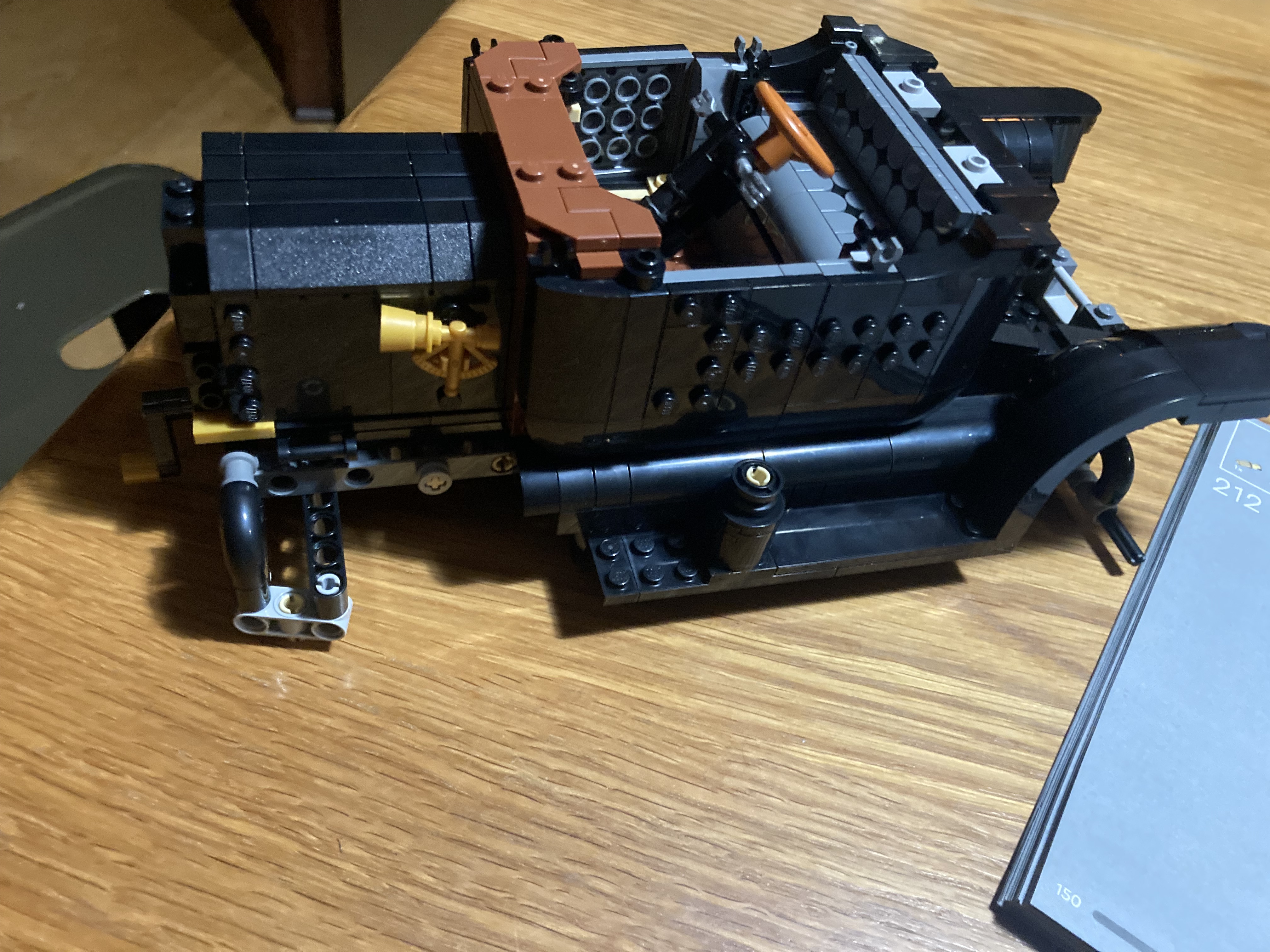
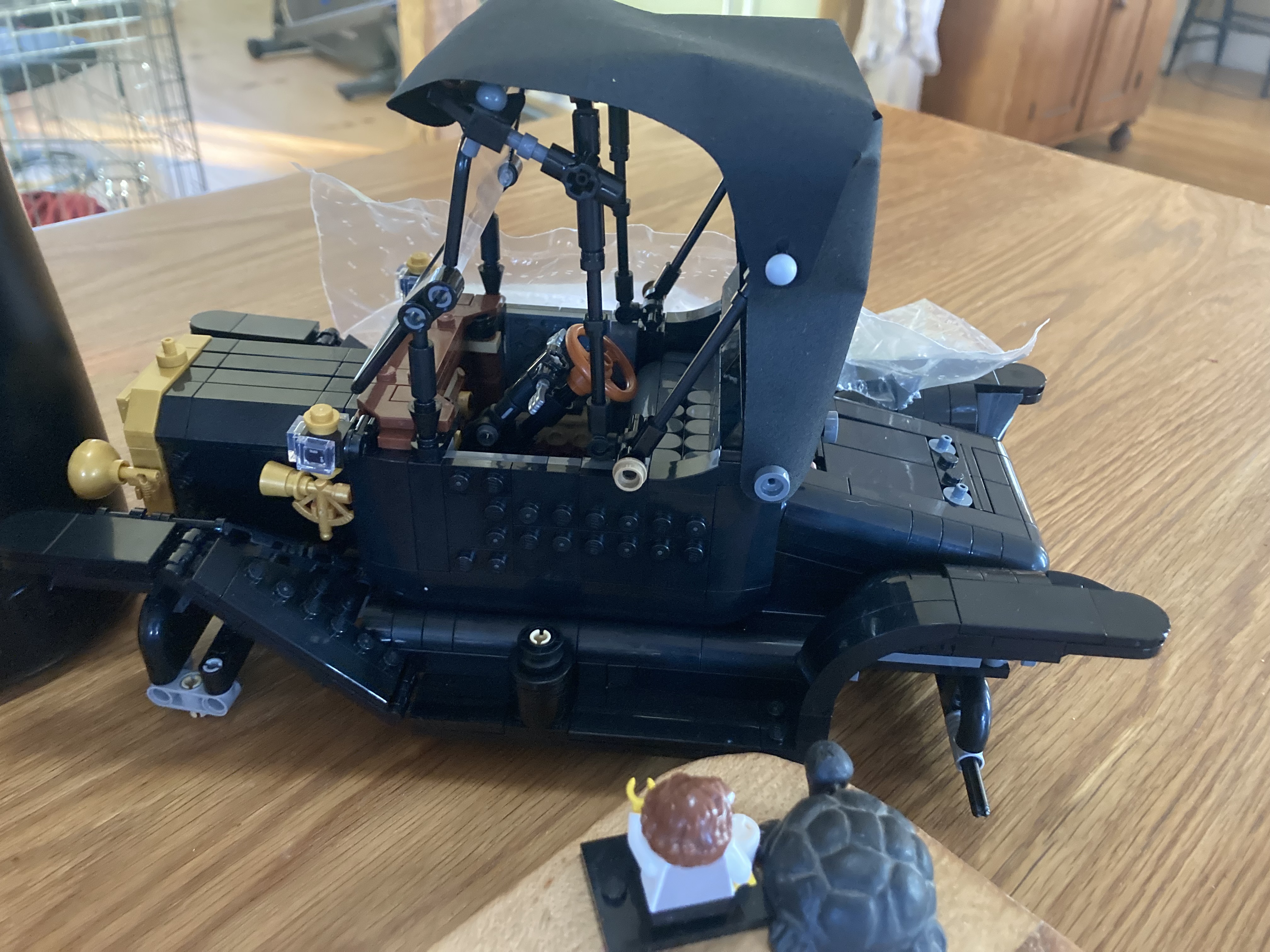
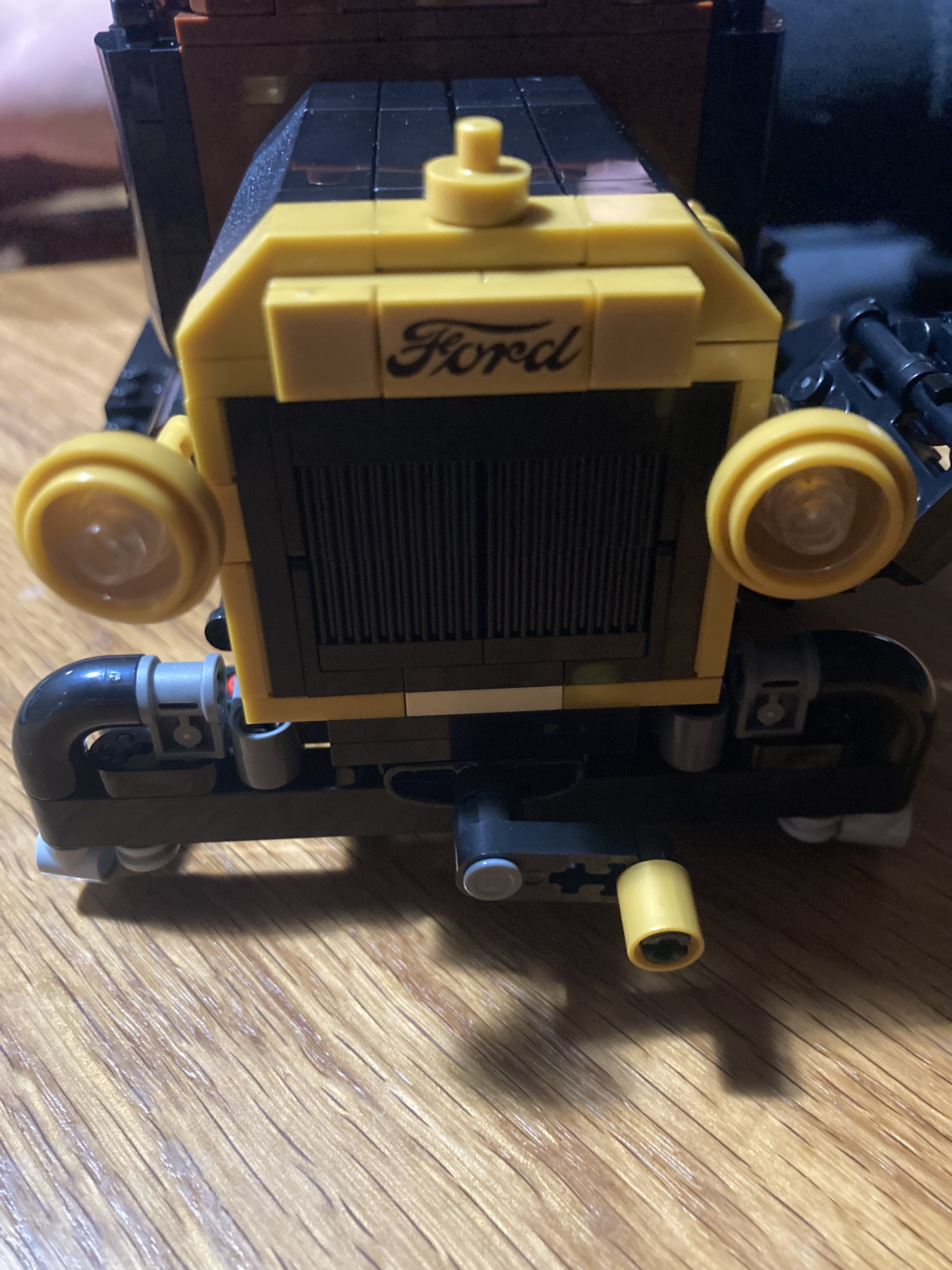
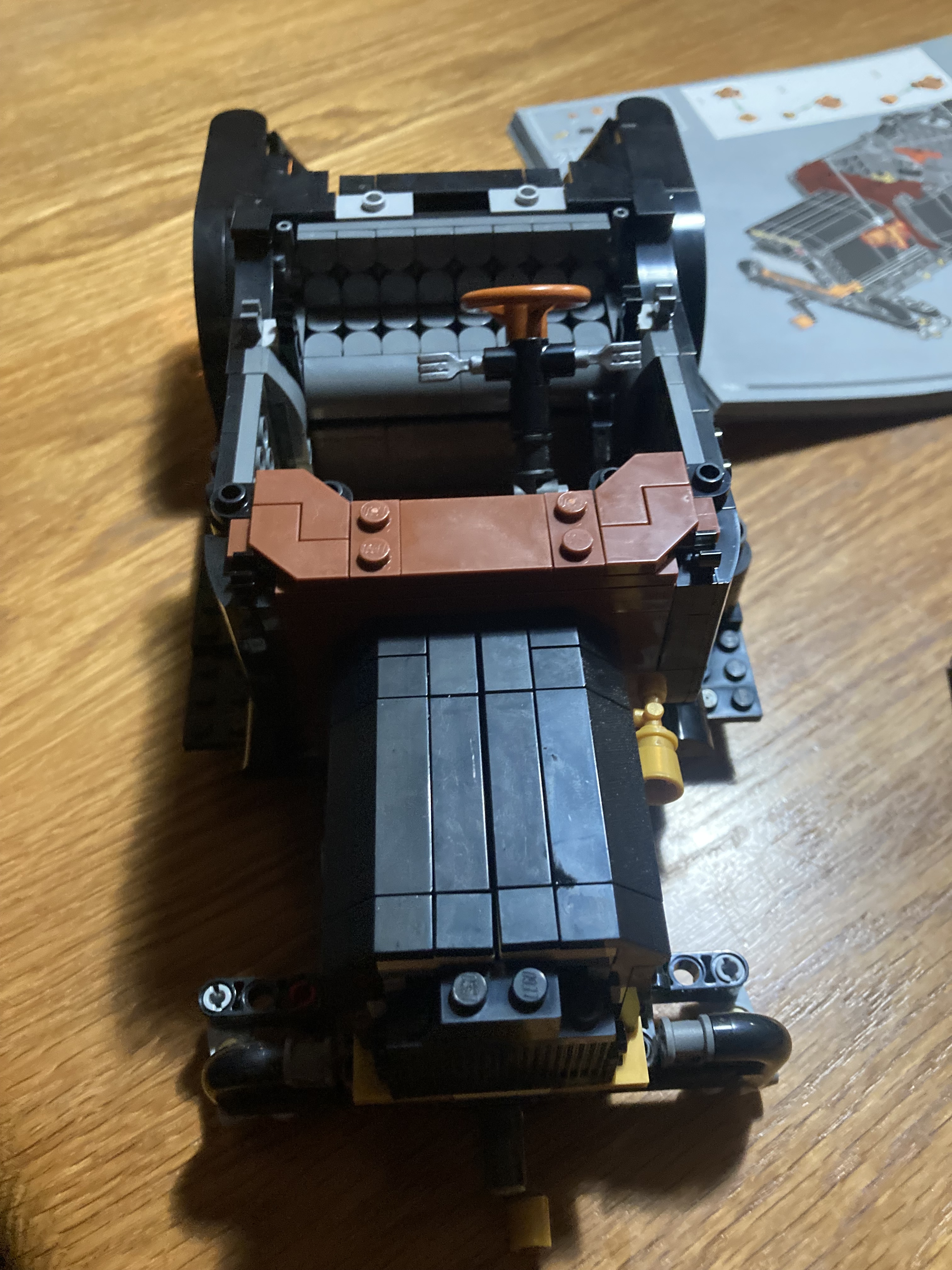
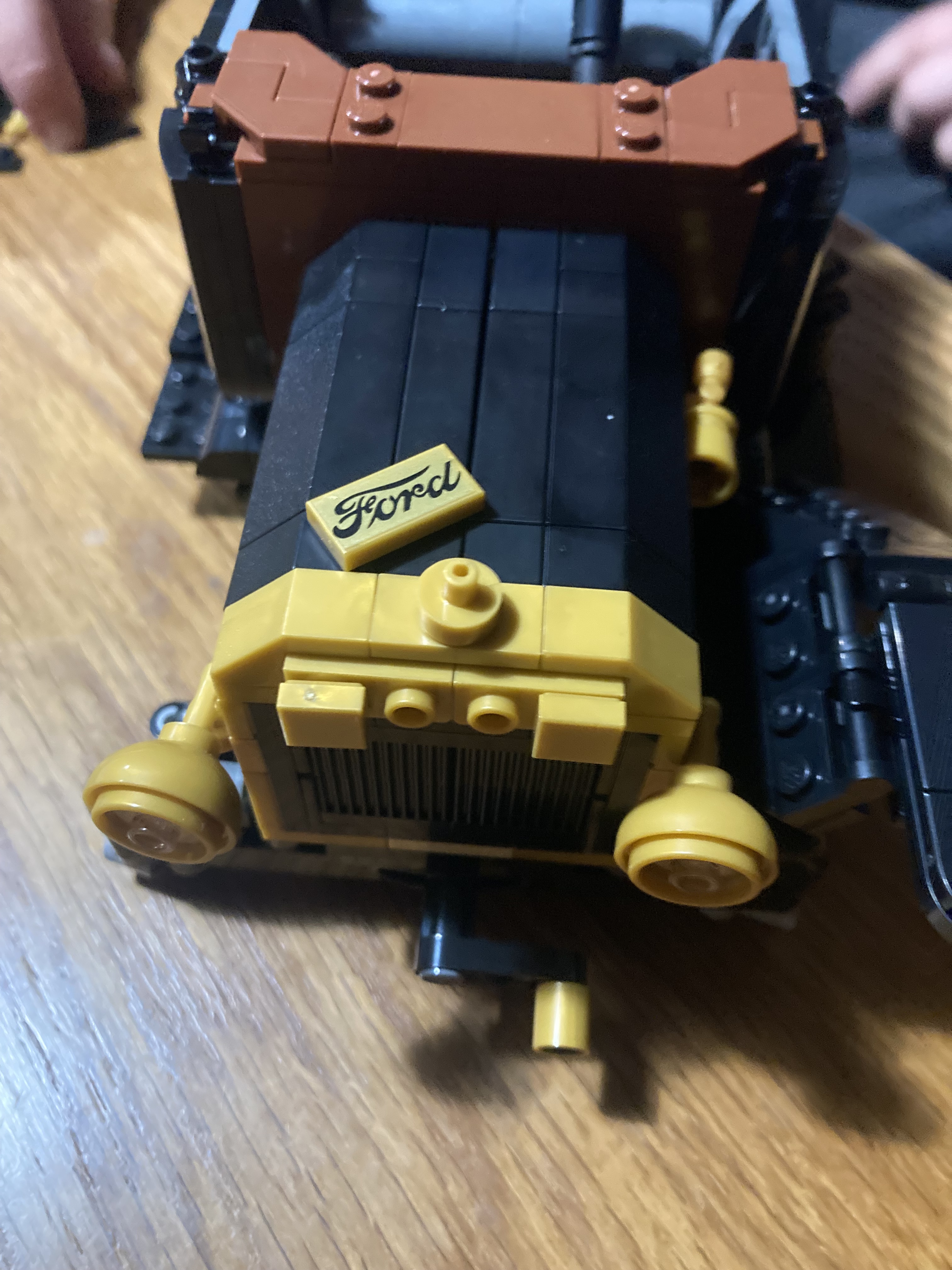
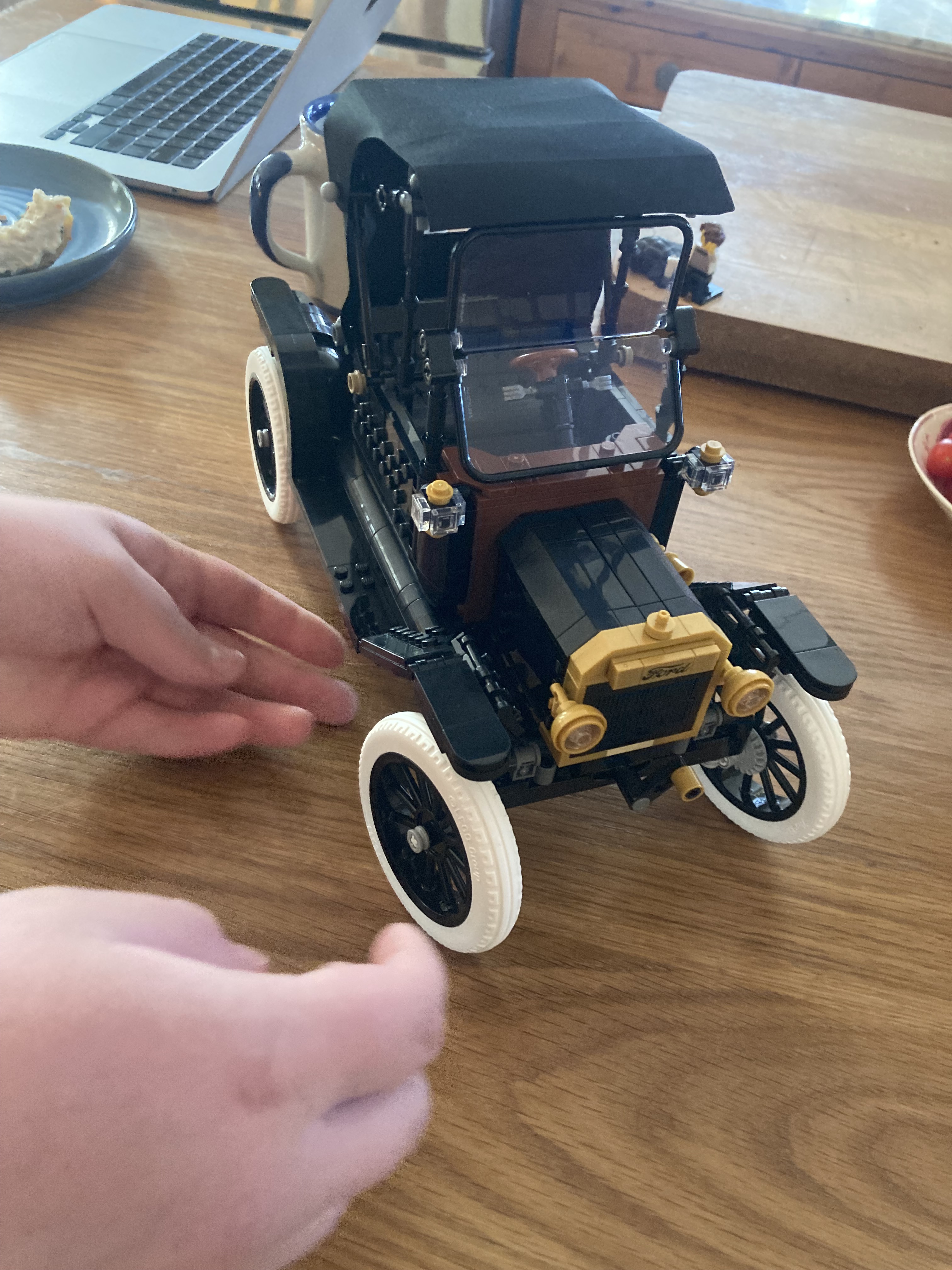
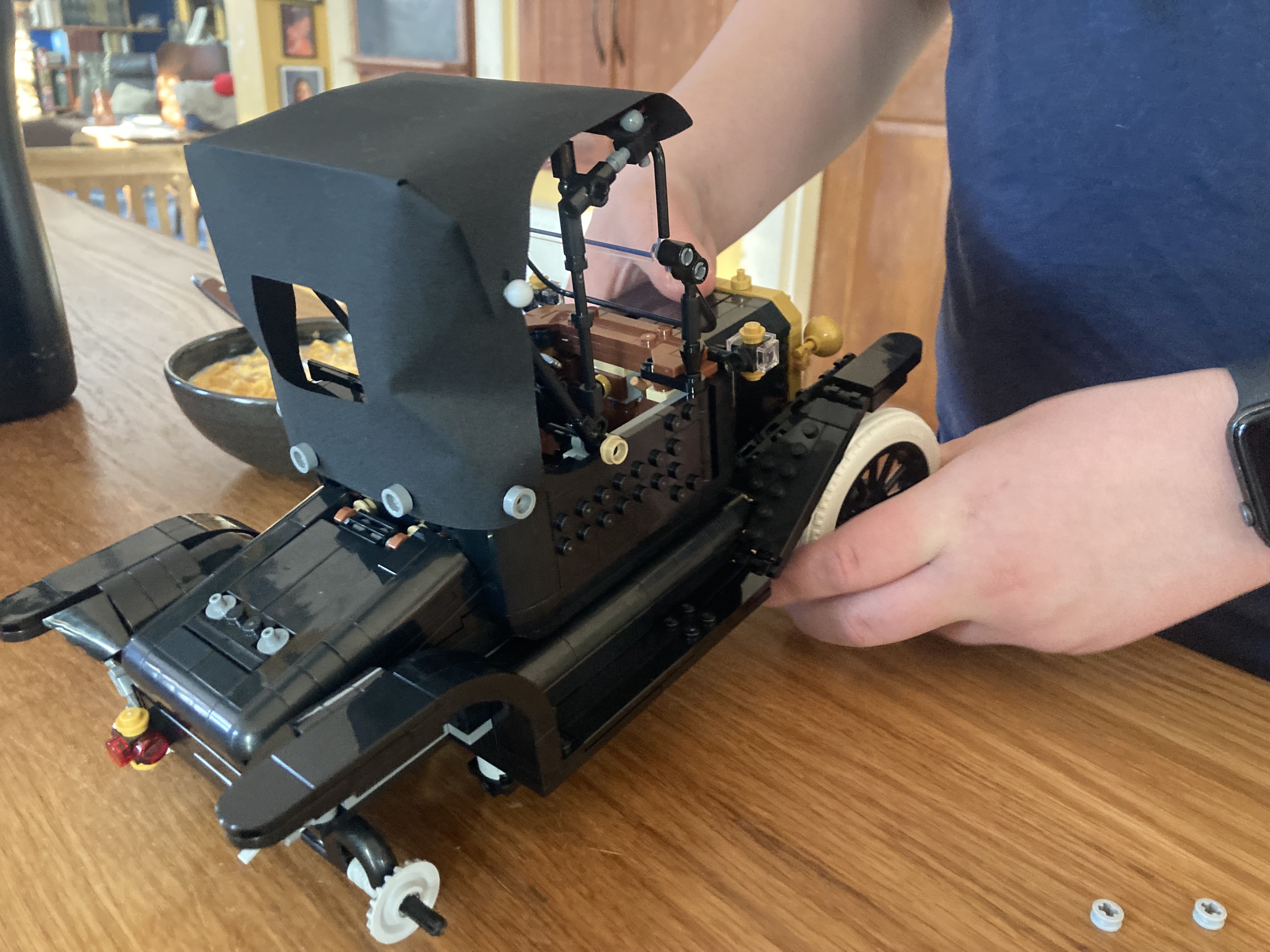
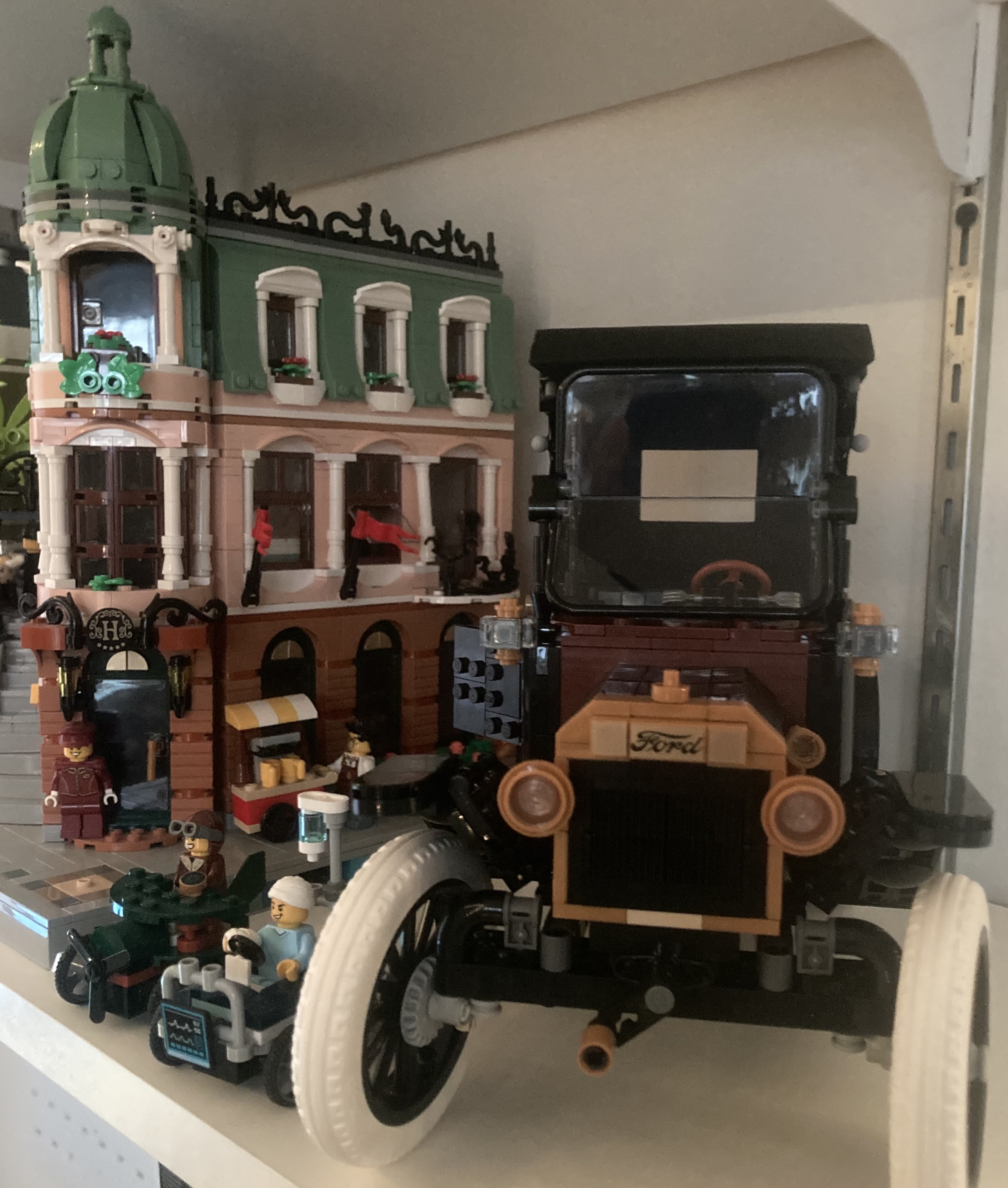
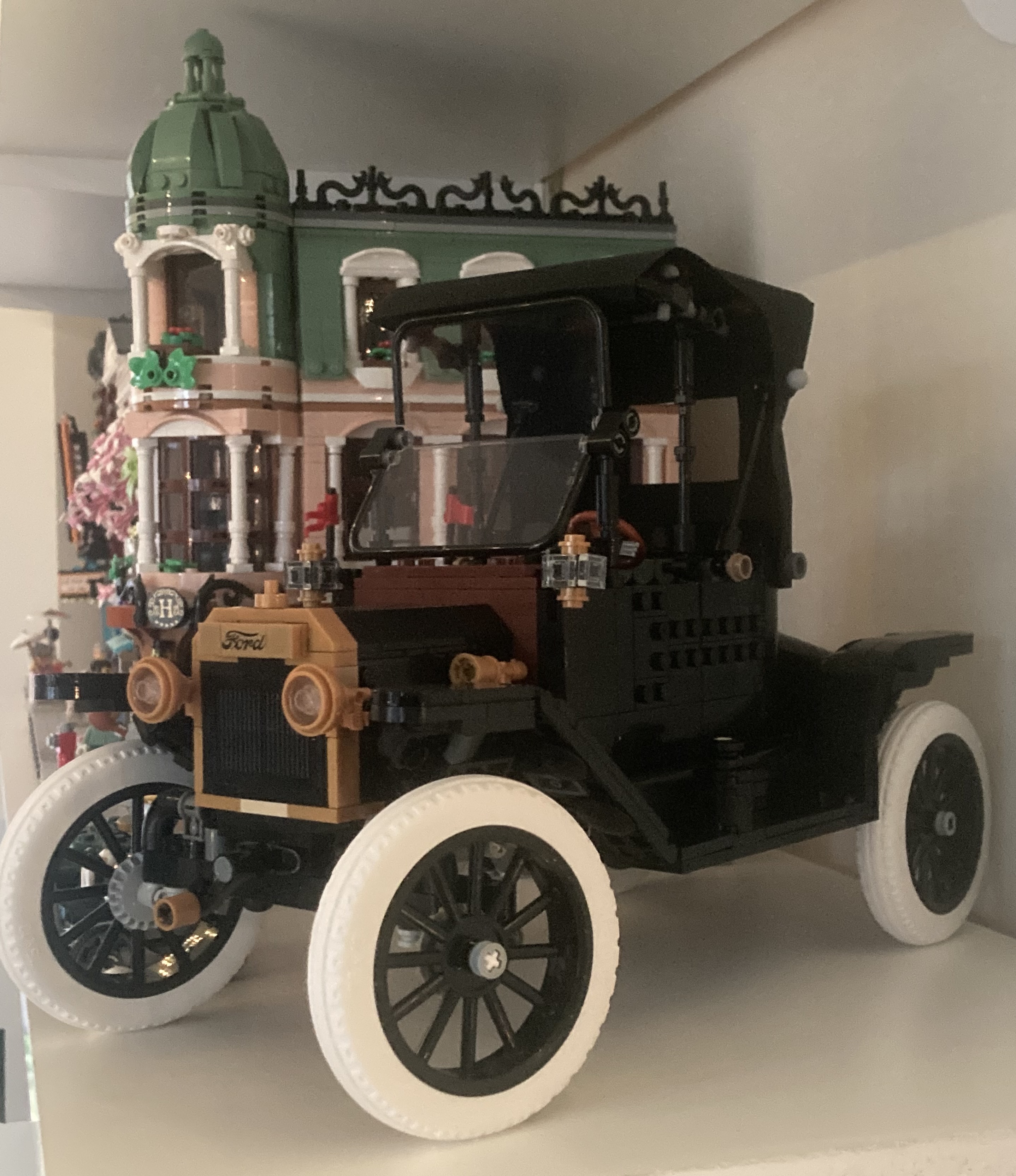
John is my son’s Great Grandfather, and this week’s homeschool history topic is coal, automobiles and Detroit. LEGO released, last week, a 1,060 piece kit for a Ford Model T measuring 7.5” high by 11” long by 5” wide, with a fold back fabric roof, split windshield, spoked rim wheels with white rubber tires. The rear trunk opens, the driver’s cab has working steering, the hood panels open to reveal the engine, while the front crank spins the fan. My son pined for that model, which he easily earned laying the tiles. This history lesson became part of the deal.
World War 1 ended with the Armistice of 11 November 1918. John returned from the war and was offered a job with the Atlas Coal Company, his territory Ohio and Indiana. The company’s “Red Comet” coal was mined in Harlan, Kentucky, a center of labor strife between coal mine owners and union workers, especially during the Harlan County War of the 1930s. Harlan County would become the poorest county in the USA.
491 miles north, in Detroit, Henry Ford – also with only an 8th grade education – had been busy during the “War to End All Wars.” The River Rouge Complex was built in 1917 and became the world’s largest vertically integrated factory. During the war it produced 42 Eagle-class antisubmarine patrol boats, more than 38,000 Model T cars, ambulances, and one-ton trucks, 7,000 Fordson tractors, two types of armored tanks, and 4,000 Liberty airplane engines for the Allies.
Henry Ford did not need John’s coal – Henry sourced his own – but John knew that Detroit would need vast amounts of Kentucky coal to boil the water to create the steam, to spin the turbine to activate the generator, to create electromagnetism to drive the industrial machine. John would become known as “The King of Coal” in the Ohio River Valley region. By the late 1940s he was buying the entire output of mines, shipping trainloads of coal north to fire the turbines of Detroit Edison. When held “as goes GM, so goes the US economy,” the King of Coal of the Ohio River Valley was among legions of salesmen shipping upwards of 3.2 Million metric tons per year to Detroit.
Both the King of Coal and Henry Ford had only an 8th grade education. That is pretty much where my son is now. Henry Ford famously “learned by doing” which increasingly seems the direction of our homeschooling. When my son learned small engine repair, the Professor taught electromagnetism. Welding as chemistry has been one facet of our teaching, while even Language Arts teaches that grammar is a construction of thought, a process of assembling words, phrases, sentences to map form to meaning. While “hands on” is a key here, this week’s lesson taught that history has sharp edges.
Cadiz, Ohio, in far eastern Harrison County, is the Appalachian town where Clark Gable was born. For our lesson about coal, Harrison County was a top producing county in Ohio, driven heavily by massive strip mining operations, with total production reaching 55 million tons per year by 1970. Cravat Coal was founded in Cadiz in 1951 by a Yugoslavian immigrant, whom John helped launch, co-signing a $100,000 note to underwrite the business. Over the years John sold their coal, and the company passed to his sons, pistol-packing union-busting coal operators.
John was old school, born in 1895, and always did business on a handshake. But the Puskarich boys used contracts, aggressive tactics, and were less than forthright. By the 1970s they were moving to push John out, and they tricked him to sign away his rights.
My now-deceased Cousin told the story, “I called grandpa in either 1975/76 and asked if I could go with him [to Cadiz]. He said he didn’t think it was such a good idea (probably because he was in the process of being let go, as I understand, they didn’t want to pay him anymore).… We stayed at a little motel. “Big” Mike Puskarich, the President, was larger than life…De Niro in Casino…8 of us sat down for dinner and he ordered “steaks for the table”…let’s just say he wasn’t Opa’s cup of tea…actually more like Rodney Dangerfield…the bill came and Mike pulled out a hundred or two and said “keep the change.” Next morning we went to the coalfields. After lunch Gramps hired the receptionist to check in on me while I watched TV. I remember Gramps coming home rather despondent. We were supposed to stay another day, but late that afternoon we checked out and returned to Cincinnati in his Grand Prix.”
In June of 1980 John wrote to Big Mike and his brothers: “Your $600,000.00 profit on this order alone was five (5) times my total salary for the 10 years I was Vice President, Sales. Your greed in taking $9,000.00 from my salary in 1977 and 1978 and rewarding me with a pension of $4.00 per day was incredible, ungrateful and dishonest. May I remind you it was I who co-signed your $100,000.00 note starting you on the road from rags to riches, and my dedicated services to a net worth of $7,000,000.00 as of December 31, 1976. Shame on you!”
John had been cut out. Five days after sending the letter, he suffered a stroke, from which he never recovered.
This week’s history lesson has many aspects, but at its most basic teaches how complex history can be. Henry Ford was an iconic industrialist, as well as committed to racist and anti-semitic views, including supporting the Ku Klux Klan.
The surface mining in Harrison County, and throughout Appalachia, has caused profound degradation, with barren un-reclaimed land and severe air and water contamination leading to higher risks of lung, respiratory, digestive, and kidney cancers due to exposure to toxins. Harrison County has higher mortality rates compared to both the Ohio state average and the United States national average.
The coal industry was dominant in the Ohio River Valley and Appalachian region from the late 19th century through the 1980s, which is exactly John’s life. At its peak, in 1923, 863,000 were employed in the mines, so more than four generations found steady employment, but at great cost. It is no surprise that an enterprising 8th grade drop out could leverage shorthand into a significant career selling coal. But to his great grandson, of the Zoomer generation, that way of life seems incredibly outdated and dangerous.
Cravat Coal, in fact, has gone out of business. John’s searing experience there brings to mind the proverb “gentle as a dove and wise as a serpent.” Both are needed.
Perhaps the ultimate lesson is that life is not a black and white story, but grey; not simple like the old western cowboy movies, where the good guy, in the white hat, rides into town and wins. Coal powered a war time industrial machine that battled and defeated fascism. America was dominant. That legacy now fades, and the Zoomers come of age in an increasingly complex, deeply interconnected, possibly anti-democratic future.
Red Cabbage Ph
Posted: March 6, 2026 Filed under: Child Centered Activities, Chronicles of a First Time Parent, What is an Art Farm | Tags: Social ecologies 1 Comment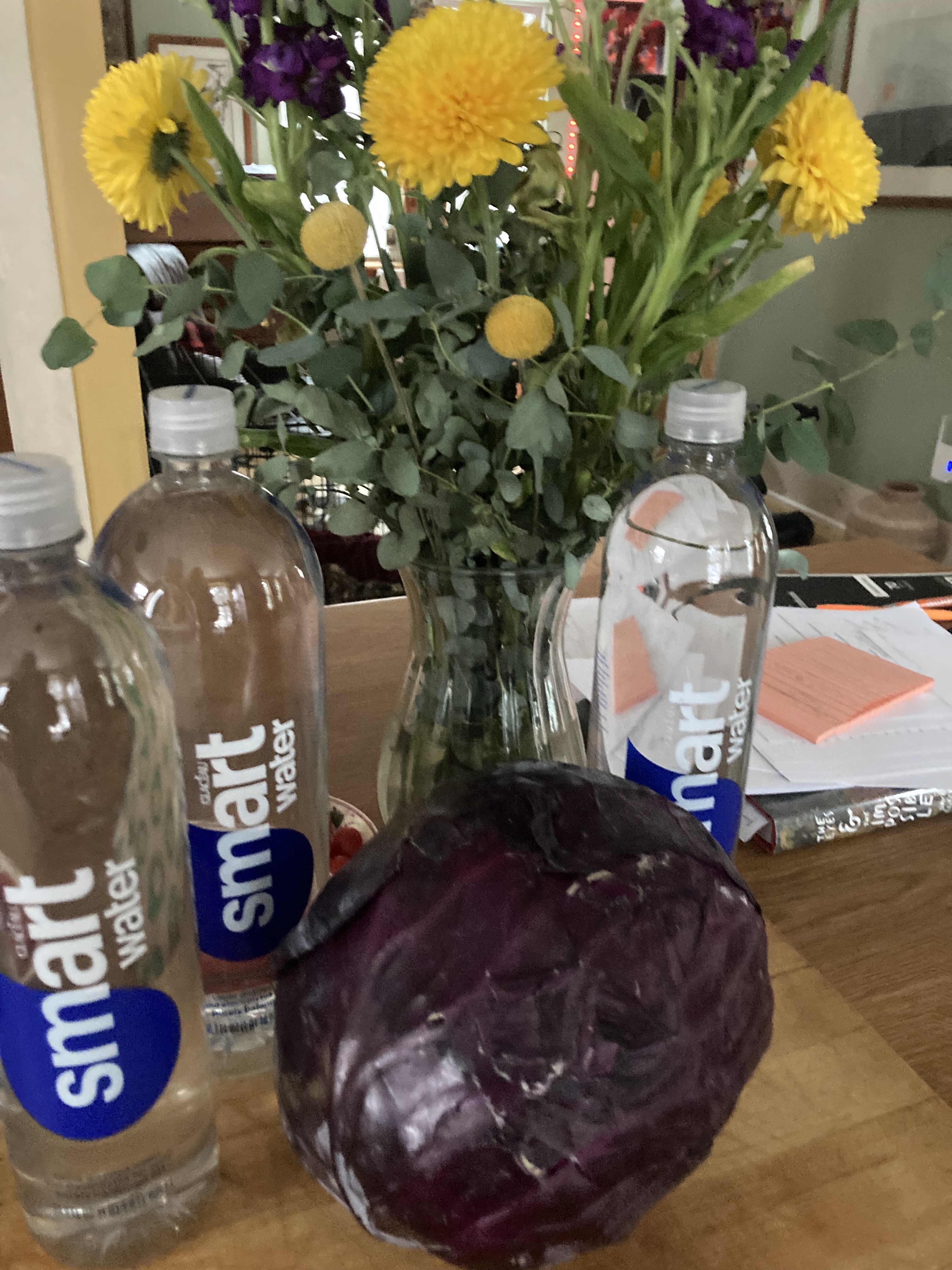
Nettlesting is a Mother Tree, whom I met, almost 30-years ago, in the Fulton Market District on Chicago’s near west-side. When that city was the “Hog Butcher to the World” that neighborhood was home to its meatpacking warehouses, but circa 1998, gentrification spread, and we each occasioned to be there for a Childrens’ art exhibit. She walked up, we started talking.
In 2000, our paths crossed again, in Chicago’s Financial District canyons, on LaSalle Street, outside the once venerable Harris Bank, which now has been merged into the global behemoth BMO. I was preparing to depart for the Philippines – a land of smoke and mirrors – on my oxymoronic quest for “Humanitarian Finance” while she was preparing to WWOOF (Worldwide Opportunities on Organic Farms) in the full sunlight of Southern Australia.
Being a Mother Tree, she is a steward of Gaia who thrives at the vanguard of soil and soul. Like a zen koan, she is not an artist, but one might say she is an eARTheart-ist.
In 2004, she planted six kernels of “Golden Bantam” organic heirloom 1902 sweet corn in a shopping cart and then proceeded to push it around Chicago’s dense urban core. People were confronted by food growing, rather than food as a commodity purchased in a store. “Know your food, know your farmer” came alive on street corners. [Search You Tube for “Field Trip. A cart full of Corn Hit’s the Road.”]
In 2006, Sandor Katz, the NY Times best selling author, profiled her guerrilla gardening in his book “The Revolution Will Not Be Microwaved.” By 2012 she was named as one of Utne Reader’s “Twelve Visionaries Who Are Changing Your World.” That now ancient history was prologue, however, to the work she has gone on to pursue.
In 2020 she travelled in the Ecuadorian Amazon basin and worked with Indigenous peoples as well as local growers, developing classes on soil and remediation. The BBC reported this, quoting her, “The ultimate goal is to create an ecosystem of native plants and crops that can be farmed sustainably while also cleaning up the oil. I’m trying to have people re-engage with certain subtle complexities of nature…”. https://www.bbc.com/future/article/20200316-cleaning-up-the-oil-spills-of-the-amazon-rainforest.
Her “Soil Keepers” program grew out of this effort, and has now been taught to more than 250 students around the United States, as well as in Qatar, Finland, Poland, and Ecuador. https://socialecologies.net/
Over the years we have kept in touch and she recently came east to soak in the rocky coast of Maine. Our oceanic expanse served as counterbalance to the Great Lakes’ prairie. She and my son M got along quite comfortably and an idea was hatched.
Science is not my strong suit. In high school Chemistry, the concept of a mole as “a unit of measurement to quantify the amount of a substance, representing exactly 6.022 × 10²³ elementary entities (atoms, molecules, ions, or particles)” was bewildering. I dropped out post haste to study ceramics. I never looked back.
Necessity, though, is the mother of homeschool innovation. Between M’s needs and my lack of science training, when the Mother Tree offered to teach him soil science I accepted post haste; what I call soil science is, more precisely, applied biogeochemistry, starting with applied chemistry through field work and kitchen-based experiments. It is amazing what red cabbage can teach about Ph.
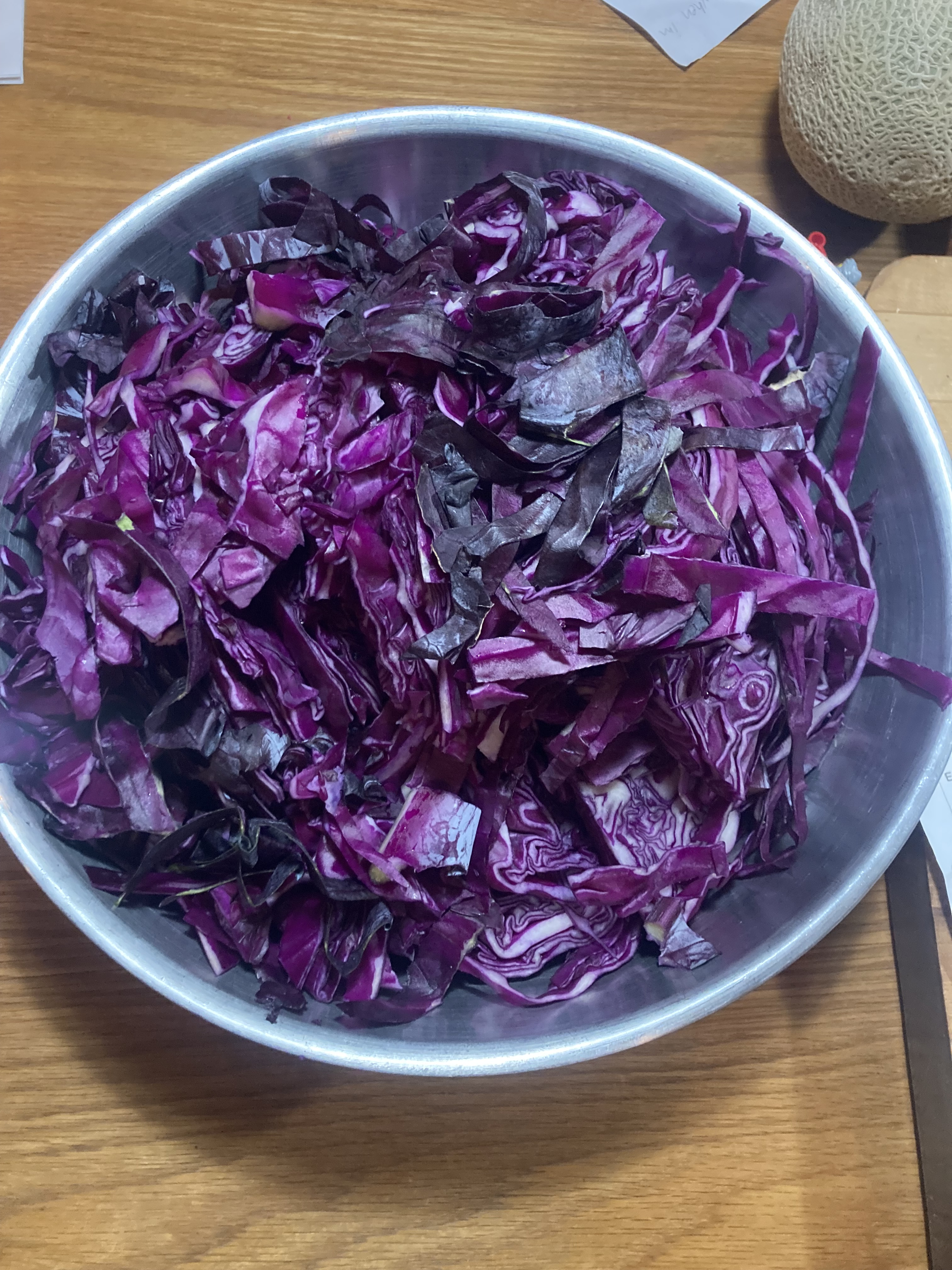
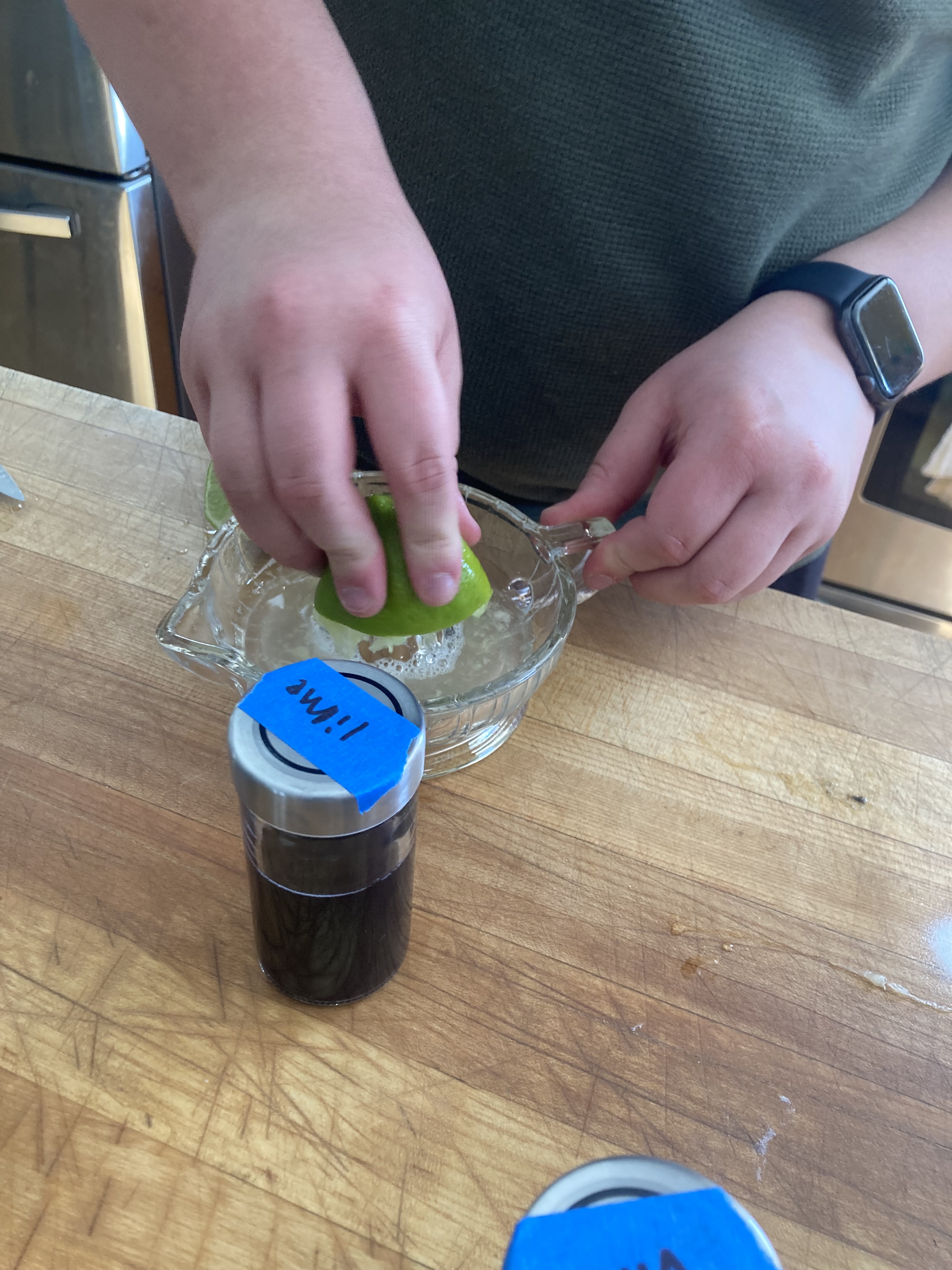
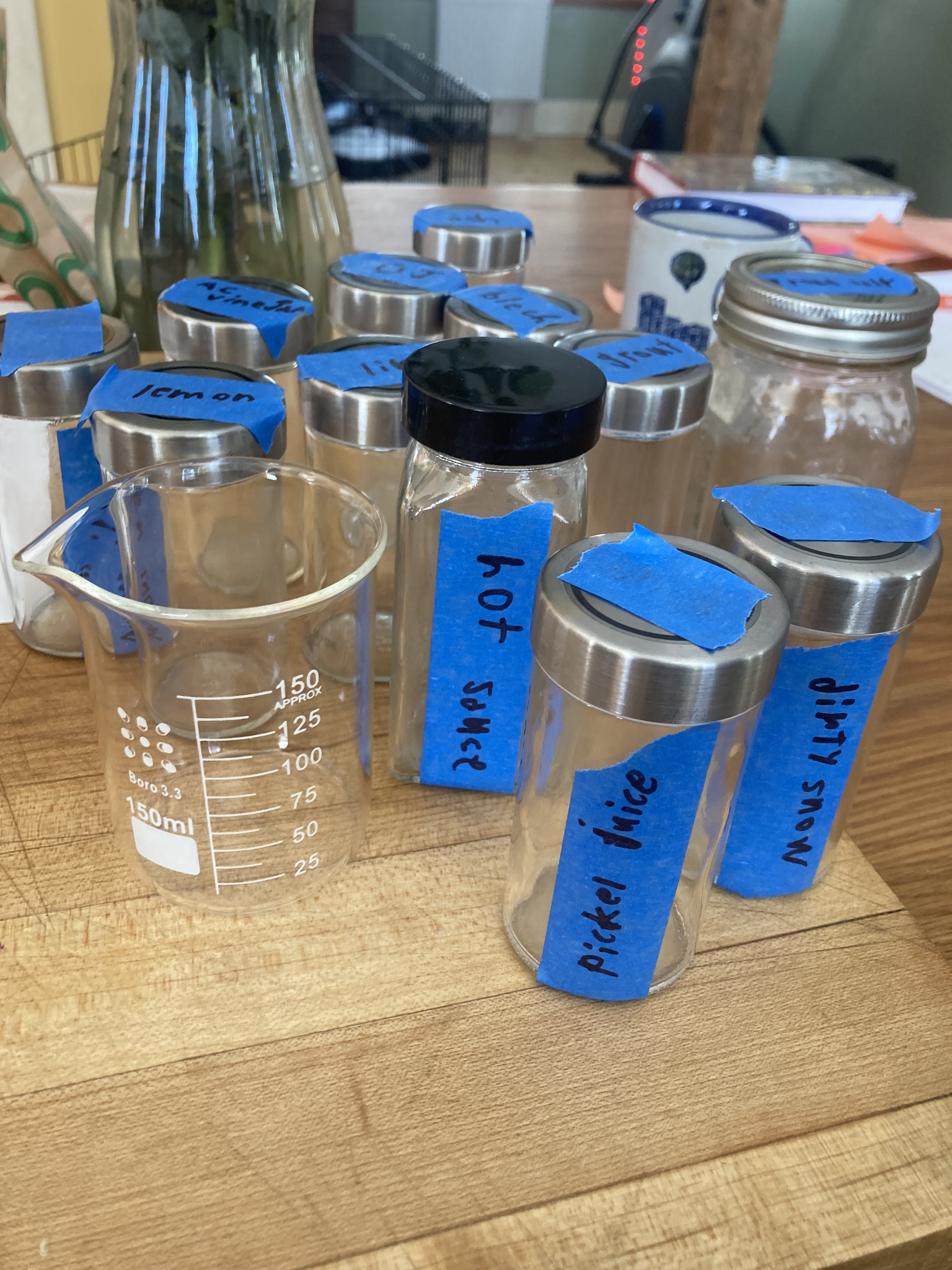
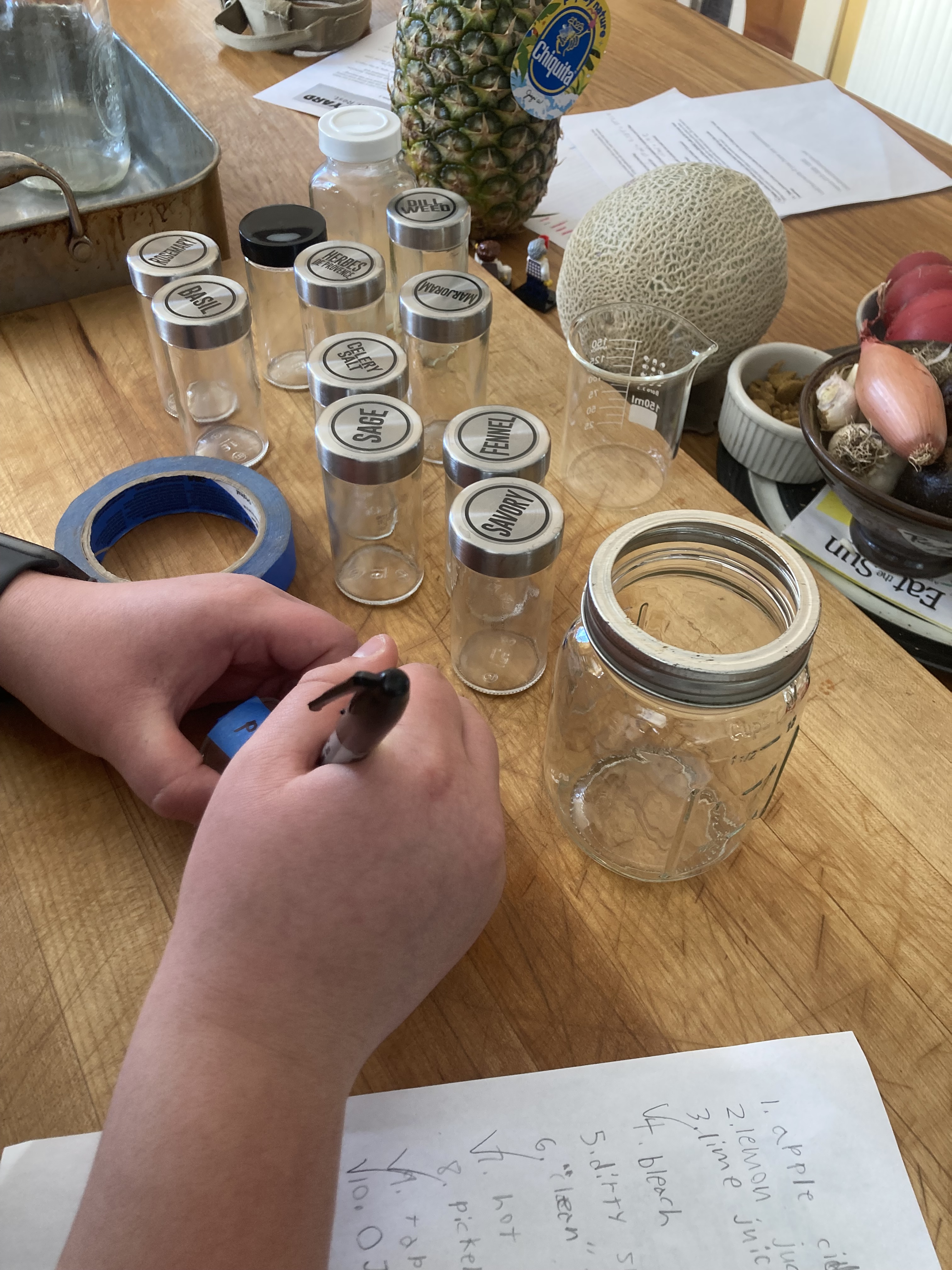
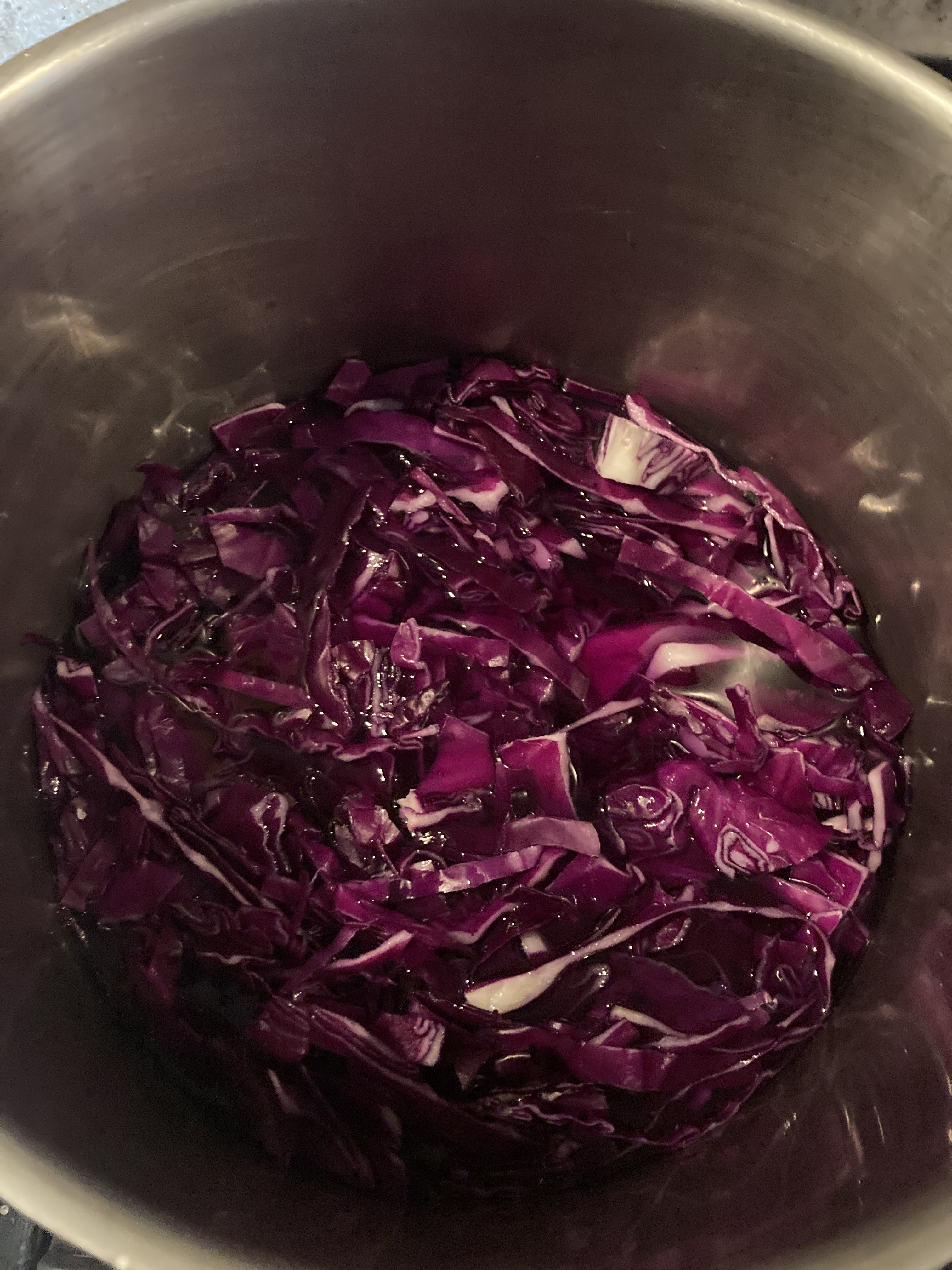
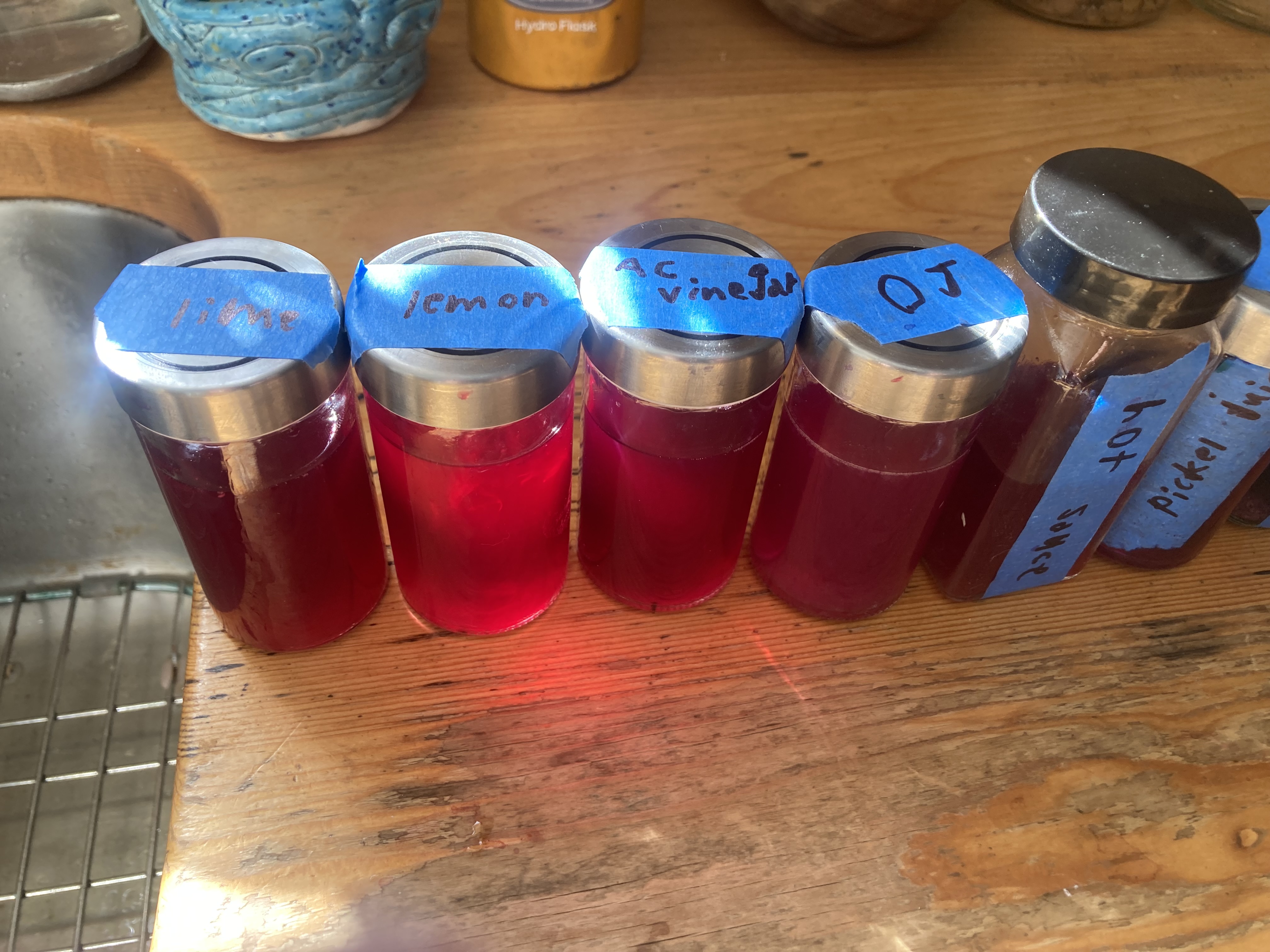
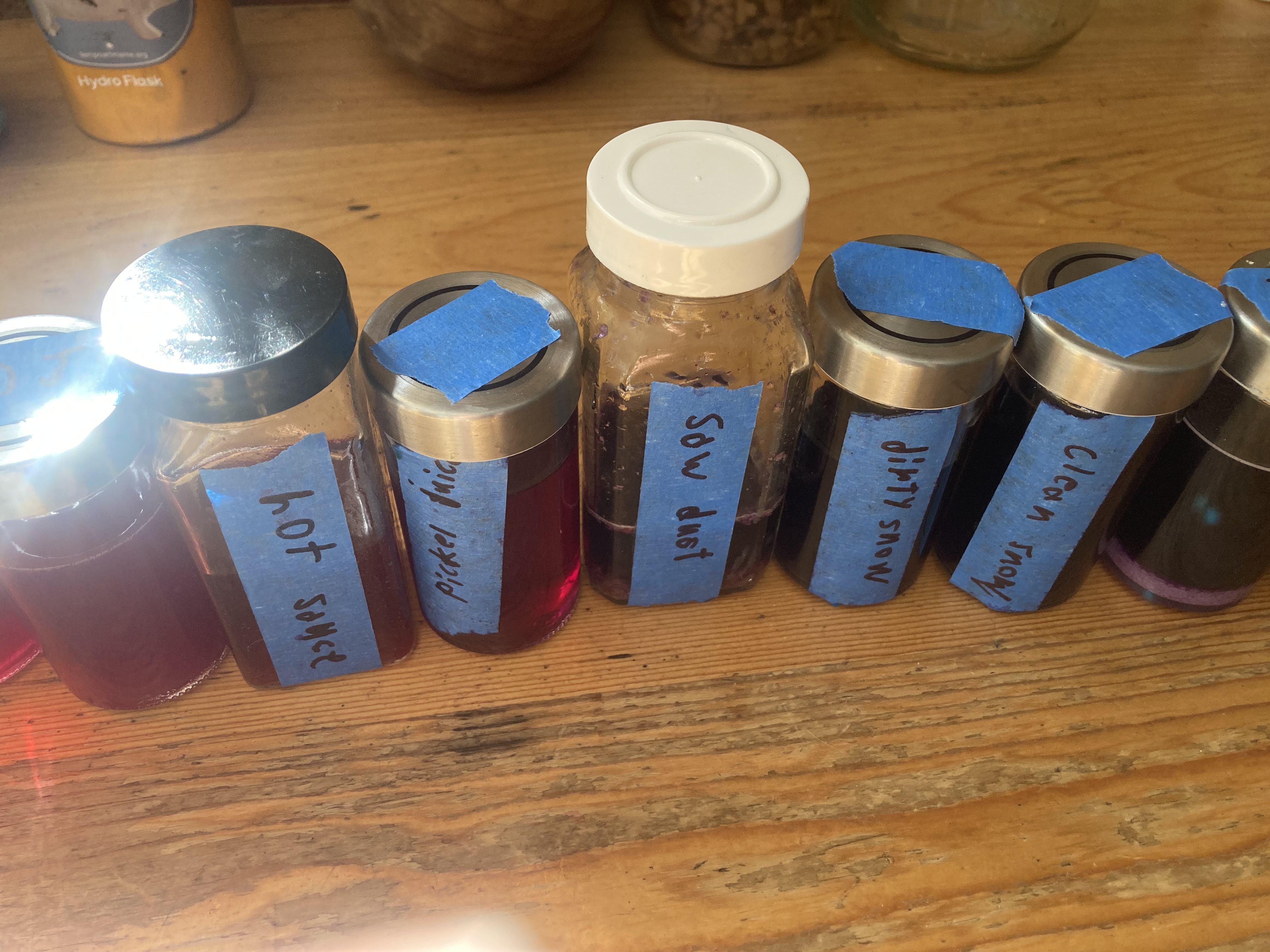
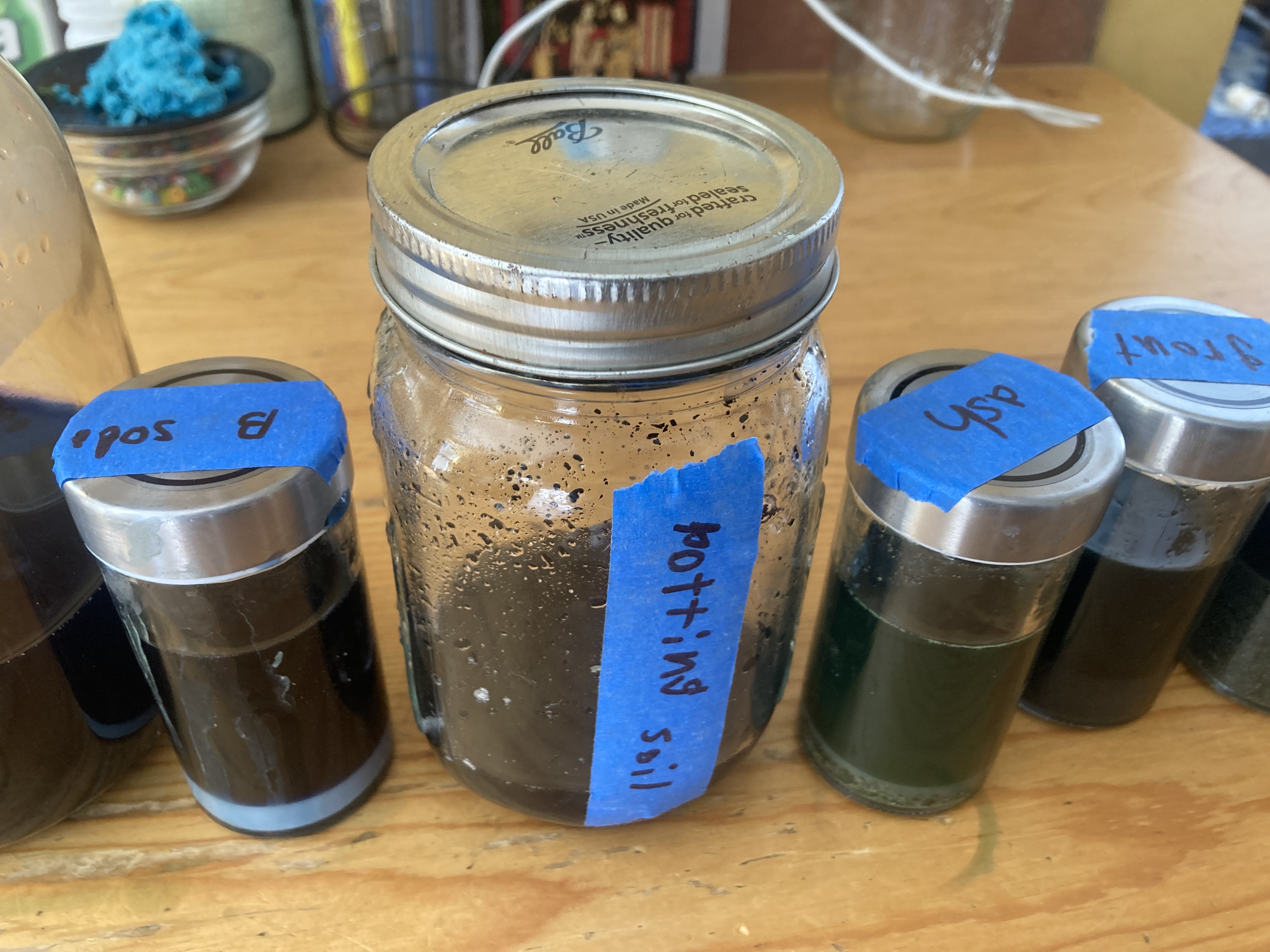
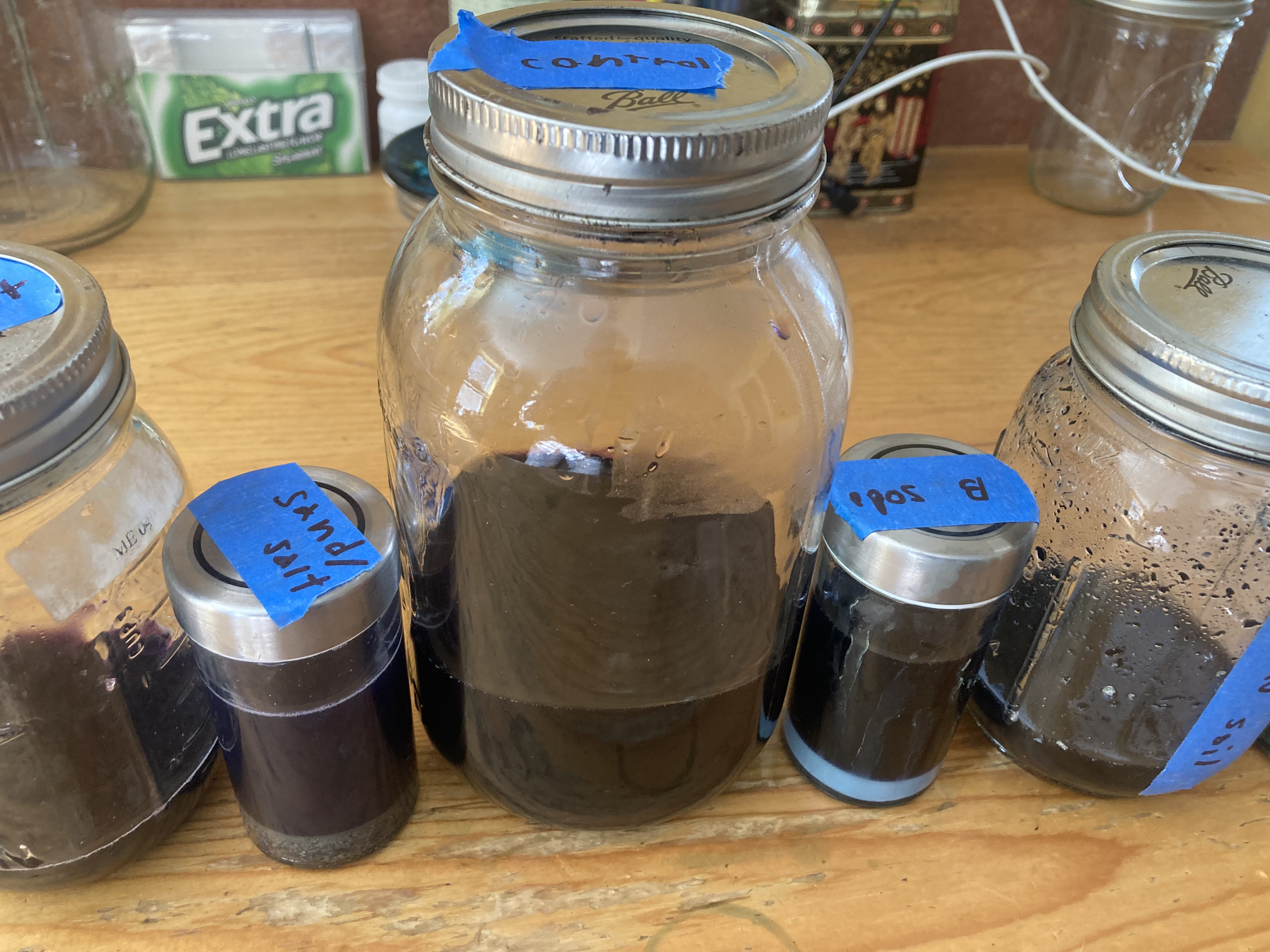
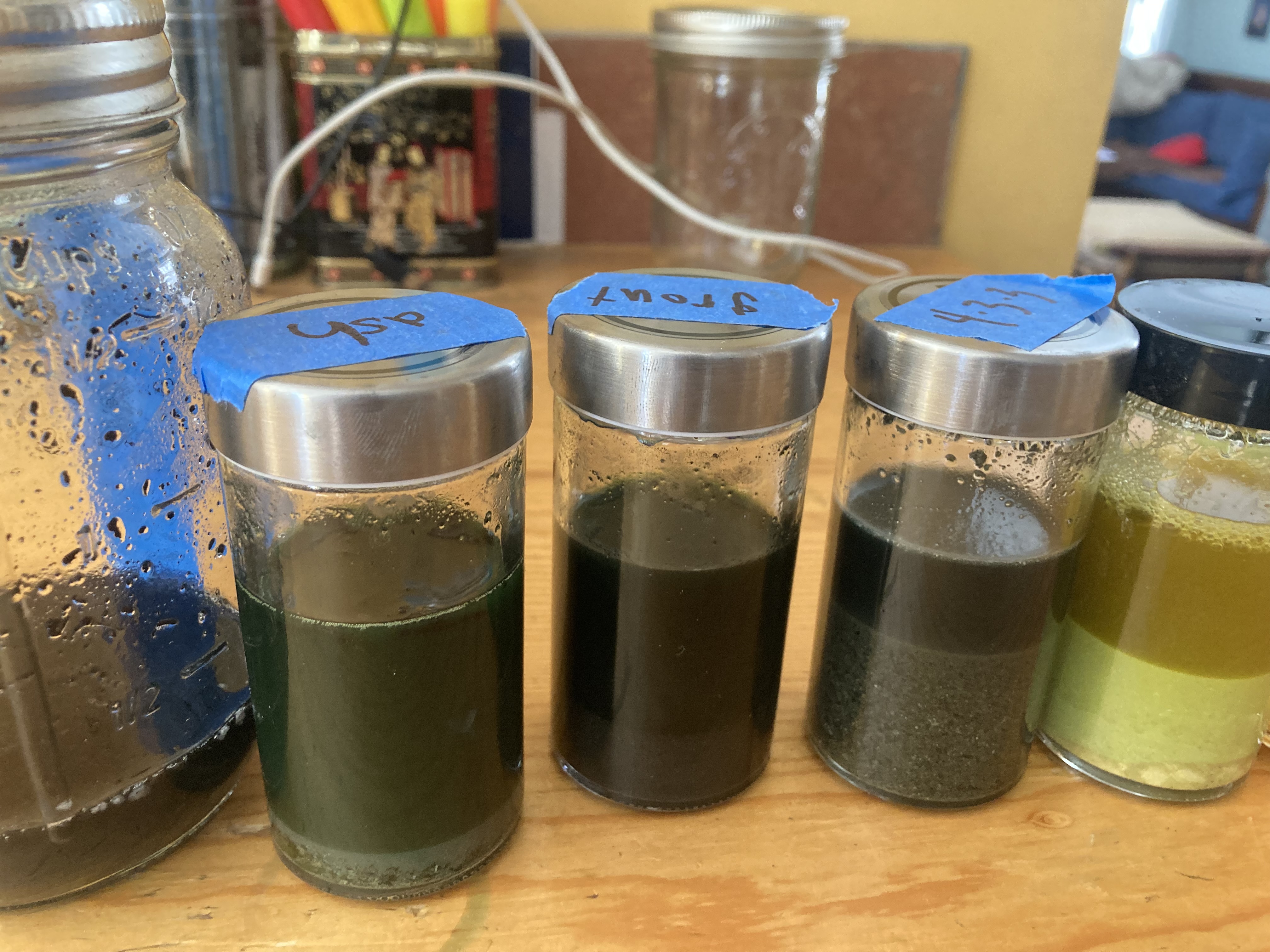
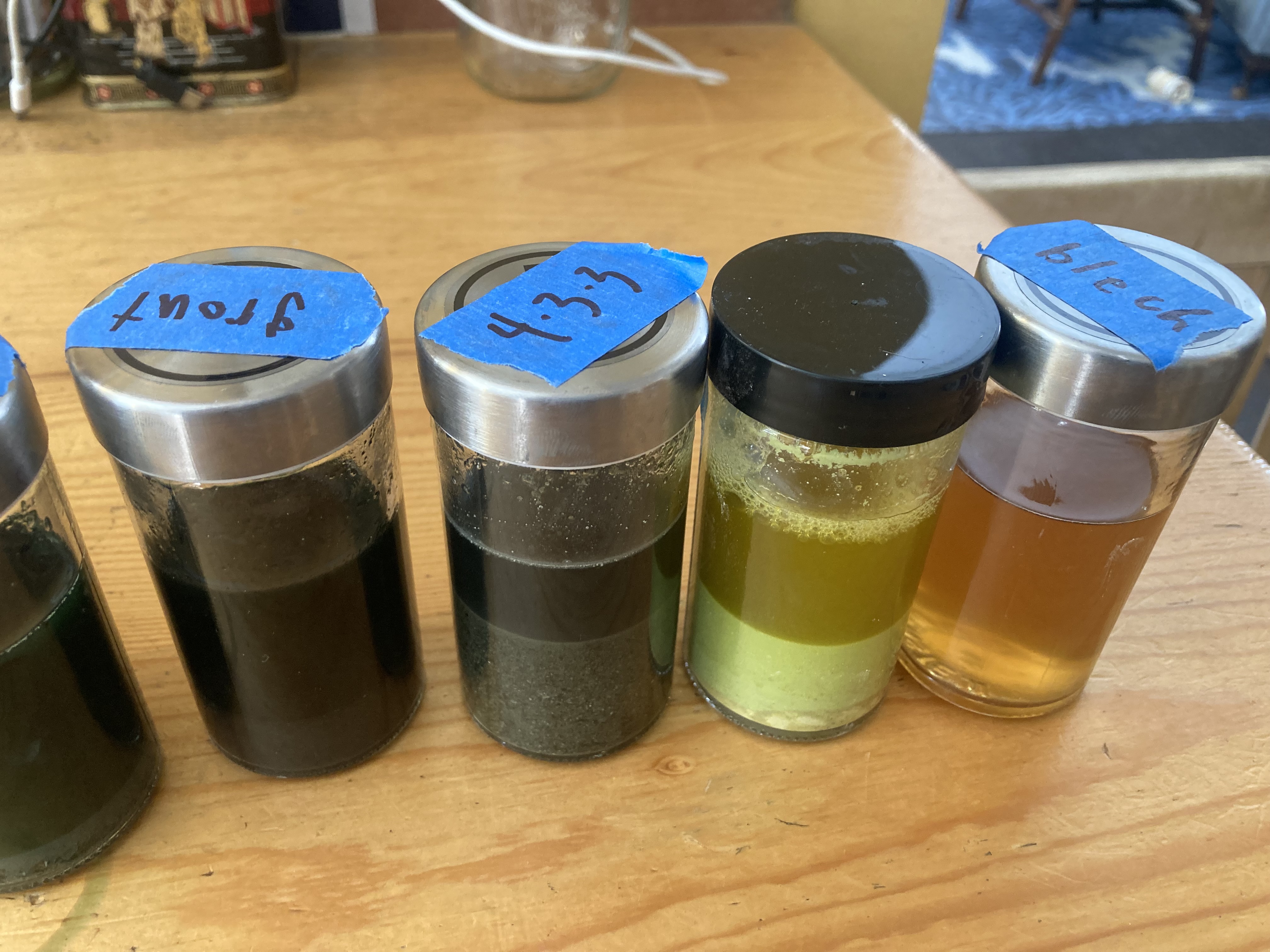
This week we rolled up our sleeves. Following the Soil Keeper’s lesson plan, we finely chopped 5.4 pounds of red cabbage and then boiled it in one gallon of neutral Ph water. M selected 20 household items, then put 15ml of each into a small jar with 50ml of the deep purple cabbage water. The materials included lime and lemon juice, apple cider vinegar, pickle juice and hot sauce; clean snow, dirty snow, calcium chloride salt, and a salt/sand blend; wood ash and sawdust, an organic 4-3-3 fertilizer, mortar and grout (from the tiling); bleach, baking soda and table salt.
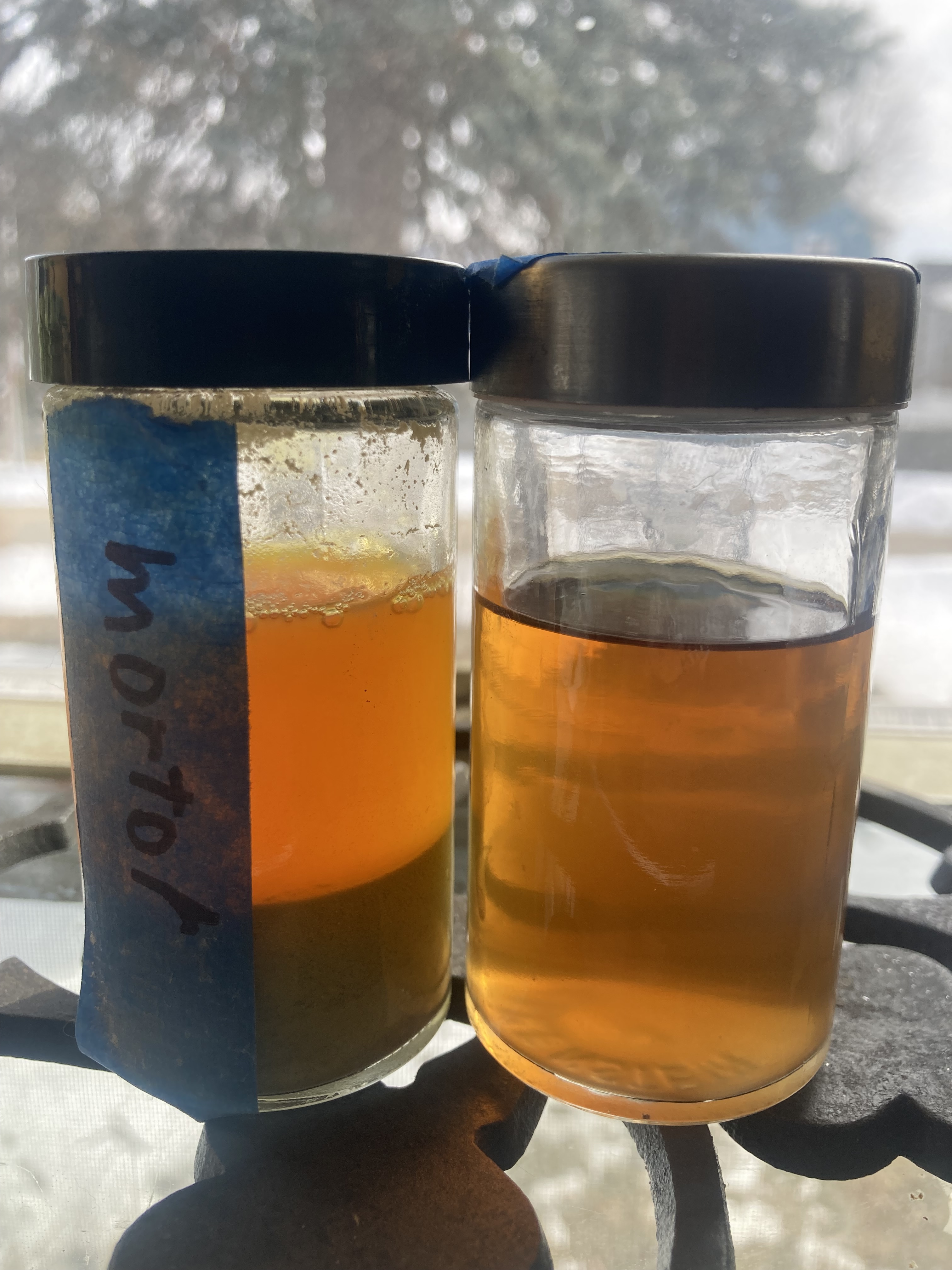
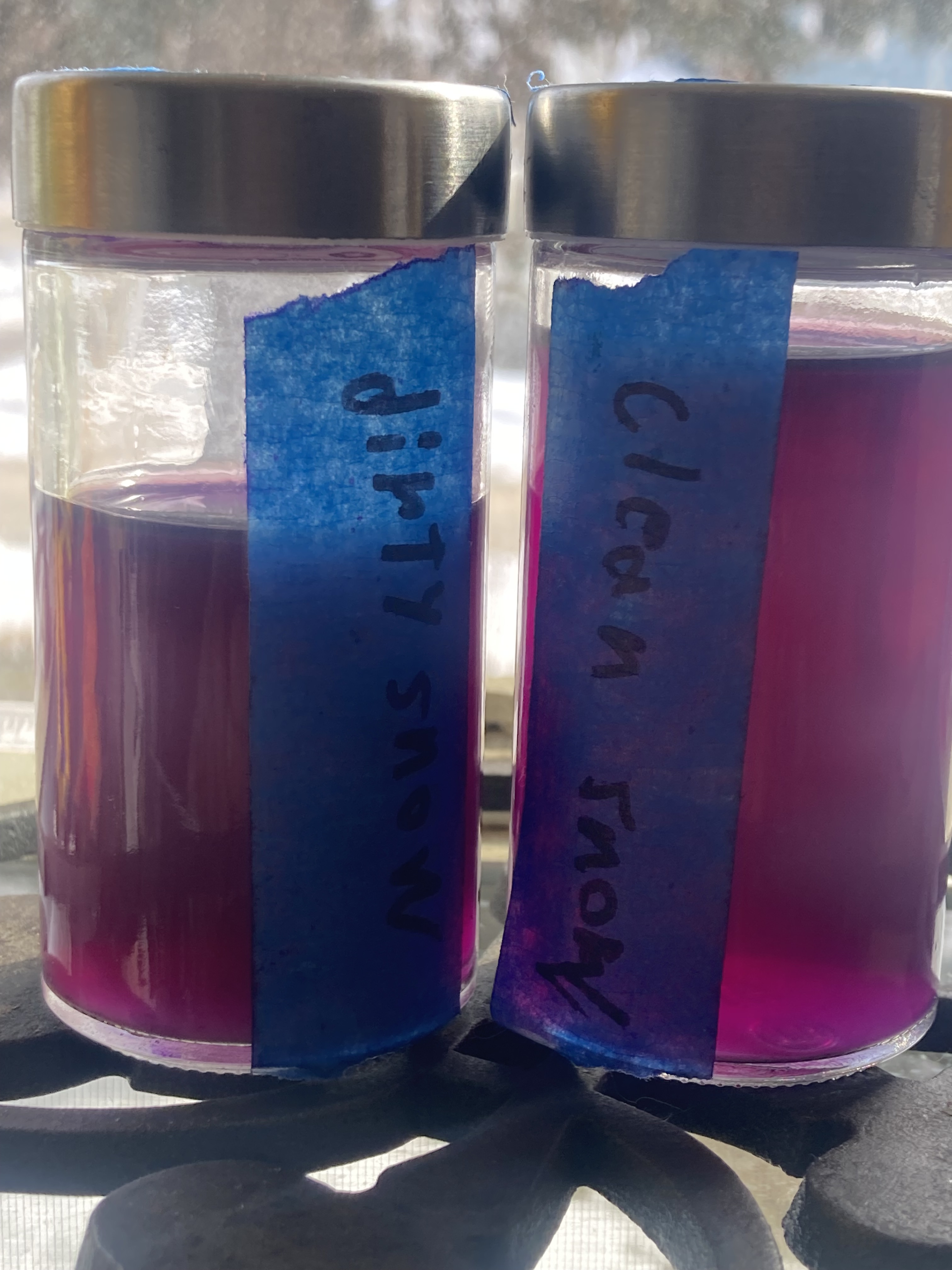
With the certainty that is science, before our very eyes the cabbage water changed color depending upon the acidity or alkalinity of the materials. The acids turned pink, while the alkaline moved to green or even yellow.
By day three, we made notes about the experiment; more precisely, my son wrote out sentences. As we began, he commented, “I remember Science class in 5th or 6th grade always taking notes. I find it hard to take notes.”
He began with simple sentences, but as his excitement grew, they became compound and complex: “Lime was the most acidic. The most alkaline was bleach. The “Midnight Black” grout went from black to light green, and slowly became a darker green in the layers; the grout mix fell to the bottom because it was heavier. The 4-3-3 mix was next to the mortar….”
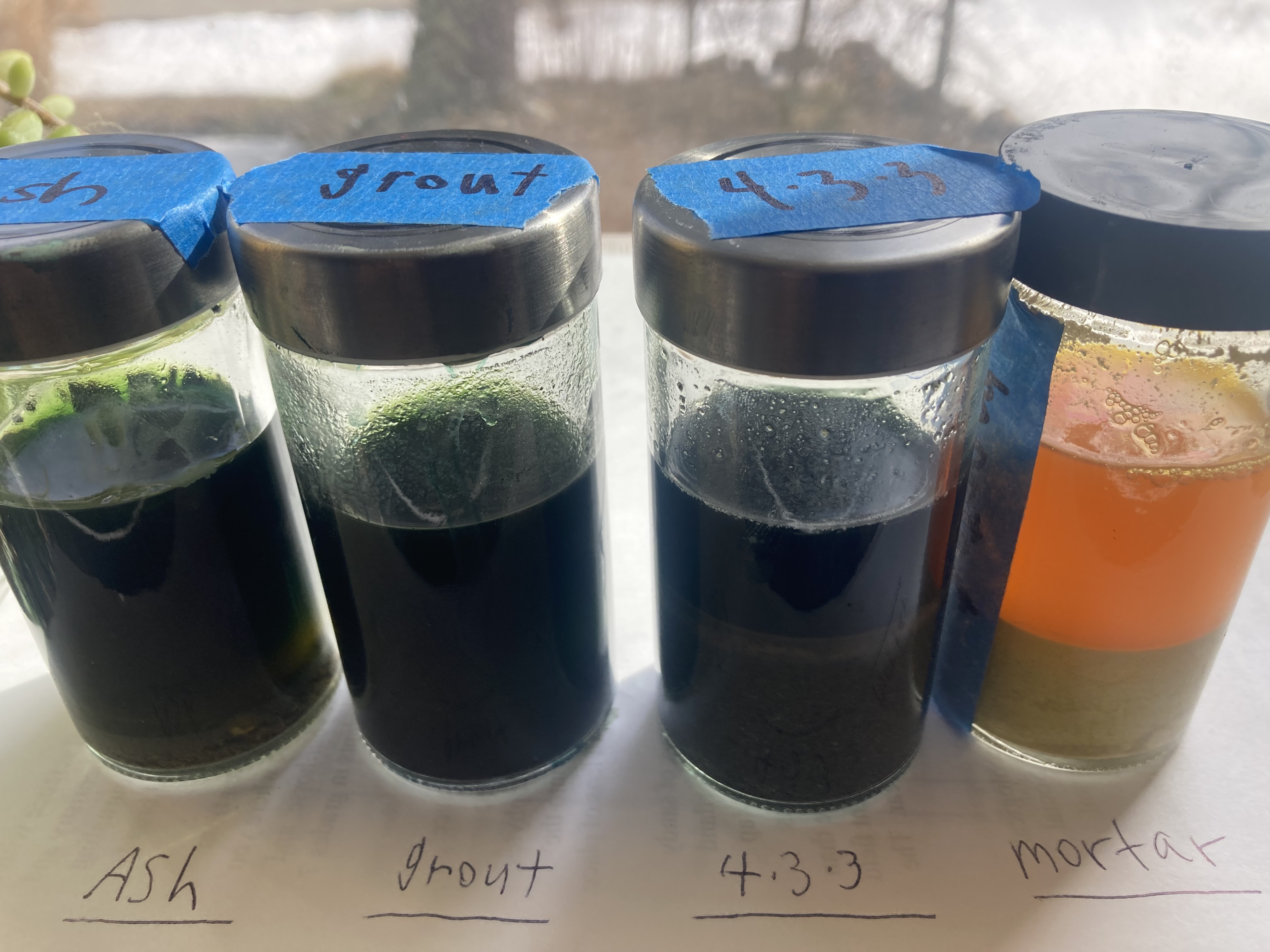
We talked and drilled deeper. While tiling, the Professor had mentioned that Lime was an ingredient in mortar. M researched and discovered (a) mortar contains lime from dolomitic limestone, (b) lime comes from rocks that contain 80% or more of calcium or magnesium carbonate, (c) Espoma Bio-Tone 4-3-3 contains calcium (at 5%) and magnesium (at 1%), and (d) he concluded, “Therefore, it makes sense that 4-3-3 mix and mortar are next to each other on my Ph scale because they both contain the main ingredients in lime.”
Excitedly, he reasoned, “What lime is doing to the soil is technically the same thing as calcium supplements do to humans.” He paused, then said, “Wait, it is not the same thing…” and so he corrected his sentence to [emphasis added], “What lime is doing to the soil is related to what calcium supplements do to humans. Calcium, to humans, supplements human bones. Calcium, in soil, supplements the cell walls.”
He then asked, “what is dirt made of?” Soil, he learned, contains minerals 45%, air 25%, water 25% and organic matter is 5%, while its texture is the ratio of sand, silt and clay particles.
He exclaimed, “I have never been so invested in a science lesson! This is fun…this is genuinely fun!!!”
About the circle of life, he discovered, “nutrient transfer: plants take up essential elements from the soil and convert them to organic matter consumed by humans.” Did someone say, “know your food, know your farmer” ?
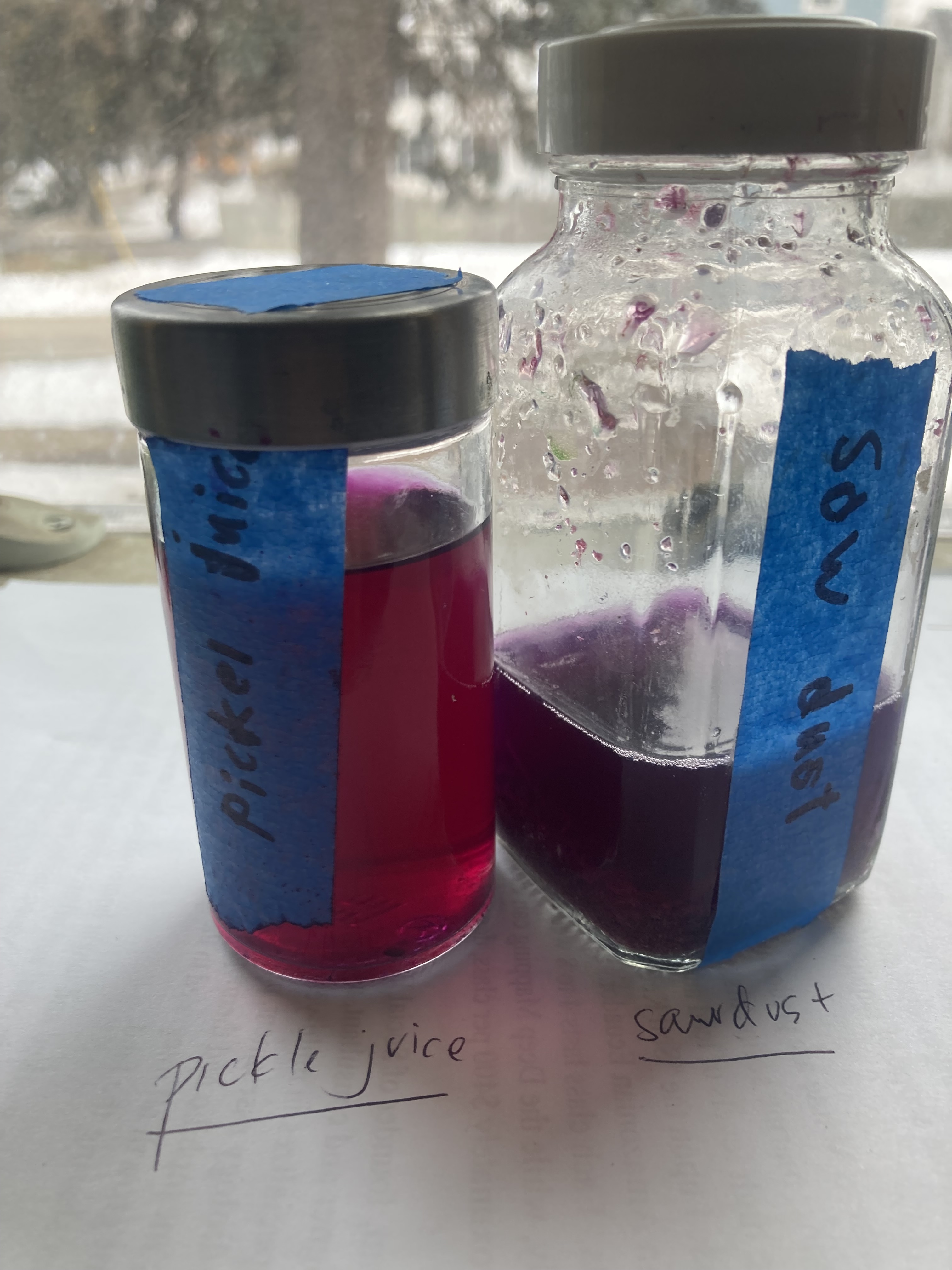
Having only just begun, he pondered why pickle juice and sawdust were beside each other on his Ph scale. His research lead to this conclusion: “The reason pickle juice and sawdust were next to each other was because pine and spruce are softwoods, and more acidic than hardwoods. We got the sawdust from the table saw, and have been cutting pine and spruce for the tiling work. That makes sense.”
“Just two more questions?” he pleaded. He chased down that softwoods are more acidic than hardwoods due to acidic resins, while oak is a hardwood that can be more acidic. Pickle juice is highly acidic, typically 2.5 to 3.9. In contrast, sawdust from pine, spruce, fir is neutral to slightly acidic; pine = 4.1 to 5.3, spruce = 4.7 to 5.8, fir = 5.2 to 5.9. “So, pine is more acidic while fir is more neutral,” he concluded.
“What if we try this again in the summer? We can test the soil when the plants are growing!”
And so our Red Cabbage Ph experiment came to an end. His bristling excitement a testimony to what happens when a student sits beside a Mother Tree, pondering soil and soul.
_______________________
NB: The astute reader may have noticed that here at an Art Farm we use no proper nouns. That is intentional, to underscore the mythopoetic, more than the rational. For example, whatever Ultimate Truth may be, it has more than 1,000 names, which is to say proper nouns, none of which capture the grandeur or sublimity of that whole, many of which lead only to wars.
Humans give names to bring order and cognitive structure to a complex world; naming divides subject from object, while “being” remains intransitive, a verb which takes no object. “Divide and conquer” is a tool of would-be authoritarians and Emperors which leads us to fight to the bottom. In these challenging times, then, let us be together, undivided, to rise to new heights and an expansion of consciousness. And to that end, my pronoun is “We.”
__________________________
Misery
Posted: February 27, 2026 Filed under: Child Centered Activities, Farming off the Farm, What is an Art Farm 1 Comment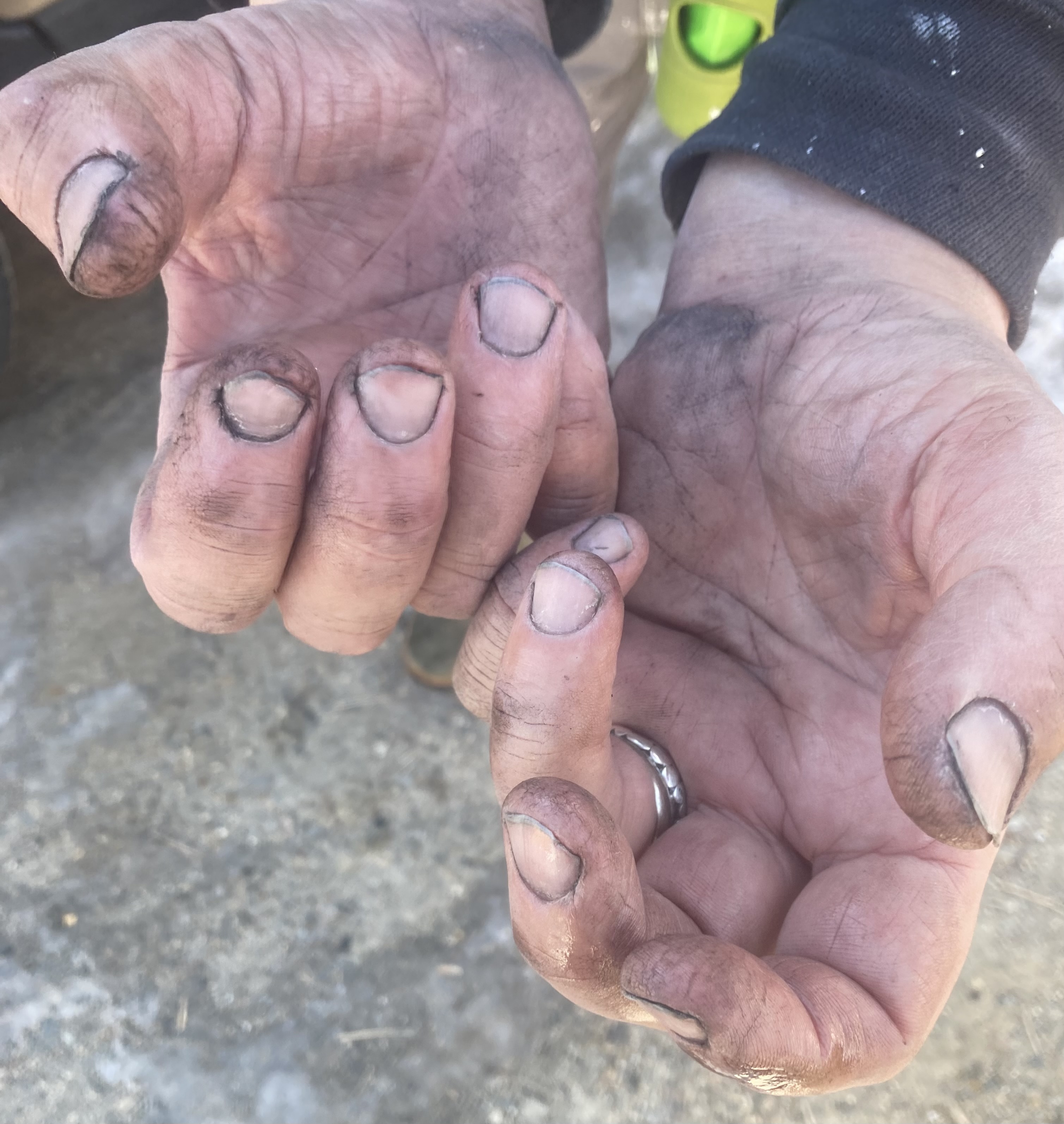
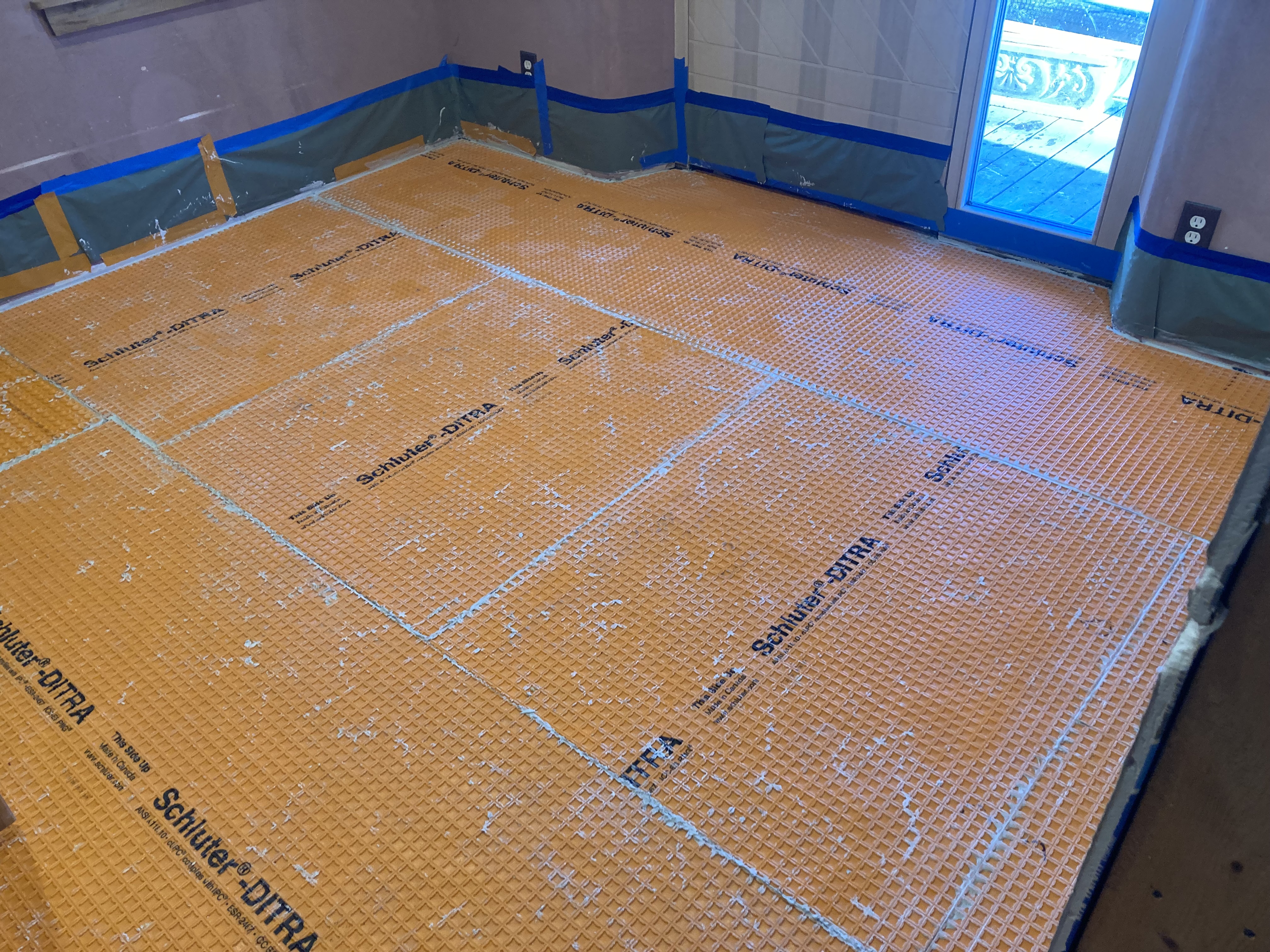
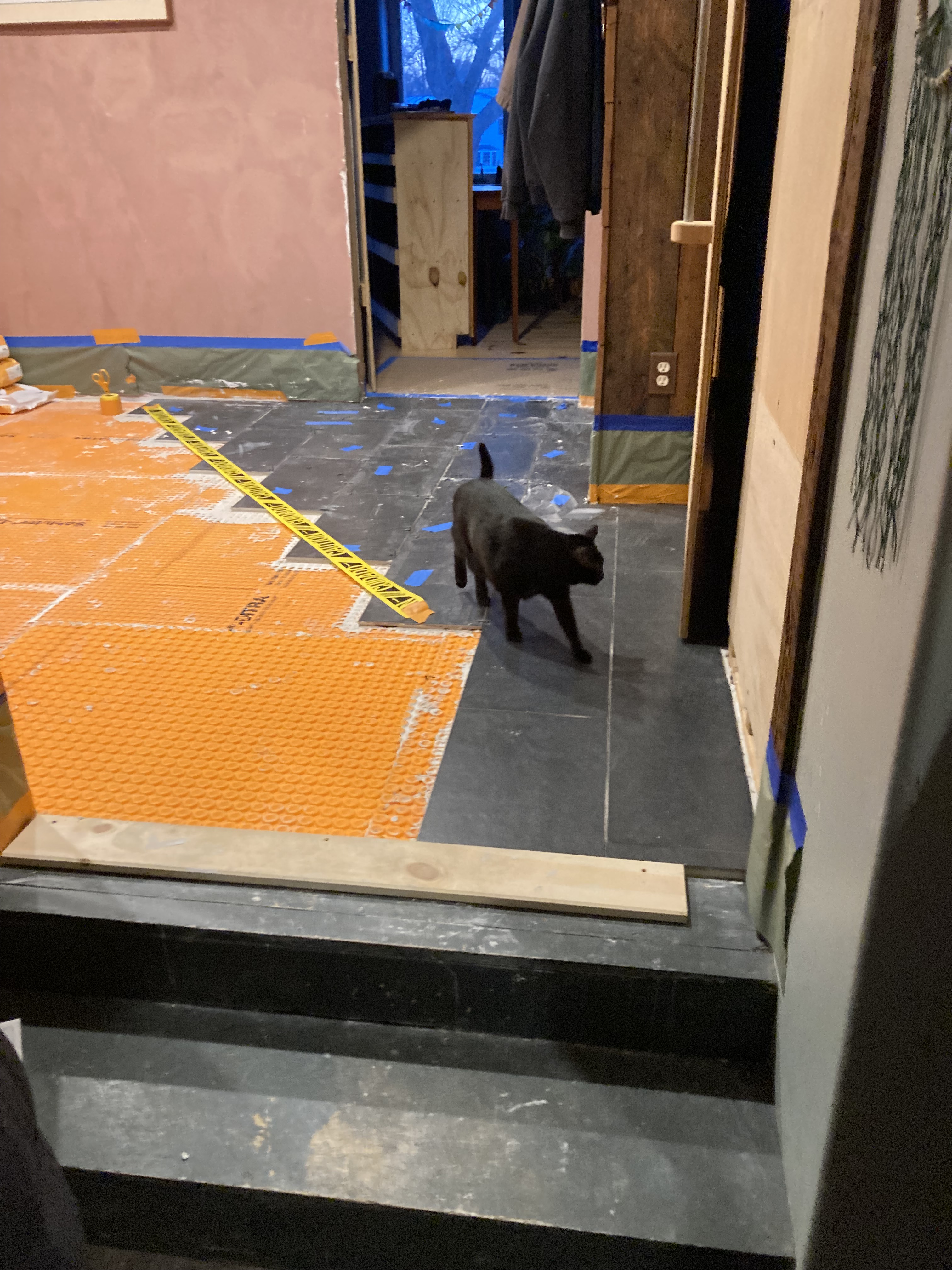
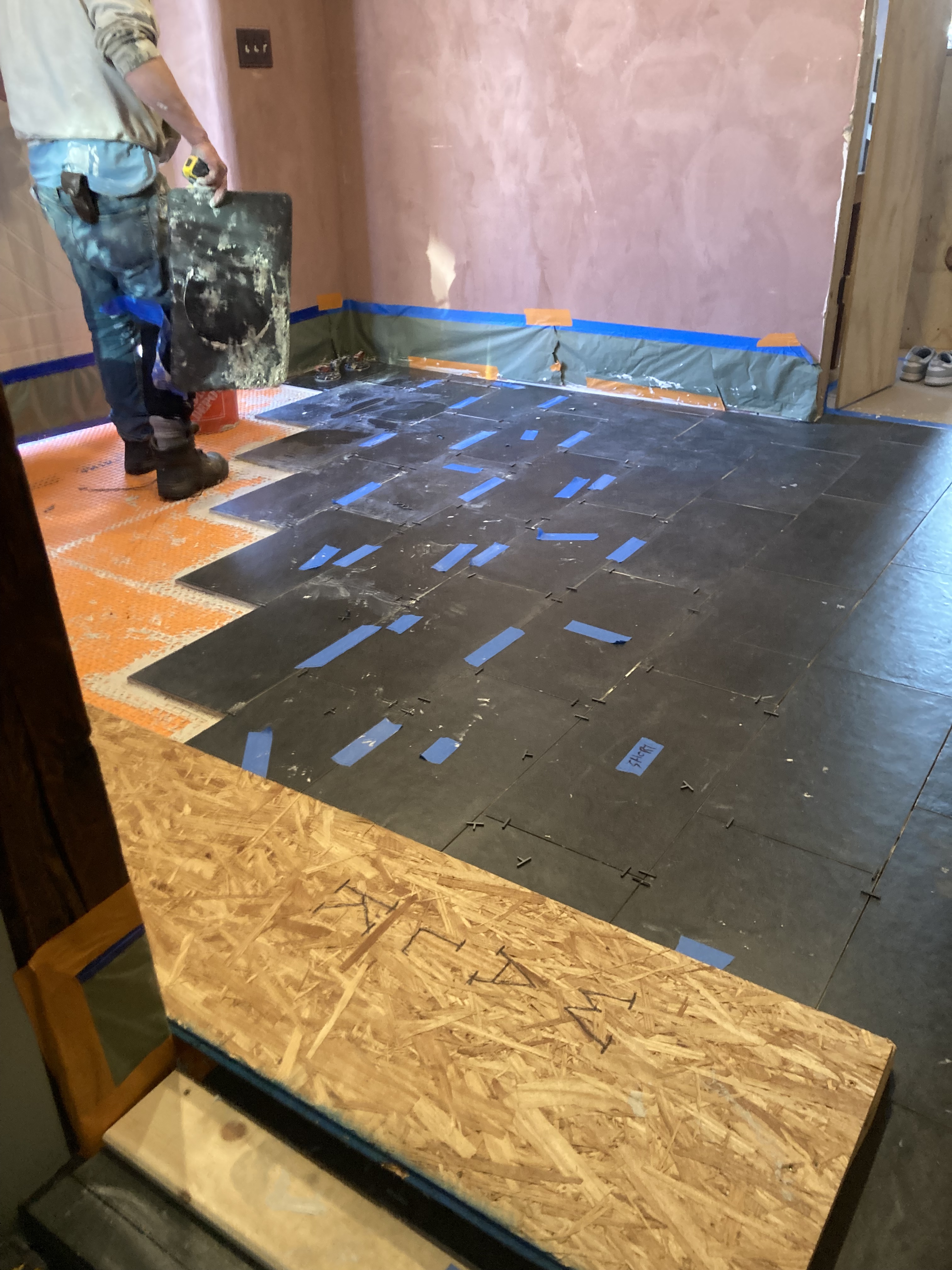
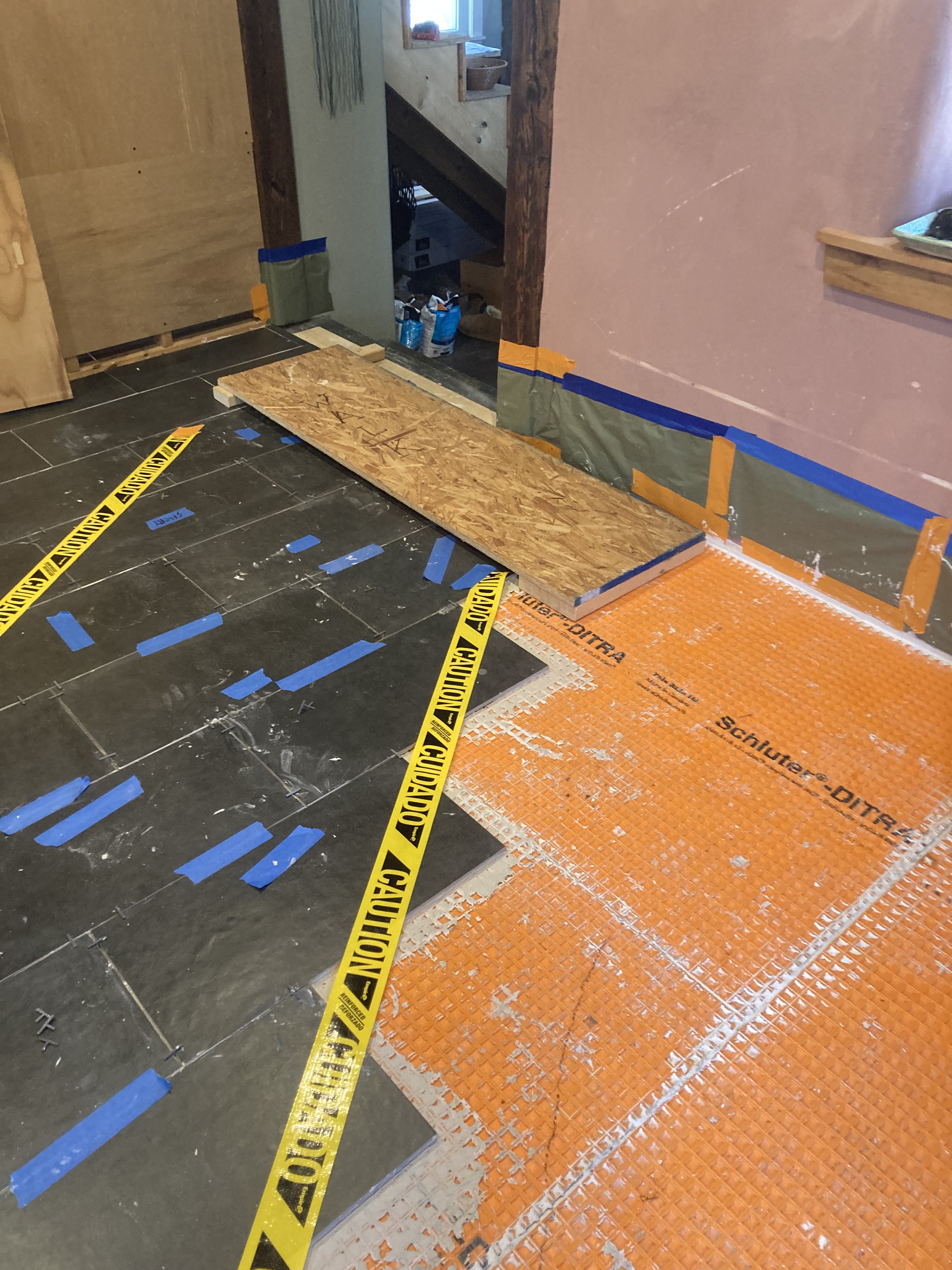
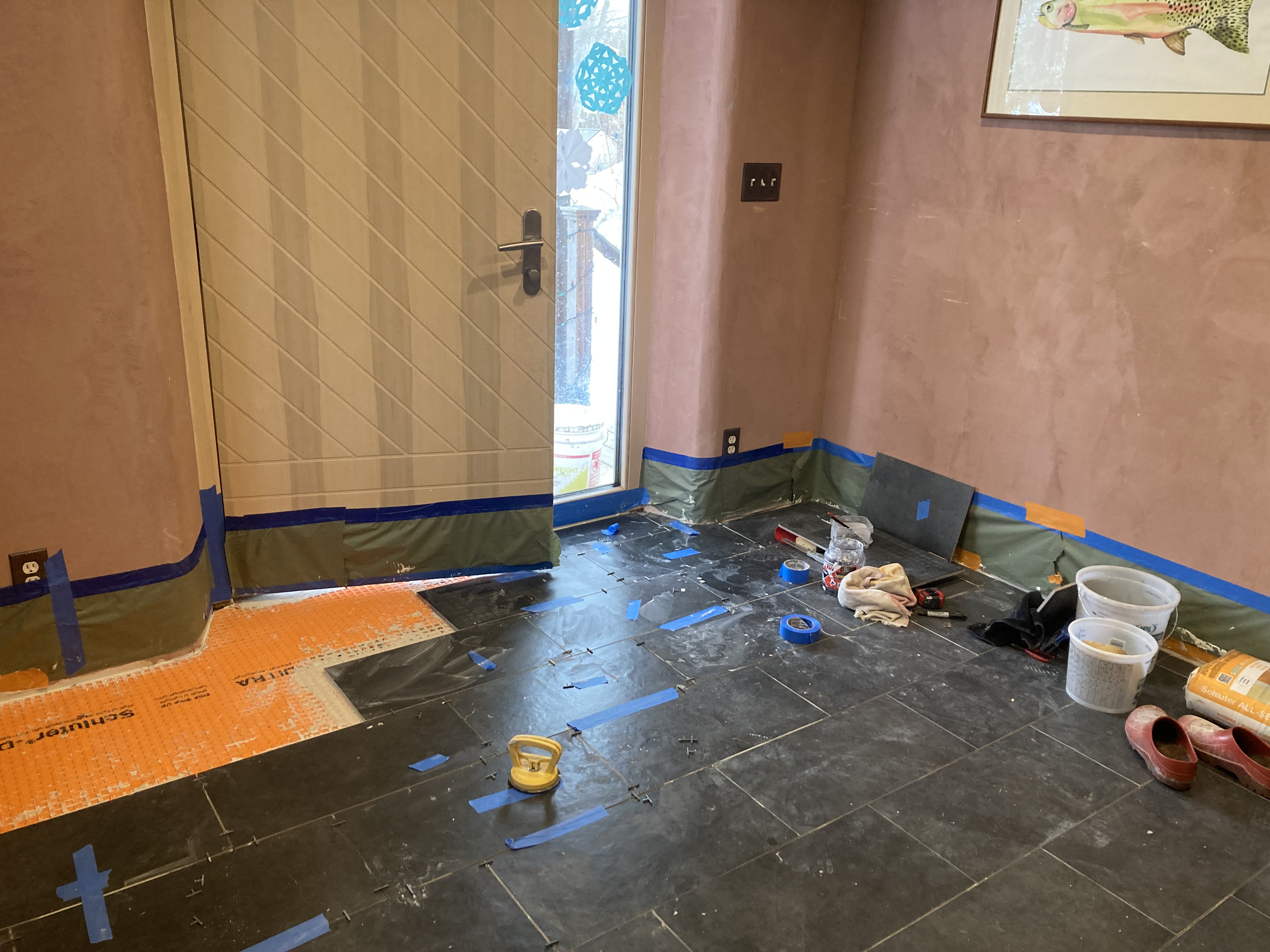
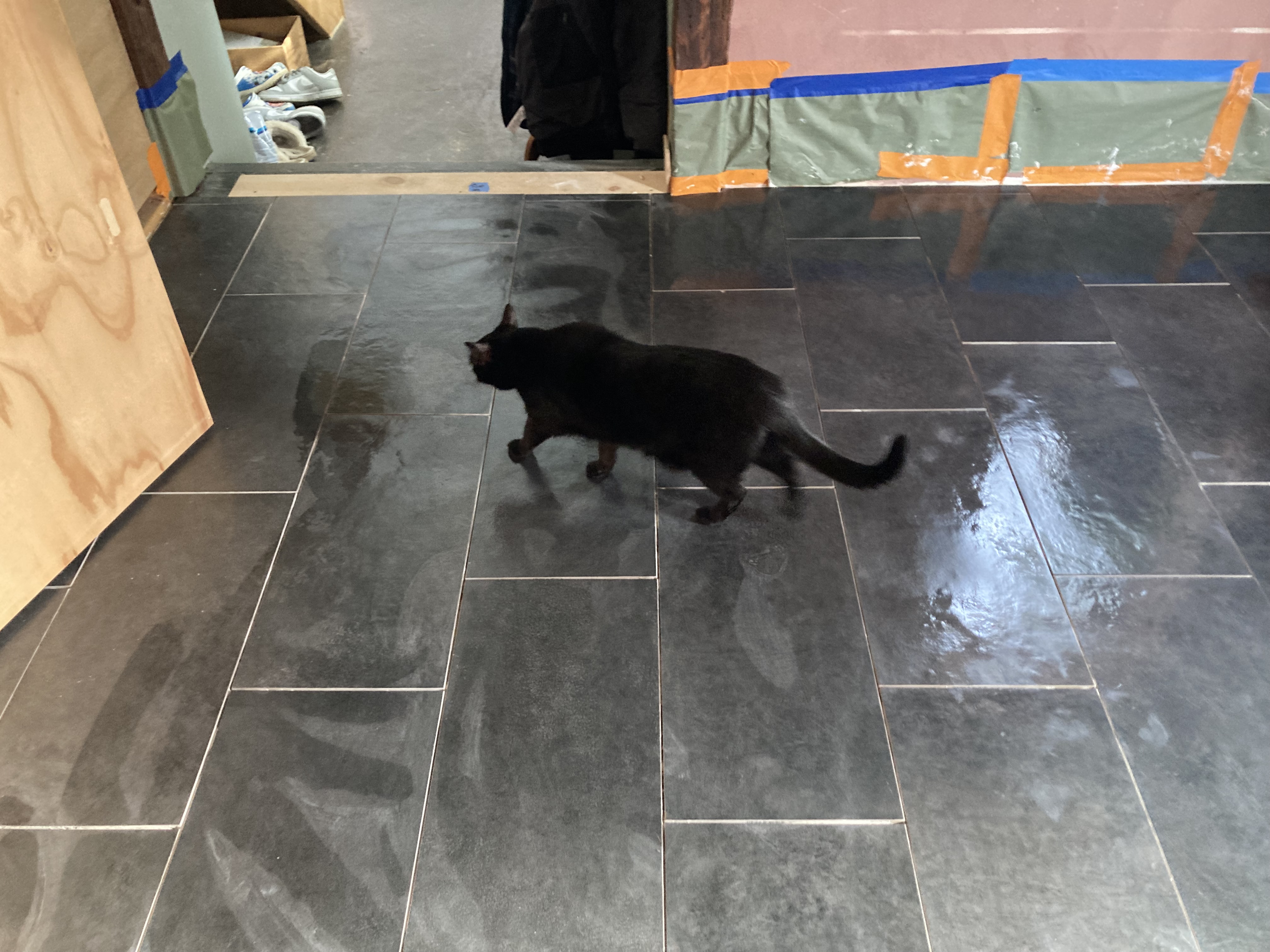
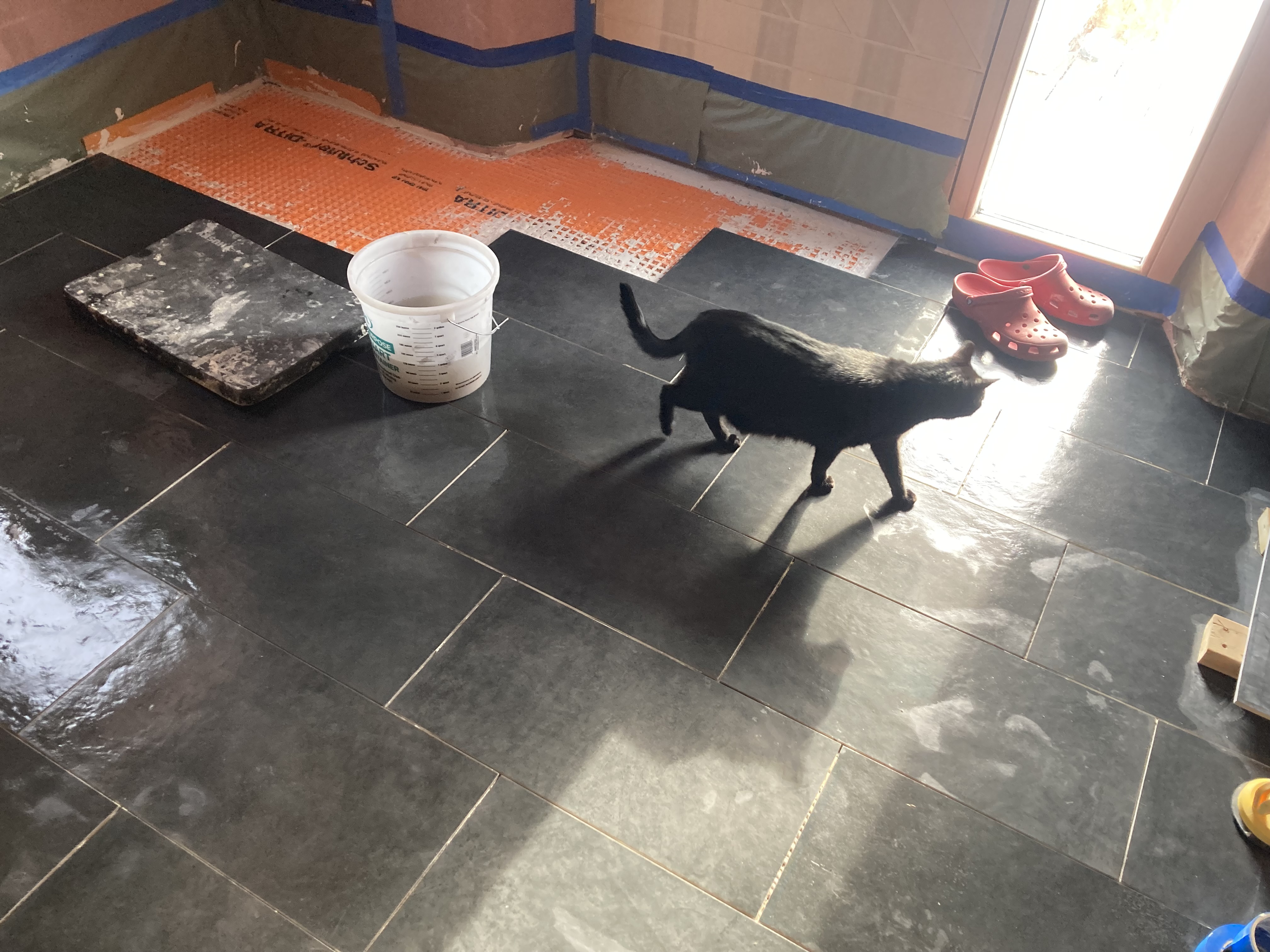
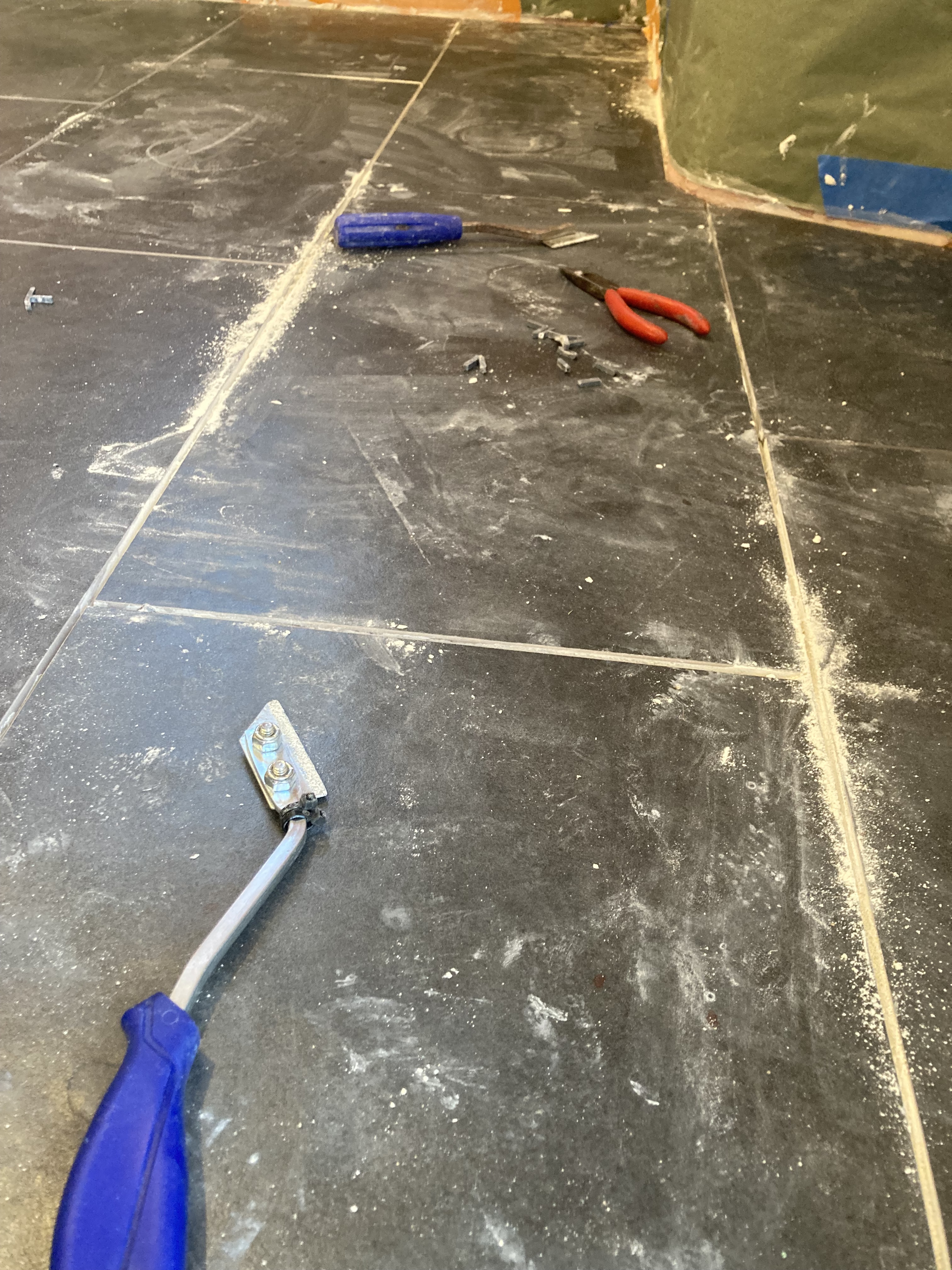
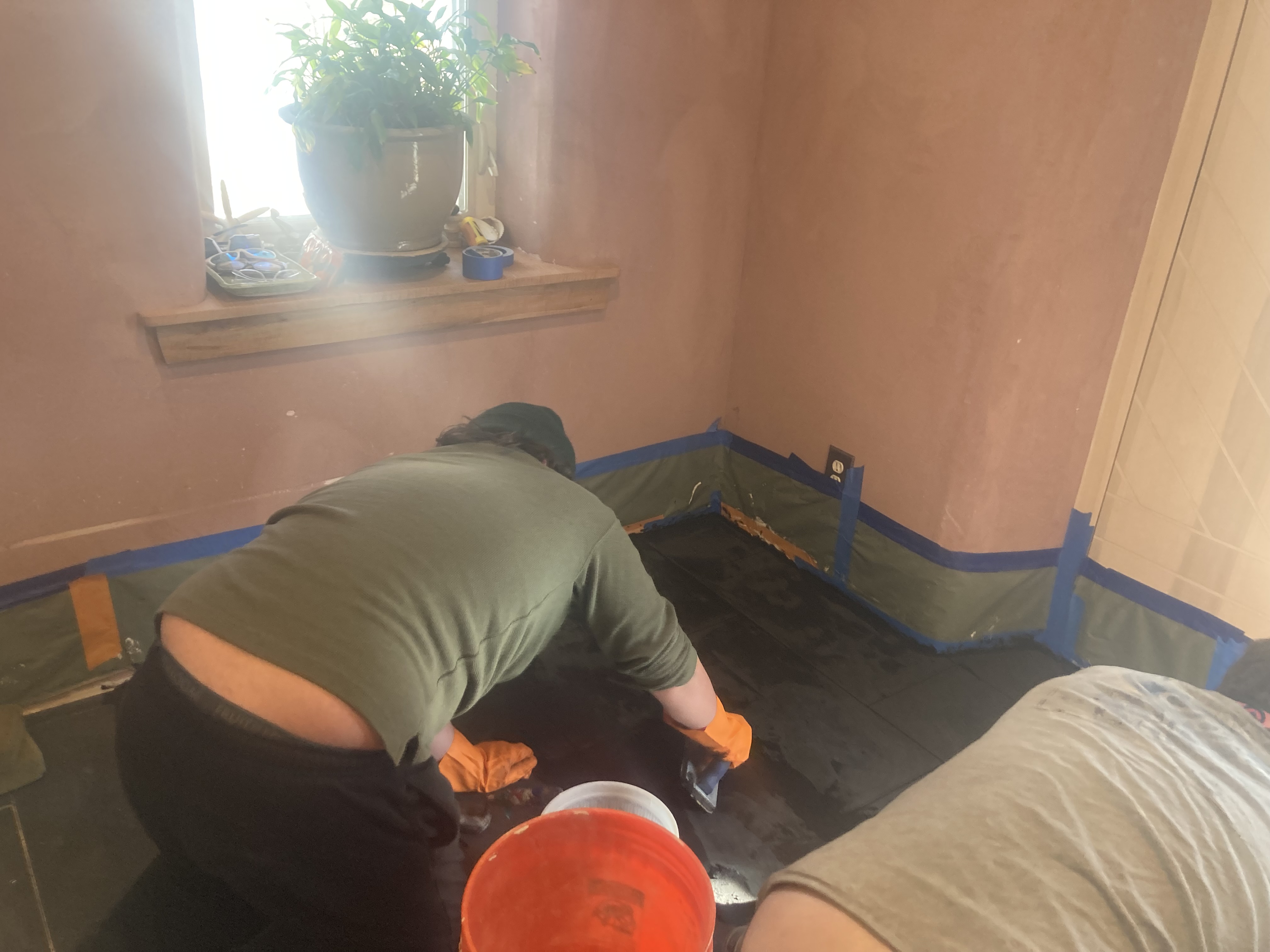
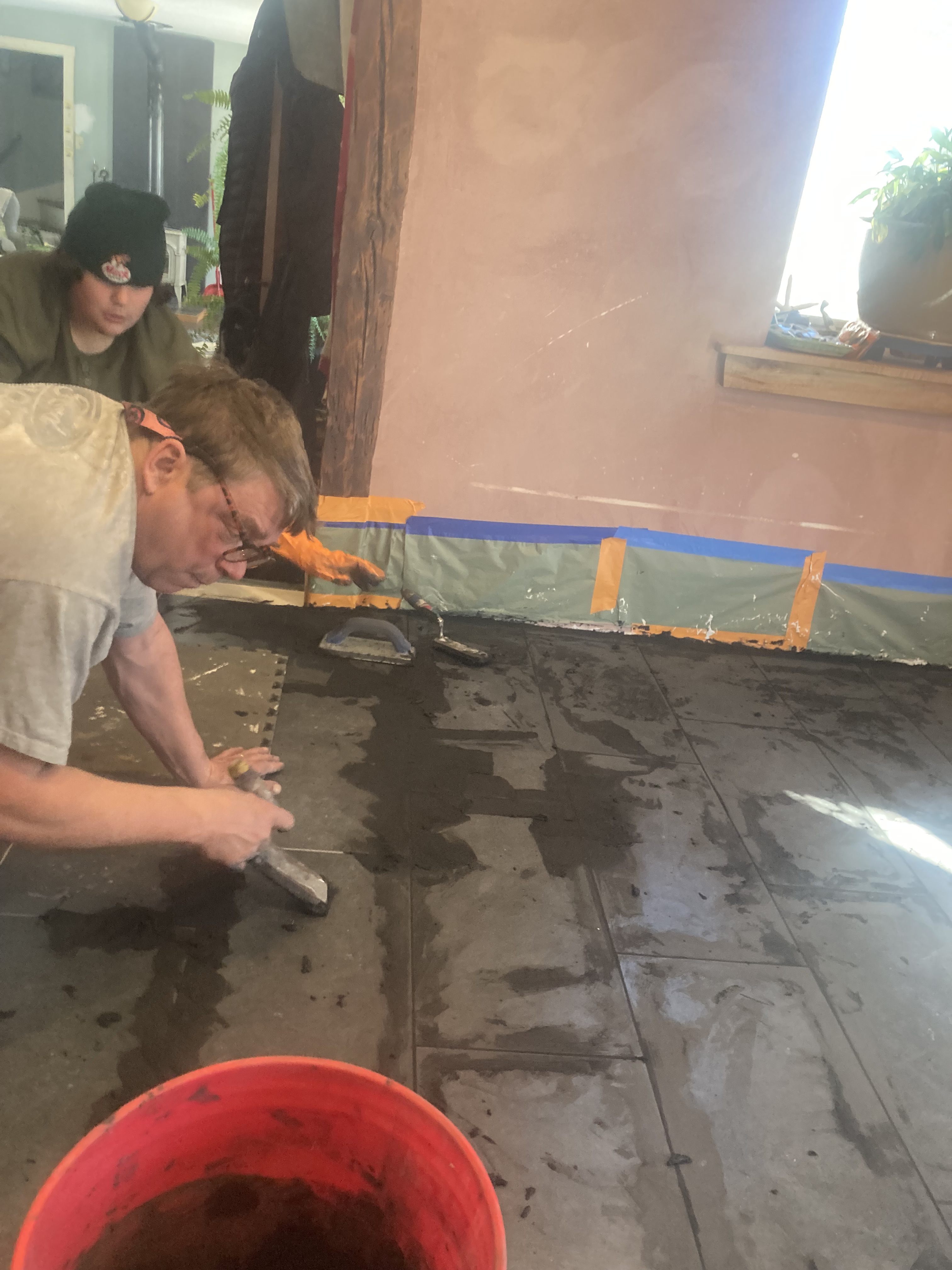
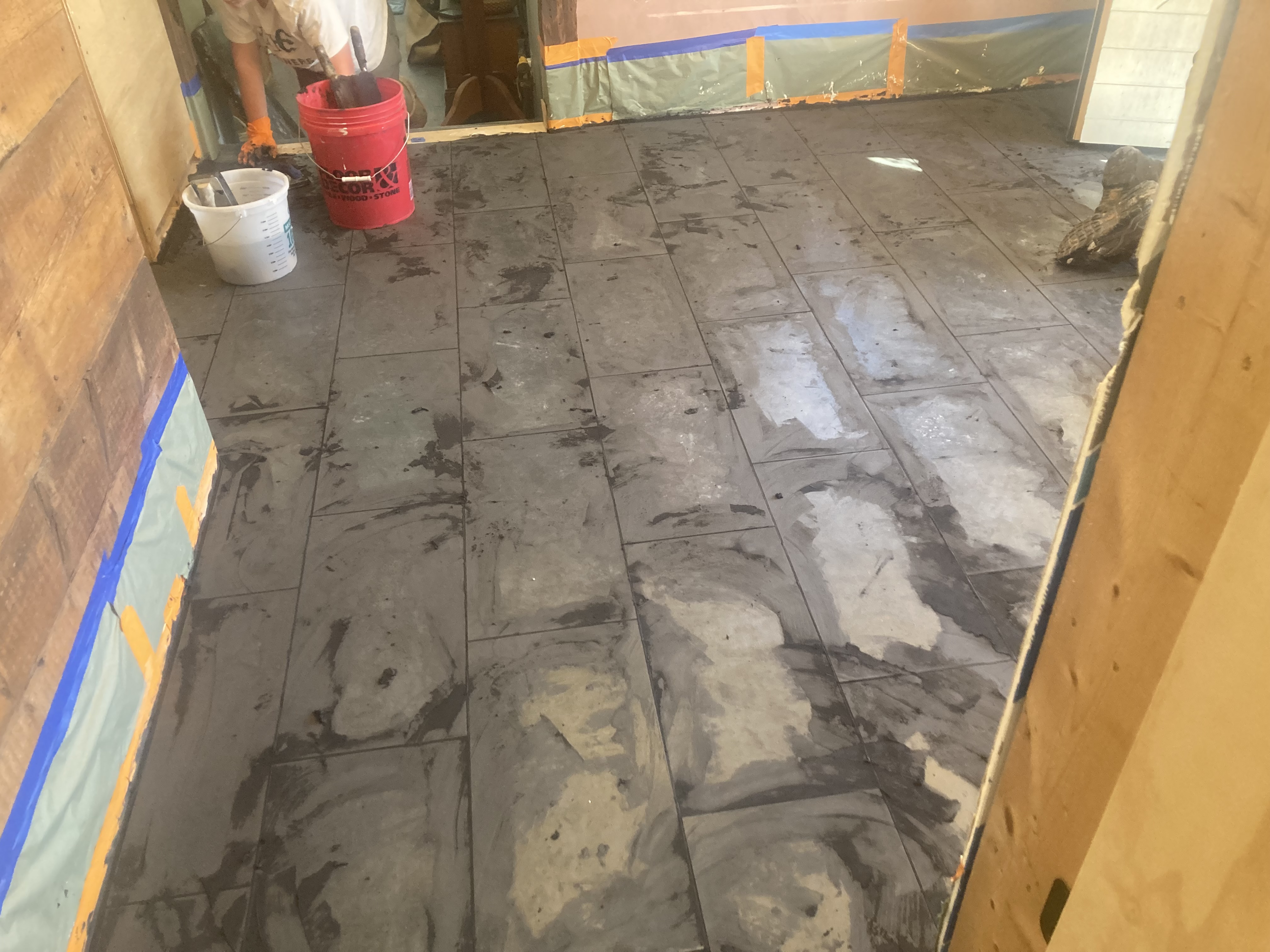
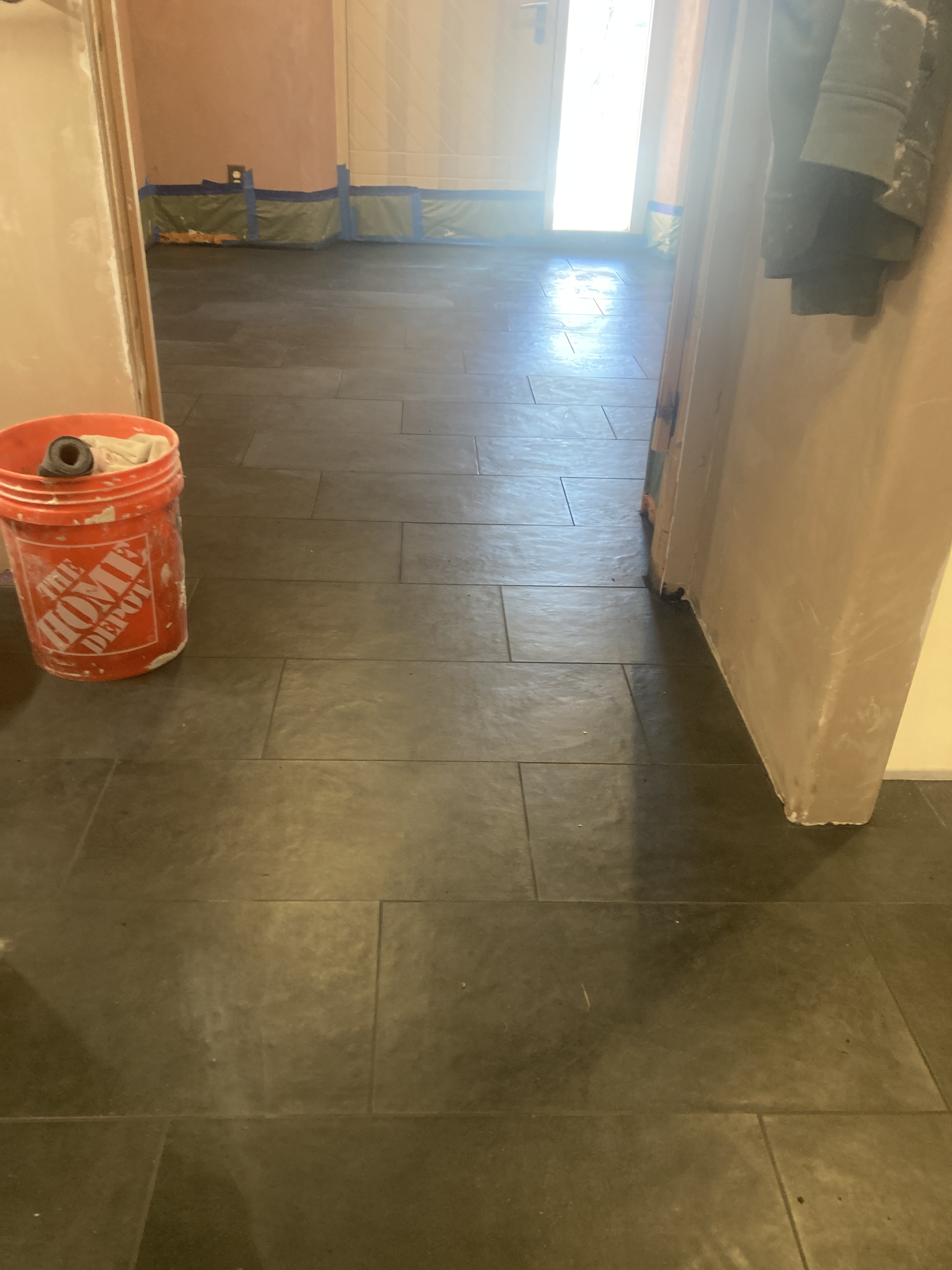
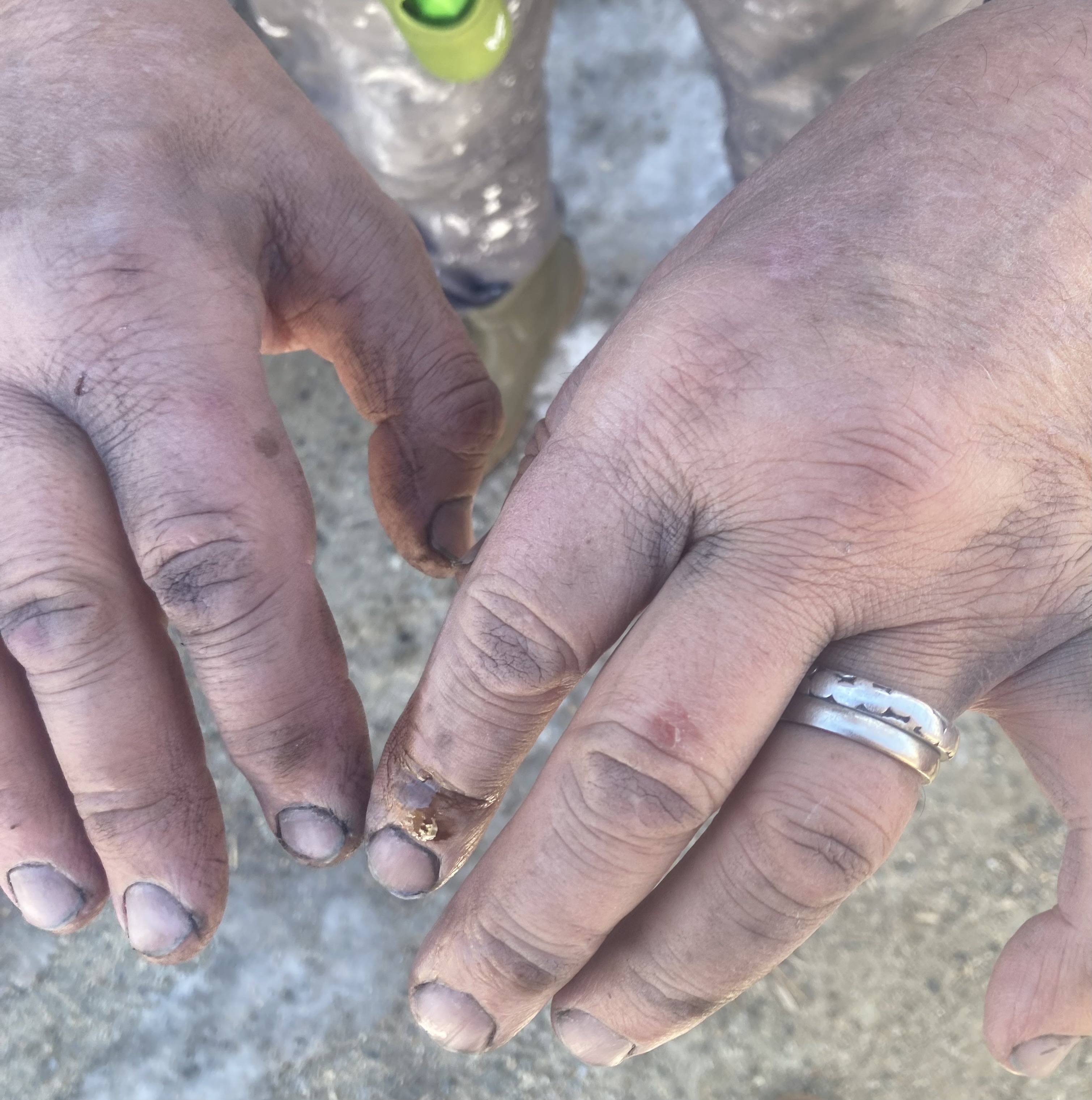
Misery loves company, which is why we did the tiling work as a team, laying 259 square feet of tiles on hands and knees. The work is finished now and indeed, “teamwork makes the dream work,” which saying the end result has proved.
To make a distraction from tiling, we played the “Greek Syllabification” game. In fact, this was a lesson in logical thinking and, even though the local schools were on February Break, our Art Farm Academy remained open for business.
My son’s Language Arts teacher, known as “The Magister,” created the game as, “…an excellent, brief object lesson in logical thinking…a fitting complement to his thinking about and then articulating how an English sentence can be composed one way or another to suit the purpose of the statement. …it’s time to slyly ratchet up his ability to think and express himself more critically–and at the same time build his pride and confidence, which the strangeness of the Greek can occasion.”
I dared not tell my son this was an assignment, but instead spoke of the “game,” with four basic rules:
- Every word is made up of syllables and consonants.
- Every syllable makes one sound.
- The sound of a syllable is made by a vowel, or by a consonant with a vowel.
- To syllabify means to divide a word into its syllables.
Seven letters are vowels in Greek: α, ε, η, ι, ο, ω, υ. The combinations of αι and οι make up one vowel, which combination is called a diphthong. A Greek word has as many syllables as it has vowels or diphthongs.
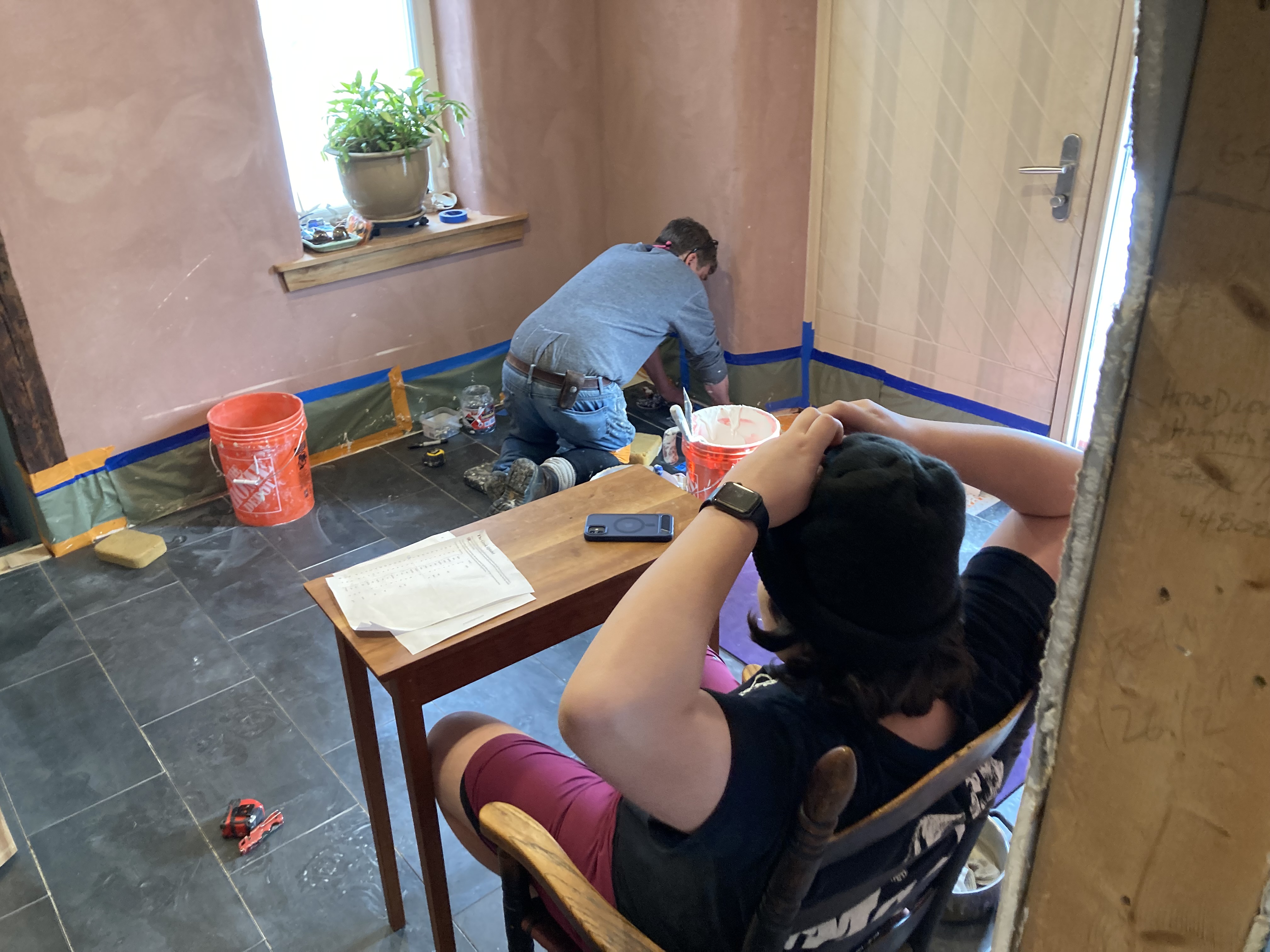
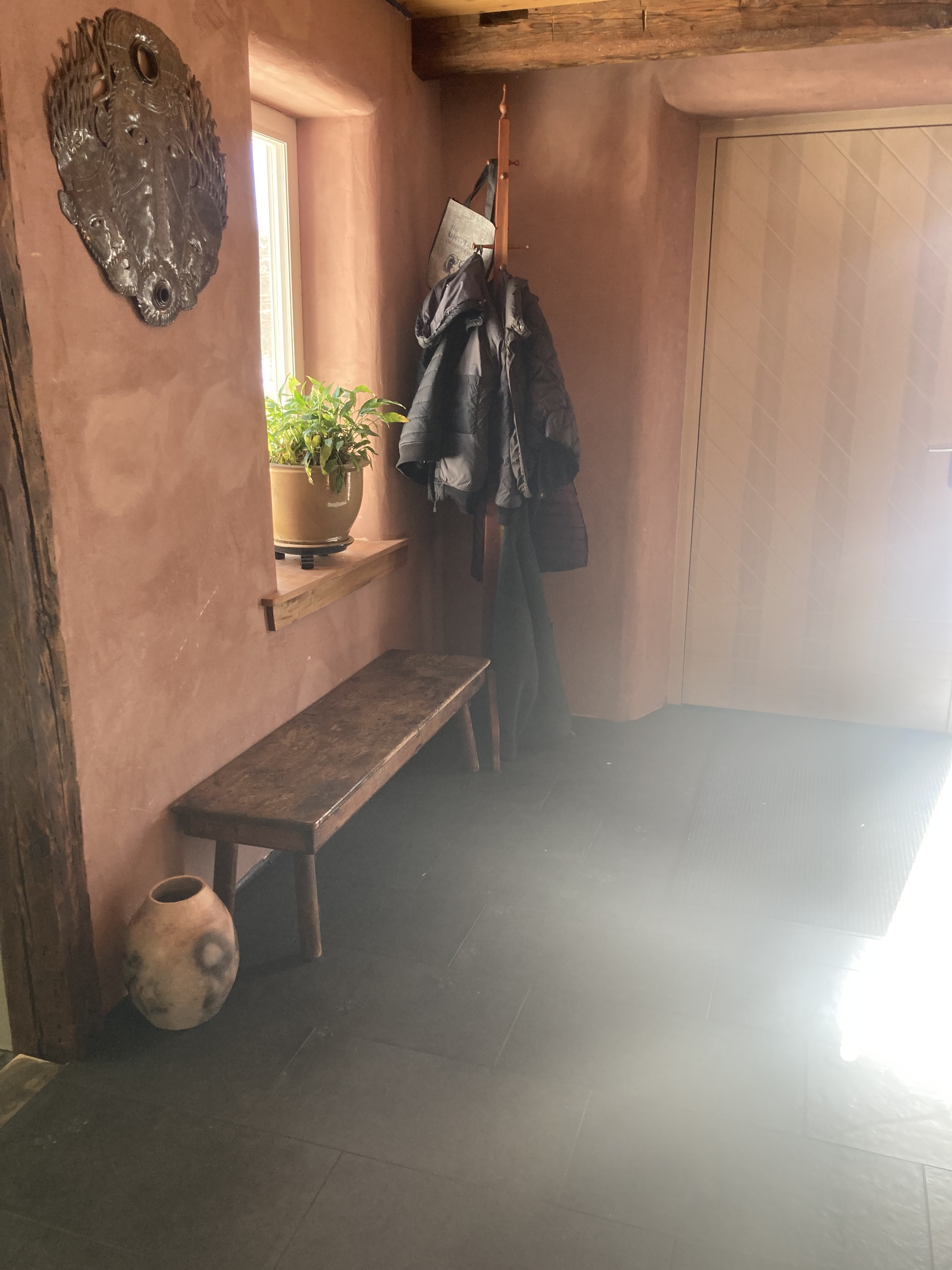
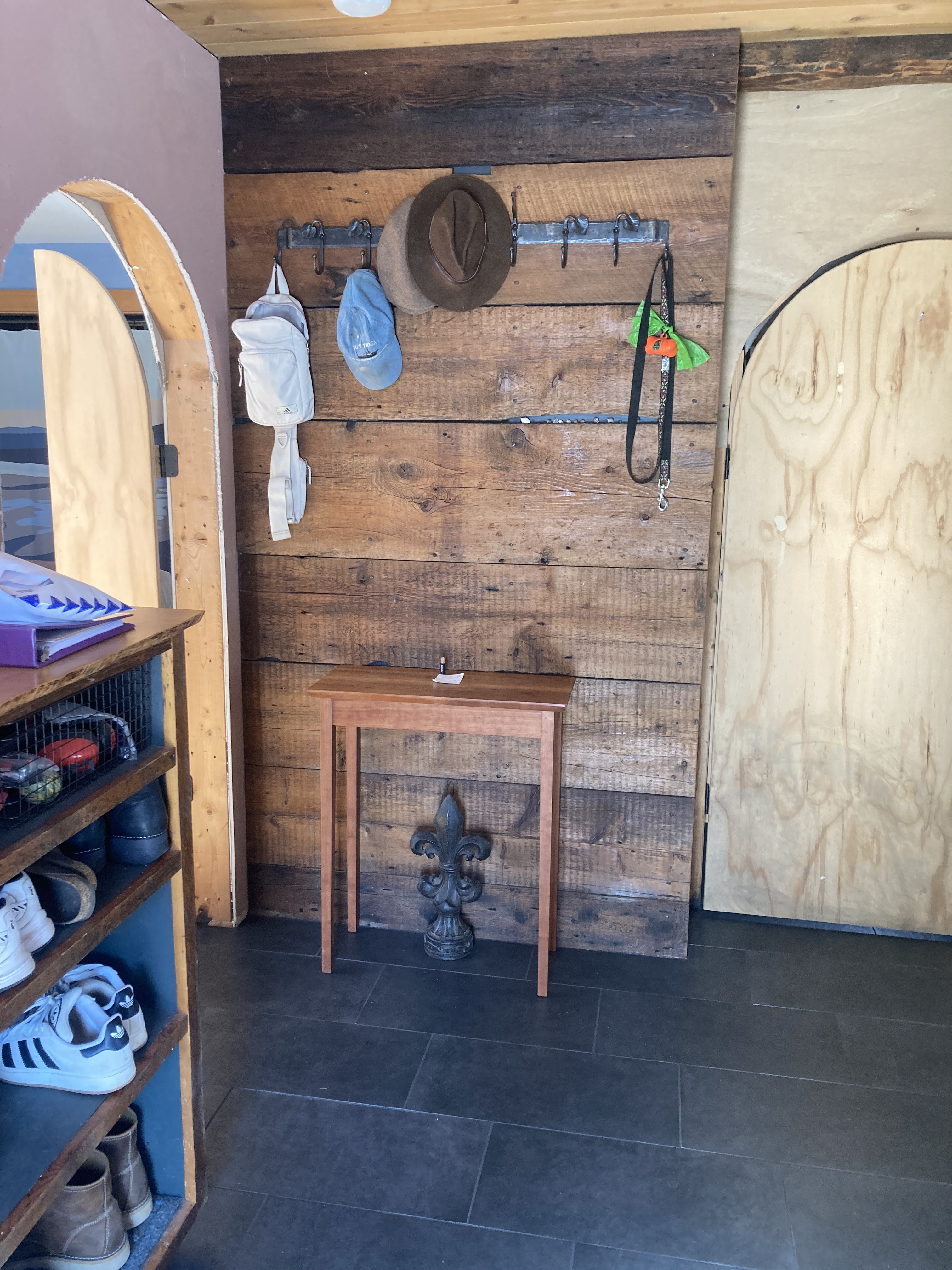
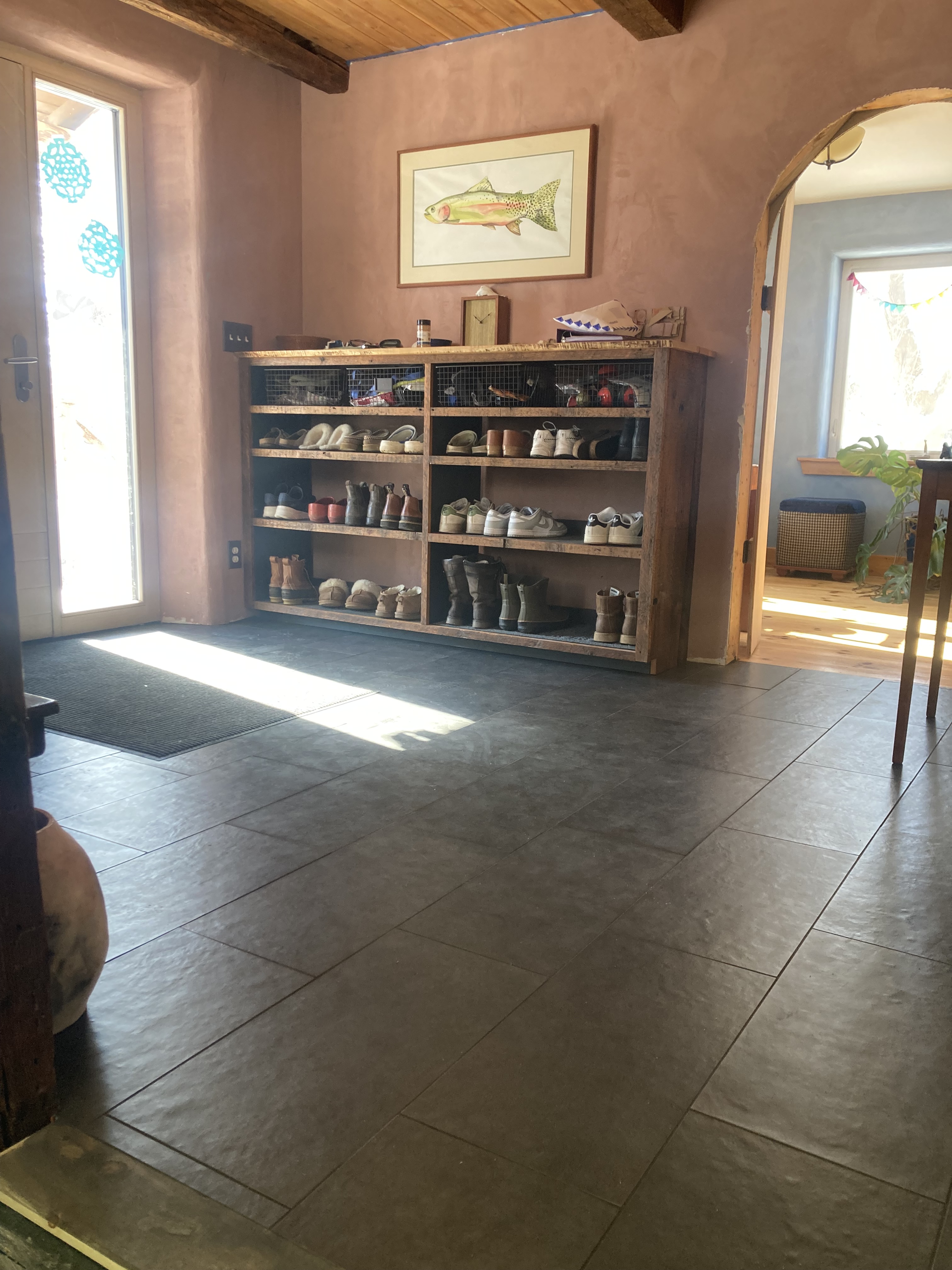
While the Professor and I worked on our hands and knees, my son set up a table and chair, and we began. The contrast in postures was as comical as playing the game was wildly impractical. But we pushed on enough to lay both the game’s ground rules as well as more tiles.
Another assignment during last week was to calculate the degrees of the triangle formed from our first day’s tiling work. My son knows that every triangle contains 180 degrees, and our day’s work was a right triangle, meaning a 90 degree angle at the base. Using a tape measure, we found the hypotenuse was 115″ but the sides were not equal – one was 71” while the other was 90” – and if not equal then the angles could not both be 45 degrees. We needed trigonometry, not geometry, to solve the ratio of the sides of a right-triangle to find a specific angle.
My daughter, who excels in high school, was amazed that we would tackle trigonometry but such was the task at hand. Conventional schooling regards trigonometry as a subject for Junior or Senior year of high school, but anyone in the trades learns that you use the tool when needed. My son has already studied ratios so this was a chance to apply that knowledge.
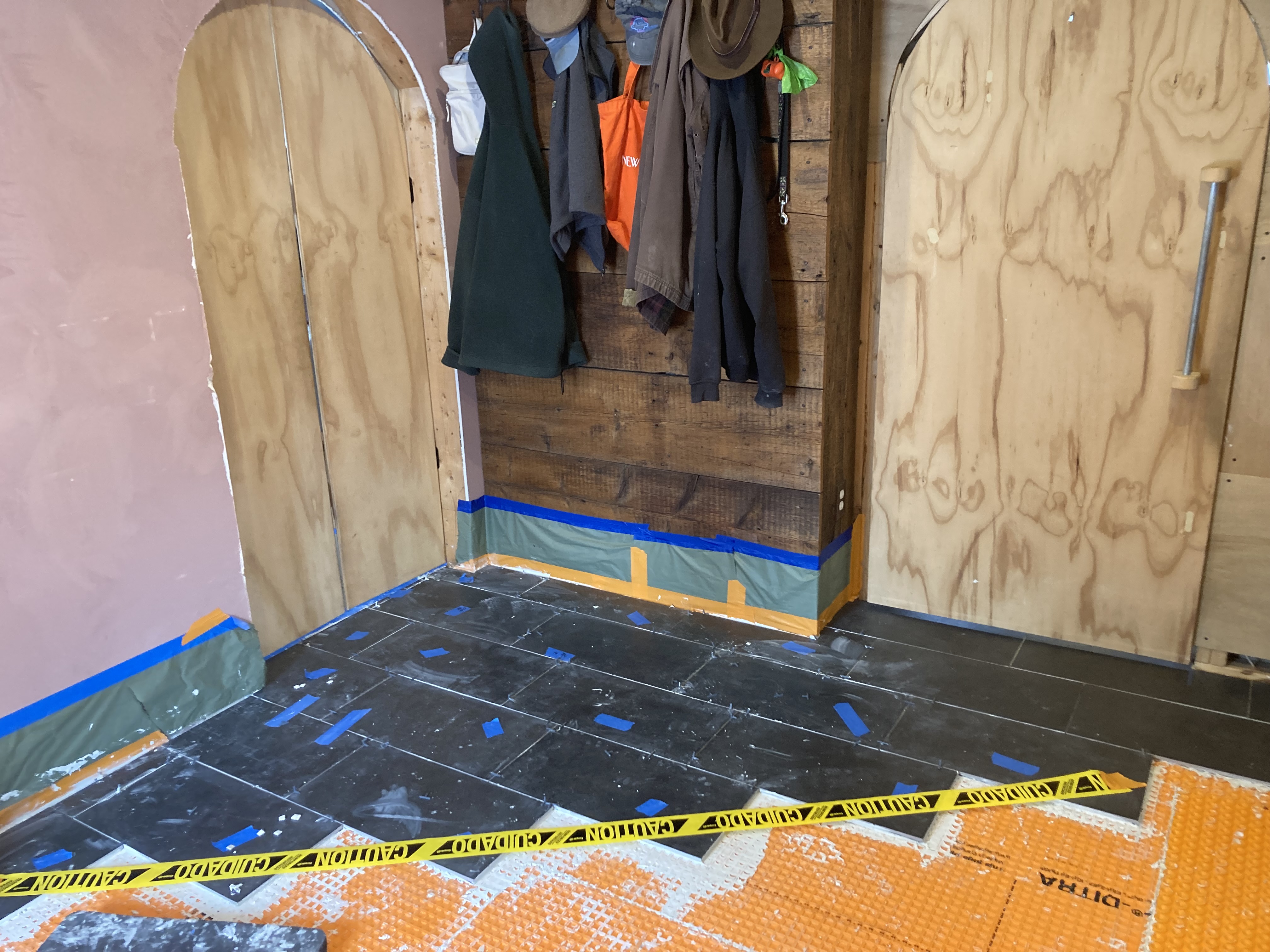
Our problem, it turns out, has been discussed as far back as the Babylonians and Egyptians; was refined by the Greek astronomers, but Aryabhata, an Indian mathematician, discovered the terms used today: sine and cosine.
The word “sine” is derived from the Latin “sinus” which means “fold in a garment,” but that was a mistranslation of the Sanskrit word “jya-ardha” which meant “half a bowstring;” the Sanskrit derived from Persian, which, in turn, came from the Greek “χορδή” which meant “a bow string made of gut.”
The Babylonian, Egyptian and Greek astronomers were trying to understand arcs in a circle, which is the shape of the cosmos. Trigonometry became their language to divide a circle in order to map the heavens, and thereby understand the movement of celestial bodies. Rich history lay behind the very tangible question of the triangle we laid on day one of our mudroom tiling.
“Sine” is simply the ratio between the right triangle’s hypotenuse and its opposite side; the 71″ Opposite divided by the 115″ Hypotenuse equals 0.617. Converting that ratio into an angle requires the inverse function known as the arcsin; given the known sides we want to know the angle they form, the space between. Because the math to calculate the arcsin is complex, we used a calculator, but the concept became clear: our tiling had angles of 90, 38, and 52 degrees (which add up to 180). Not surprisingly, the Greek letter theta θ is used to represent the unknown angle. The strangeness that Greek can occasion!
Our Art Farm, then, teaches a practical truth that life is about problem solving, not meeting the metrics of a school curriculum. And in the “there are no coincidences” department, the Goddess happened to read to us a passage written by Melody Beattie about solving problems:
When we spend more time reacting to a problem than we do solving it, we miss the point. We miss the lesson; we miss the gift. Problems are a part of life. So are solutions.
A problem doesn’t mean life is negative or horrible. Having a problem doesn’t mean a person is deficient. All people have problems.
Recovery does not mean immunity to or exemption from problems; recovery means learning to face and solve problems, knowing they will appear regularly. We can trust our ability to find solutions and know we’re not doing it alone. Having problems does not mean life is picking on us. Some problems are part of life; others are ours to solve, and we’ll grow in necessary ways in the process.
Face and solve today’s problems. Don’t worry needlessly about tomorrow’s. When they appear, we’ll have the resources necessary to solve them.
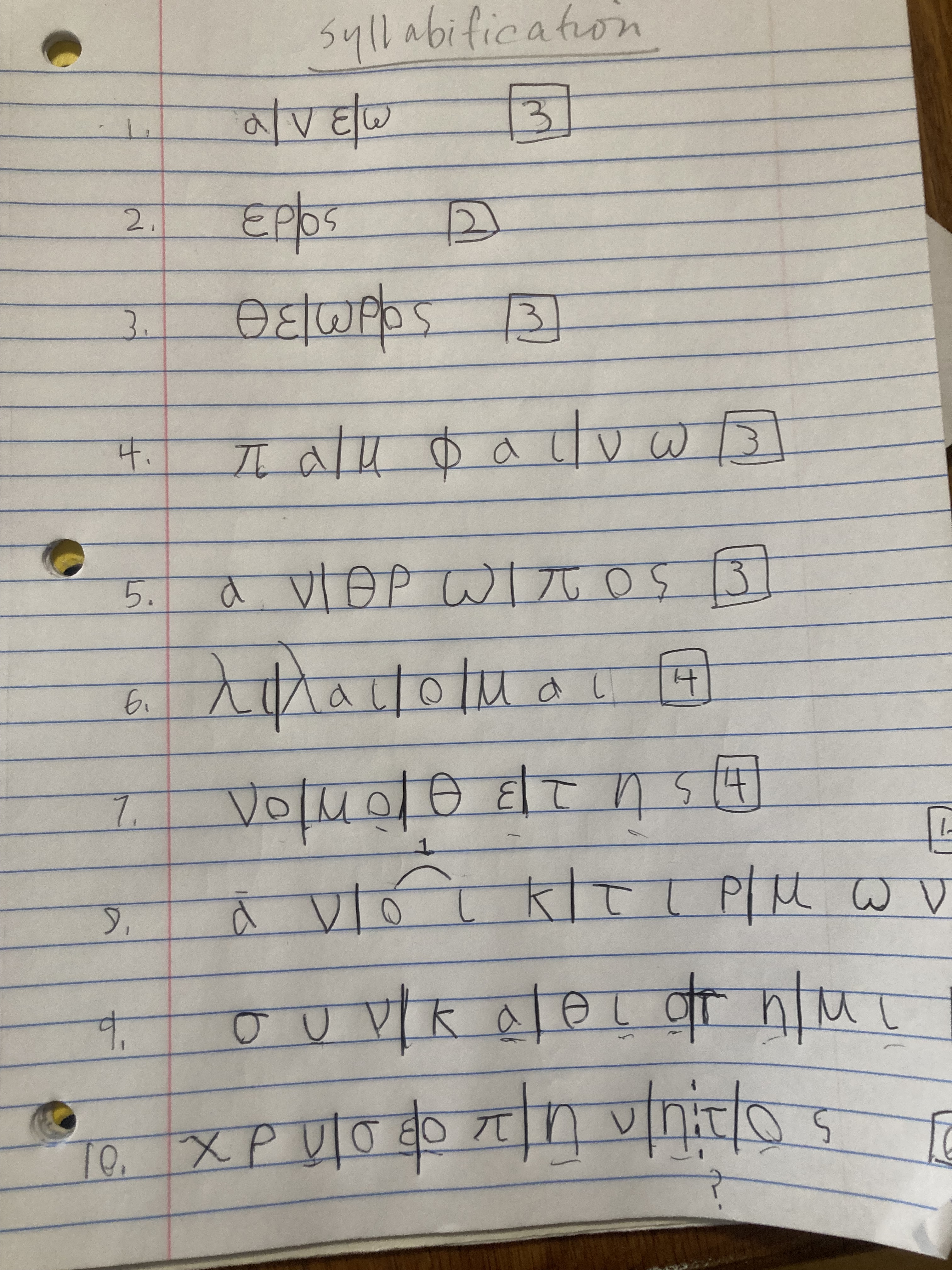
Indeed, our core curriculum increasingly is the very practical lesson of stepping up to life to solve problems. And about that game of Greek Syllabification? By Sunday my son had finished the task. Greek is the least of the lesson. The point is to play by the rules and gain confidence in approaching and working through the unknown. Some serious mental gymnastics ensued, as he worked this through, including pronouncing the words after breaking them into the syllables.
1) ανεω (silently) 3 syllables: α νε ω
2) ερος (love) 2 syllables: ε ρος
3) θεωρος (spectator) 3 syllables: θε ω ρος
4) παμφαινω (to shine) 3 syllables: παμ φαι νω
5) ανθρωπος (man) 3 syllables: αν θρω πος
6) λιλαιομαι (to desire) 4 syllables: λι λαι ο μαι
7) νομοθετης (lawgiver) 4 syllables: νο μο θε της
8) ανοικτιρμων (merciless) 4 syllables: αν οικ τιρ μων
9) συγκαθιστημι (to bring together) 5 syllables: συγ κα θισ τη μι
10) χρυσεοπηνητος (woven with gold) 6 syllables: χρυ σε ο πη νη τος
Love Languages
Posted: February 20, 2026 Filed under: Art & Healing, Child Centered Activities, consciousness | Tags: mental health 1 Comment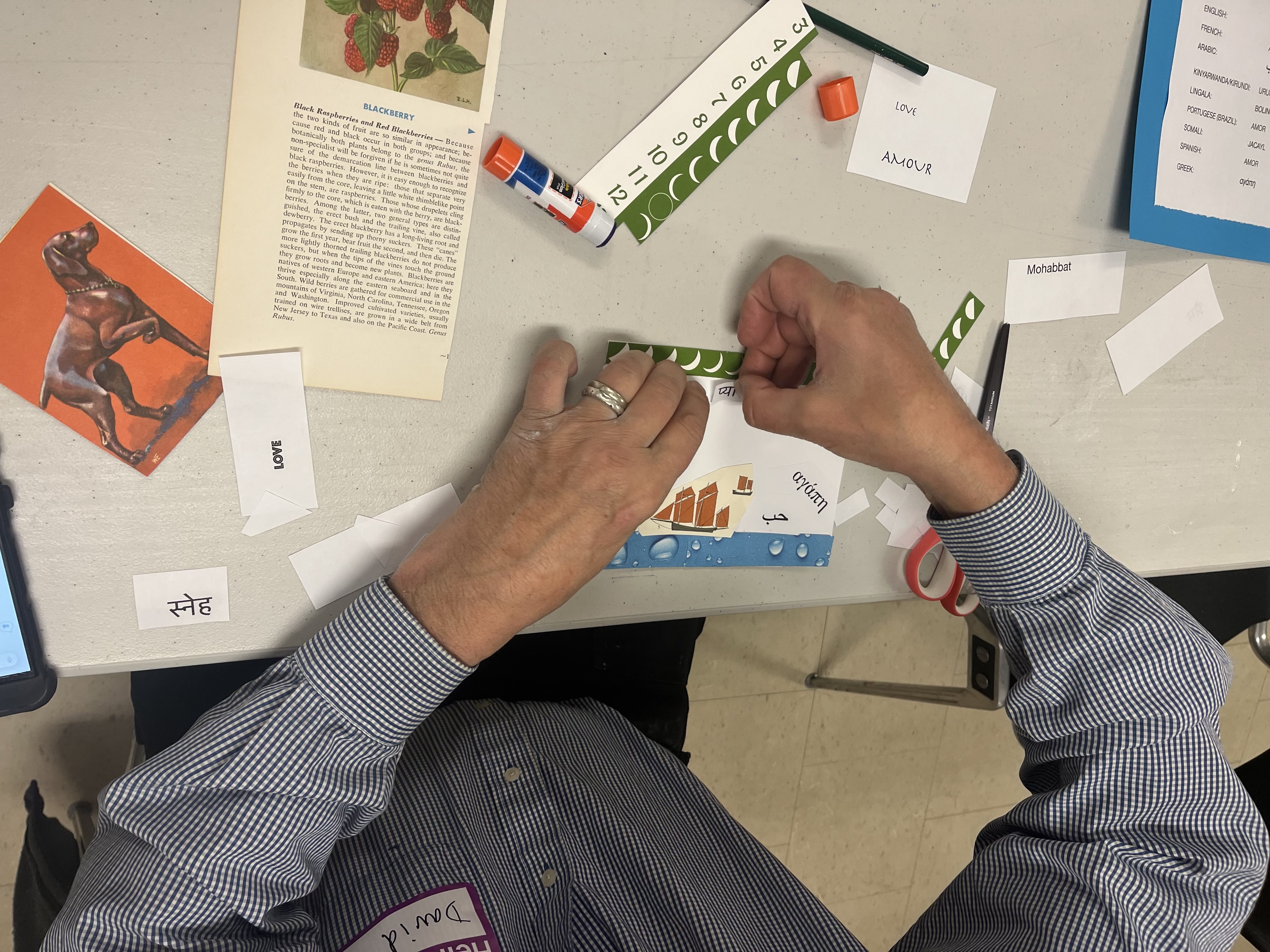
Greek has 8 distinct words for love. Sanskrit has 96. English, 1.
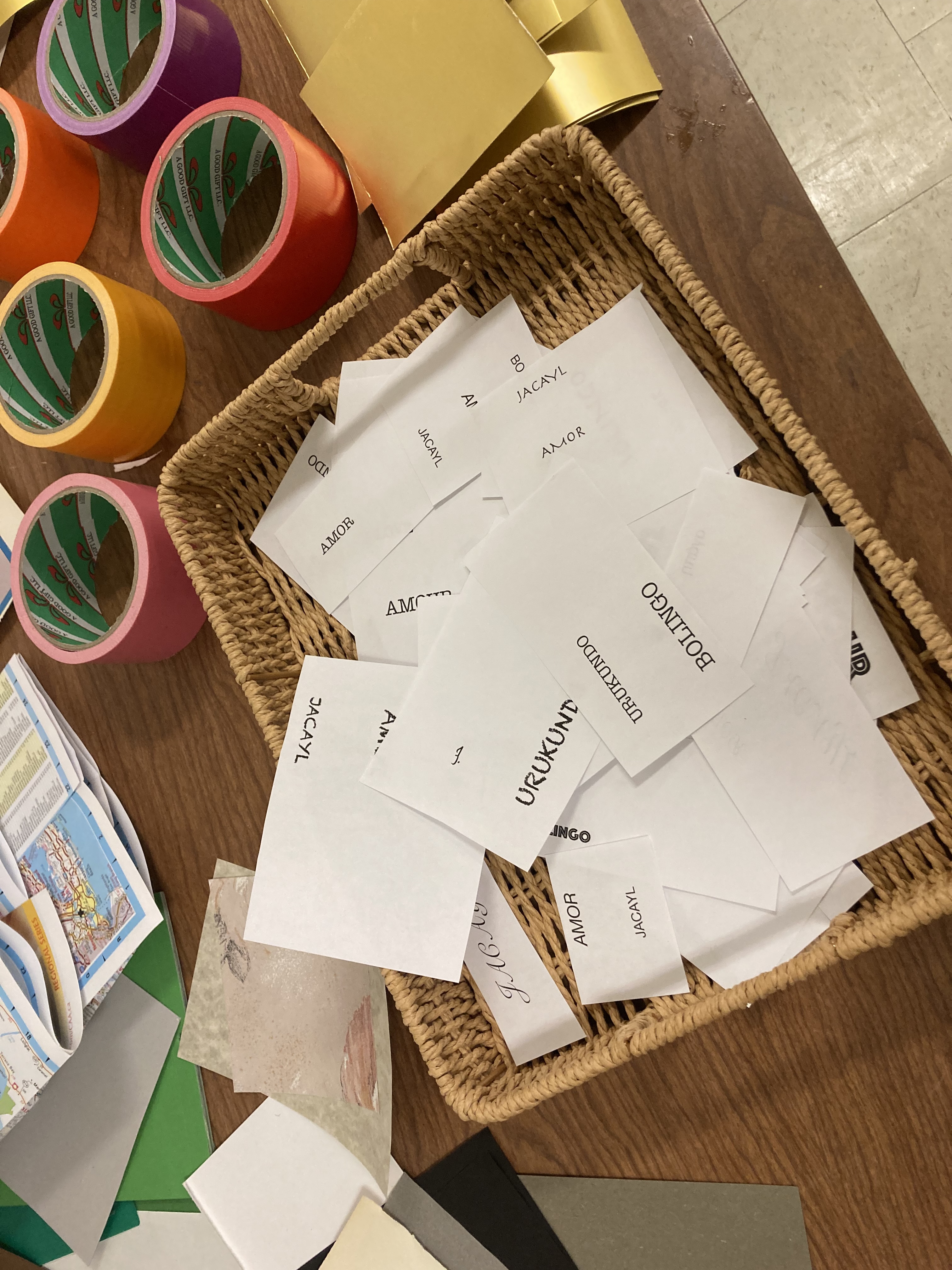
In South Portland Public Schools over 35 different languages are spoken, with the primary languages being Arabic, French, Kinyarwanda/Kirundi, Lingala, Portuguese, Somali, Spanish and English. Love here is most frequently spoken as Amour, حب, Urukundo, Bolingo, Amor, Jacayl, Amor and αγάπη. Adding in Sanskrit and Hindi we have प्रेम, प्यार, Mohabbat, and स्नेह. All saying the same, merely different vowels and consonants.
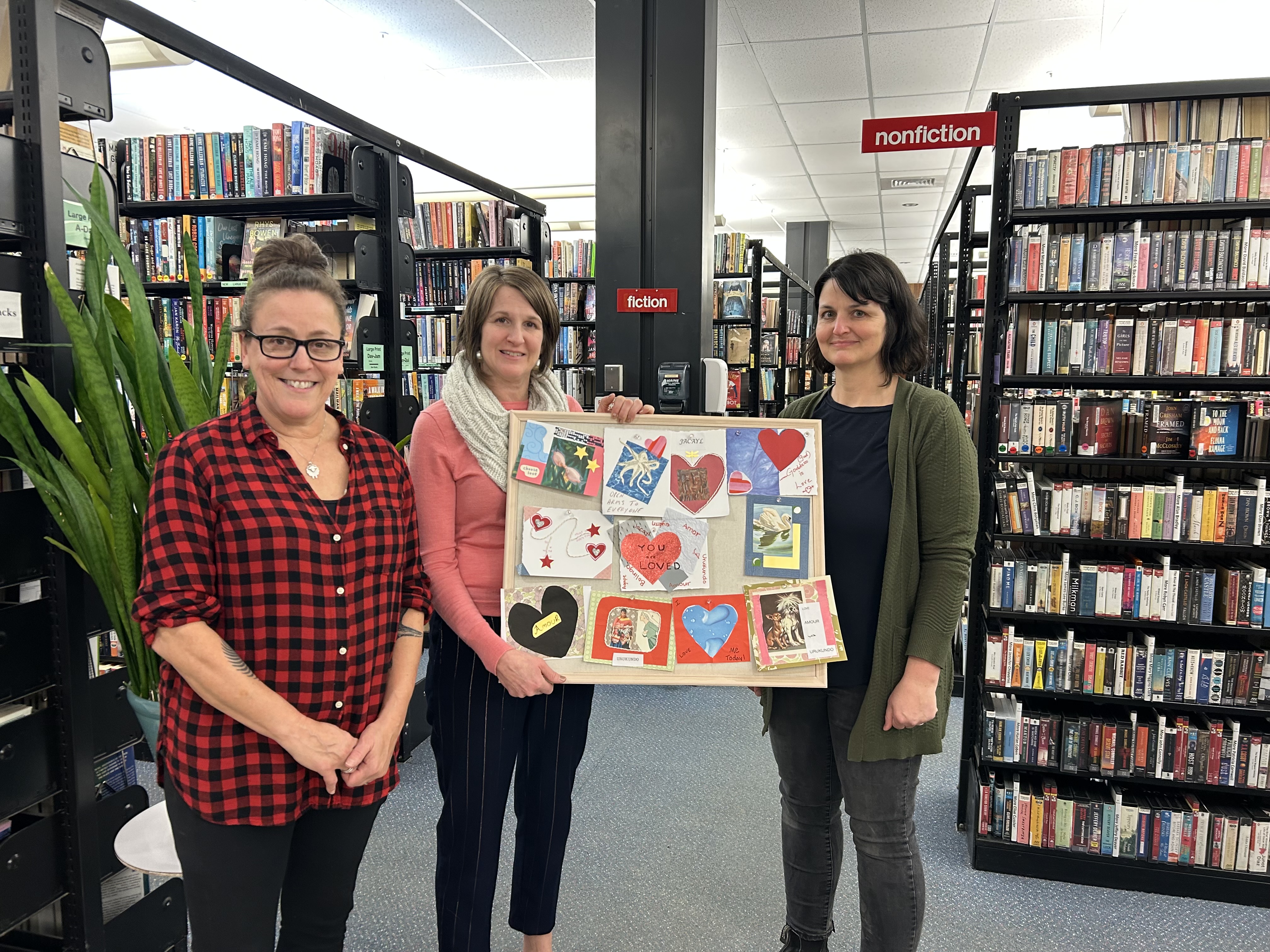
Valentines Day presented an opportunity to underscore the many languages of love through a “Postcards from the Heart” art-making experiential held at the South Portland Public Library. The curly haired Goddess with whom I live developed the idea with colleagues and then served as the leader for this life-affirming response to the masked jackals rampaging our communities locally and nationally. Love is an antidote to fear, or as the Governor of Illinois said this week, “love is the light that gets you through a long night.”
The small minded Christian Nationalists argue that English is the one and only “pure” language of these United States. But we “the tired, the poor, the huddled masses, yearning to breathe free” know the truth is far more varied, nuanced and beautifully complex. The Postcards quietly acknowledged this, and gave people a chance to express themselves in a non-violent and compassionate way.
When authoritarian anger rips our communities asunder, when protests rightfully organize, and food drives bring meals to those unable to go to work or school, art-making might seem a trivial pursuit, but its healing power is unquestioned and clinically proven. The process of non-verbal expression creates a safe space to explore feelings, especially for trauma survivors. The act of creation triggers the release of “feel good” chemical messengers – dopamine and serotonin – which are uplifting and promote resilience. Externalizing our emotions offers perspective and empowers the maker.
Open to the public, 27 people participated with ages ranging from elementary school age children to elderly. One group of 15 from a women’s shelter wanted to attend but that would have overwhelmed the space.
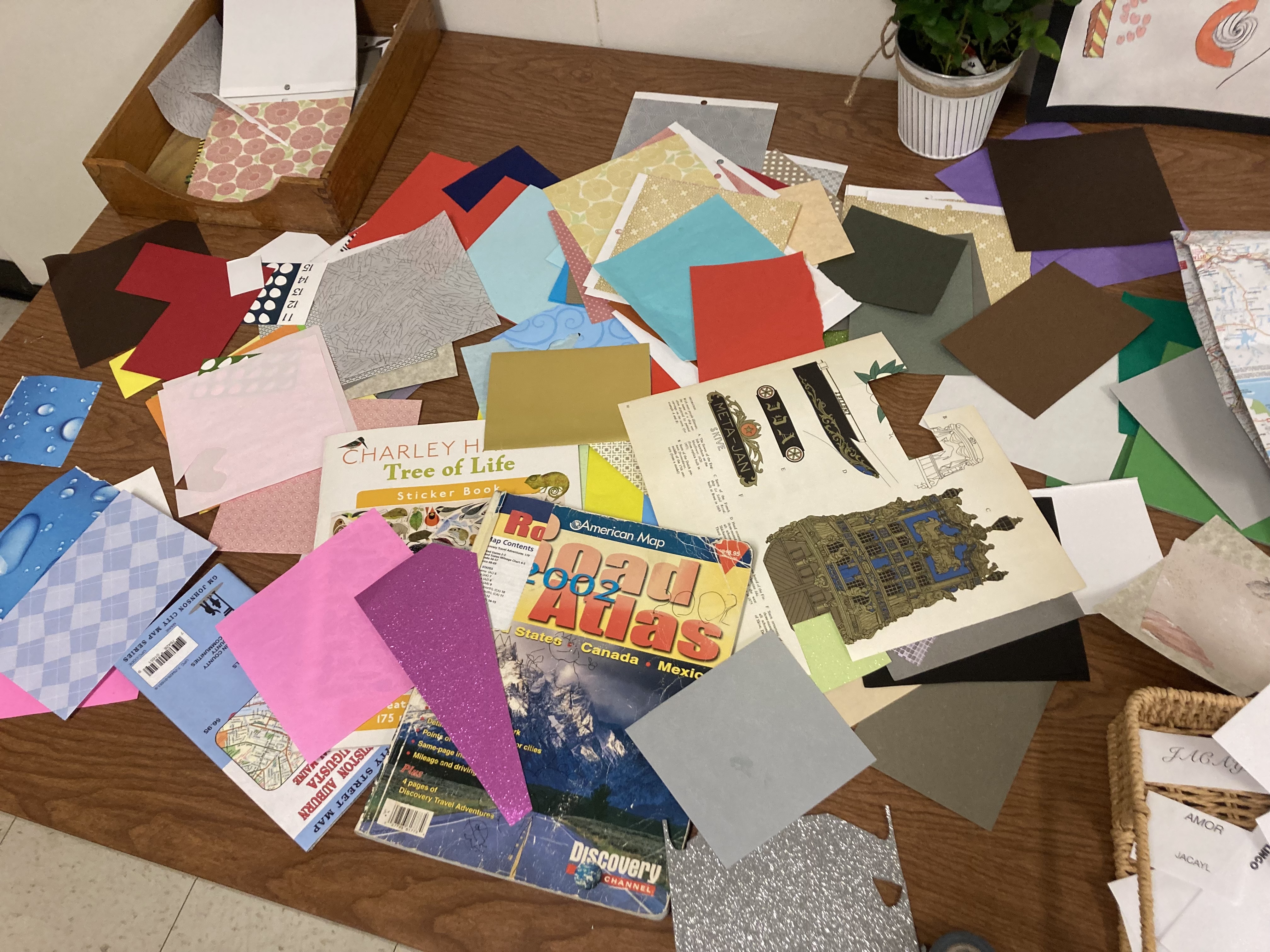
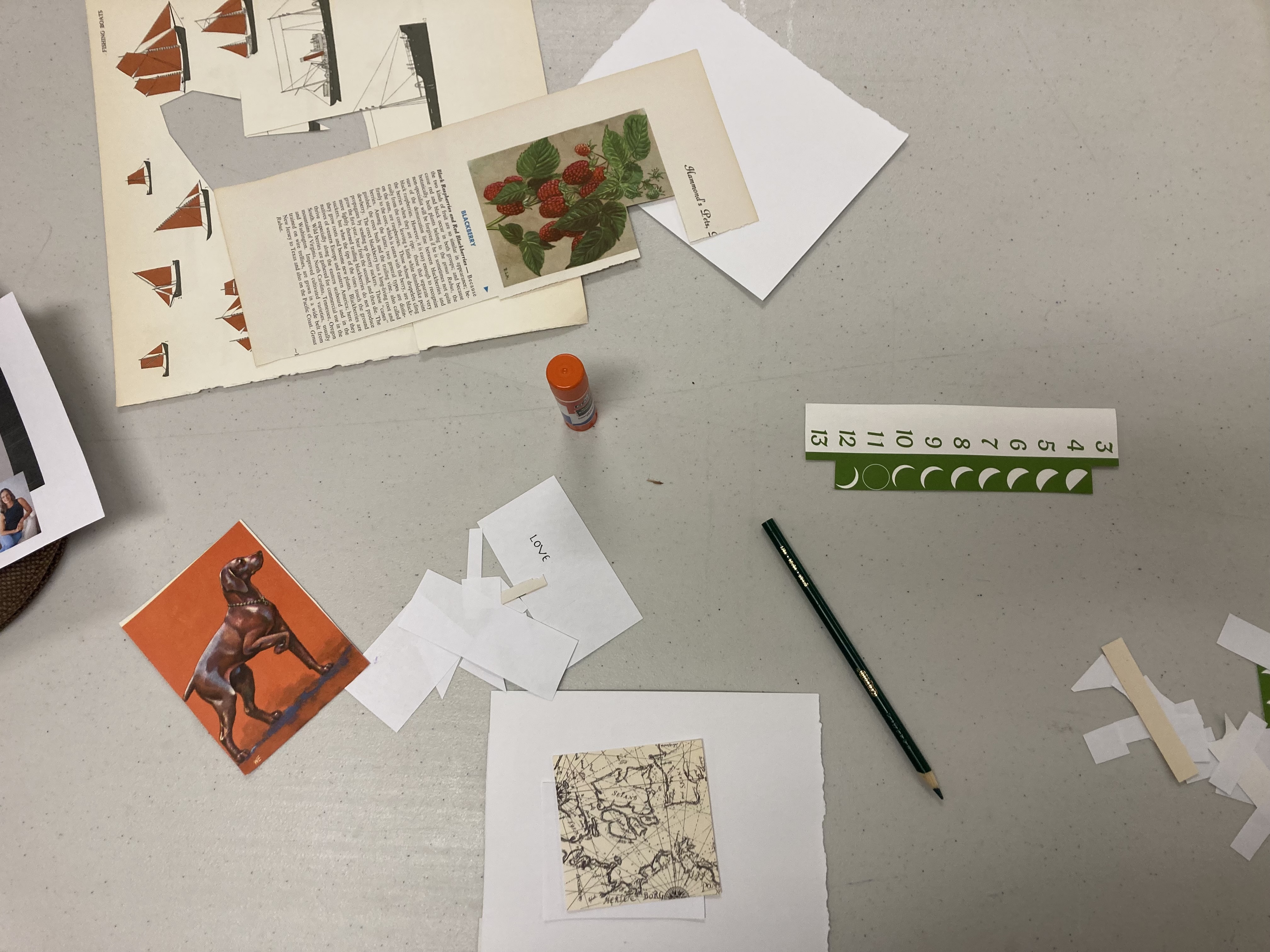
I participated in one 45-minute session, gluing images of the Moon cycle, cutouts from old picture books, and “love” from 10 different languages. 7 other women participated, one of whom was older and wore delightfully eccentric glasses, while the other 6 were young women from a “sober house.” Everyone was engaged, focused silently on their work. At the end we walked about looking at each others’ creations, all of which were as varied and diverse as the forms and expressions of love. There was a deep sense of connection in a non-verbal form.
A friend, who works with immigrant women, strongly wanted to invite those women but feared they would not want to risk coming out in public. The idea has been raised about creating art-making kits that can be delivered to homebound people so that they also might give voice to their love, in any language. A local group, Maine Needs, appears to be doing something along these lines.
The City of South Portland has a wellness program for its staff, and a librarian pondered whether art-therapy could be engaged for them. The idea is scalable and replicable, and the need for healing only grows in these times of Mammon and the cult of personality.
Number Rules the Universe
Posted: February 13, 2026 Filed under: Child Centered Activities, Chronicles of a First Time Parent 1 Comment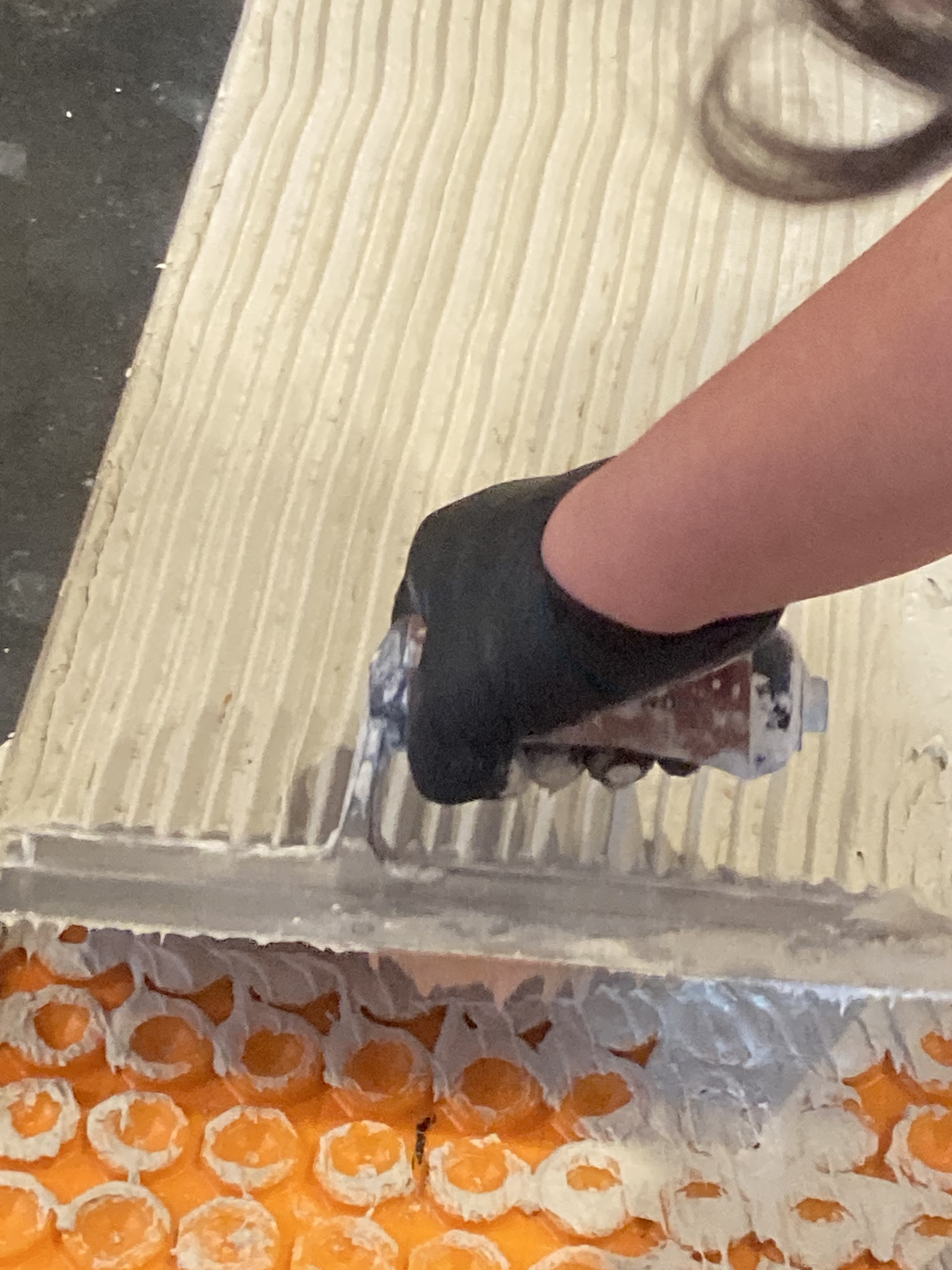
“Geometry is knowledge of the eternally existent,” said the Greek sage. So fundamental is this truth that every middle school includes geometry in its curricula.
Coming of age, children, enter into the exquisite beauty of geometric truth. Regardless of language spoken, color of your skin, which church, temple or forest you worship in, the eternal truths – πr2 (area of a circle) or 2πr (circumference of a circle) or πr(r+l) = πr[r+√(h2+r2)] (total surface of a cone), et cetera – pertain. Greek letters are used to label these eternal truths.
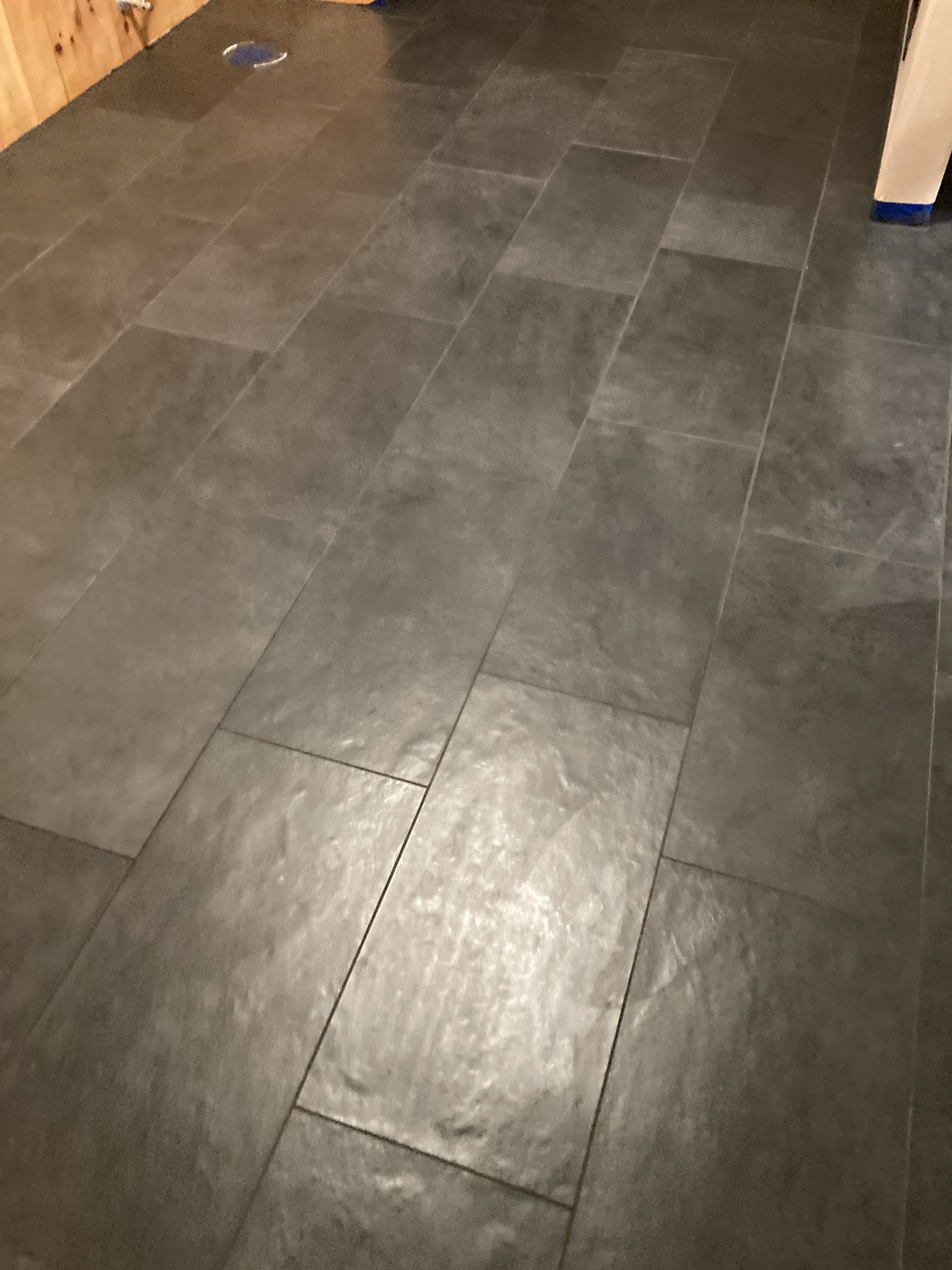
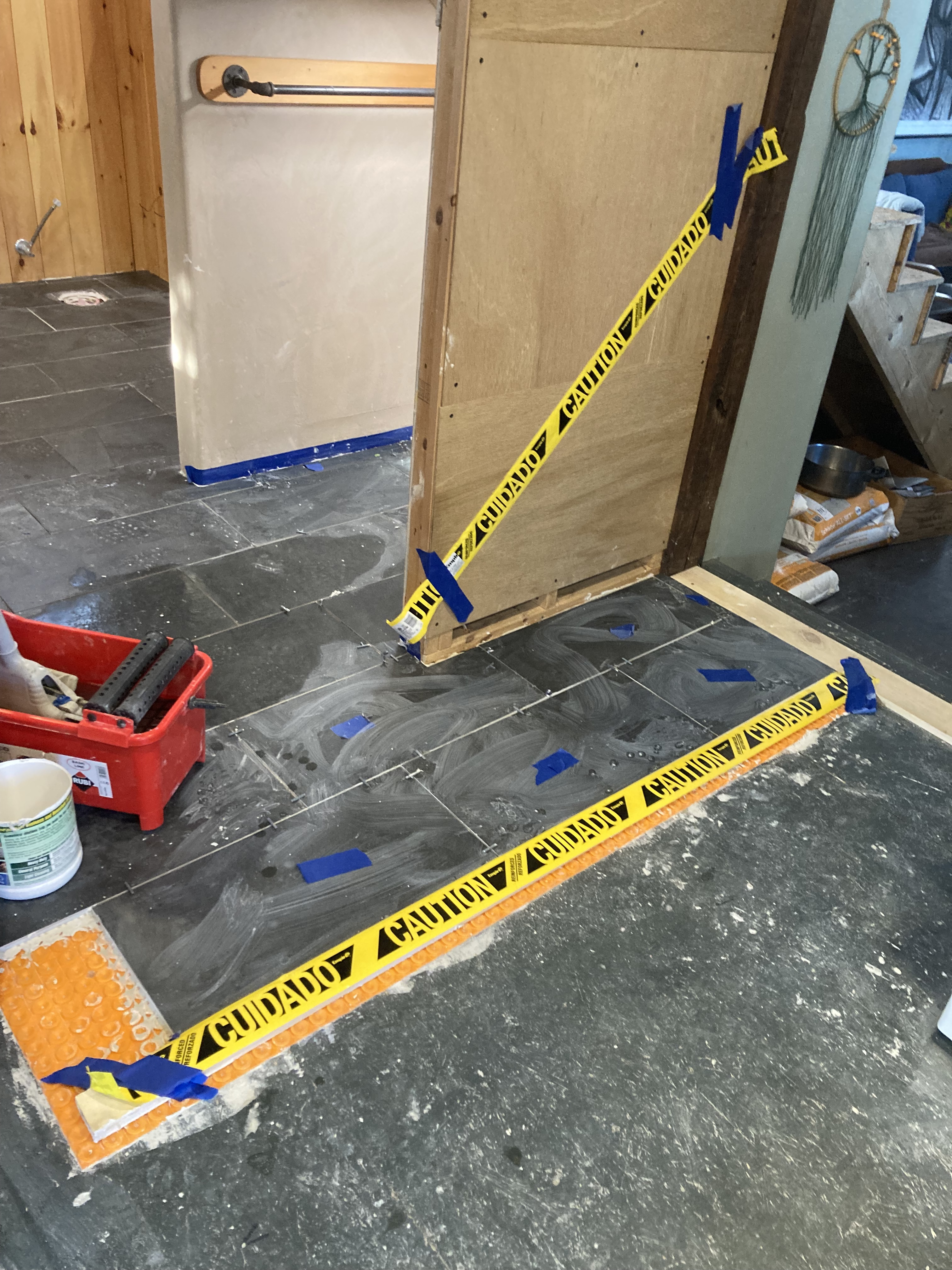
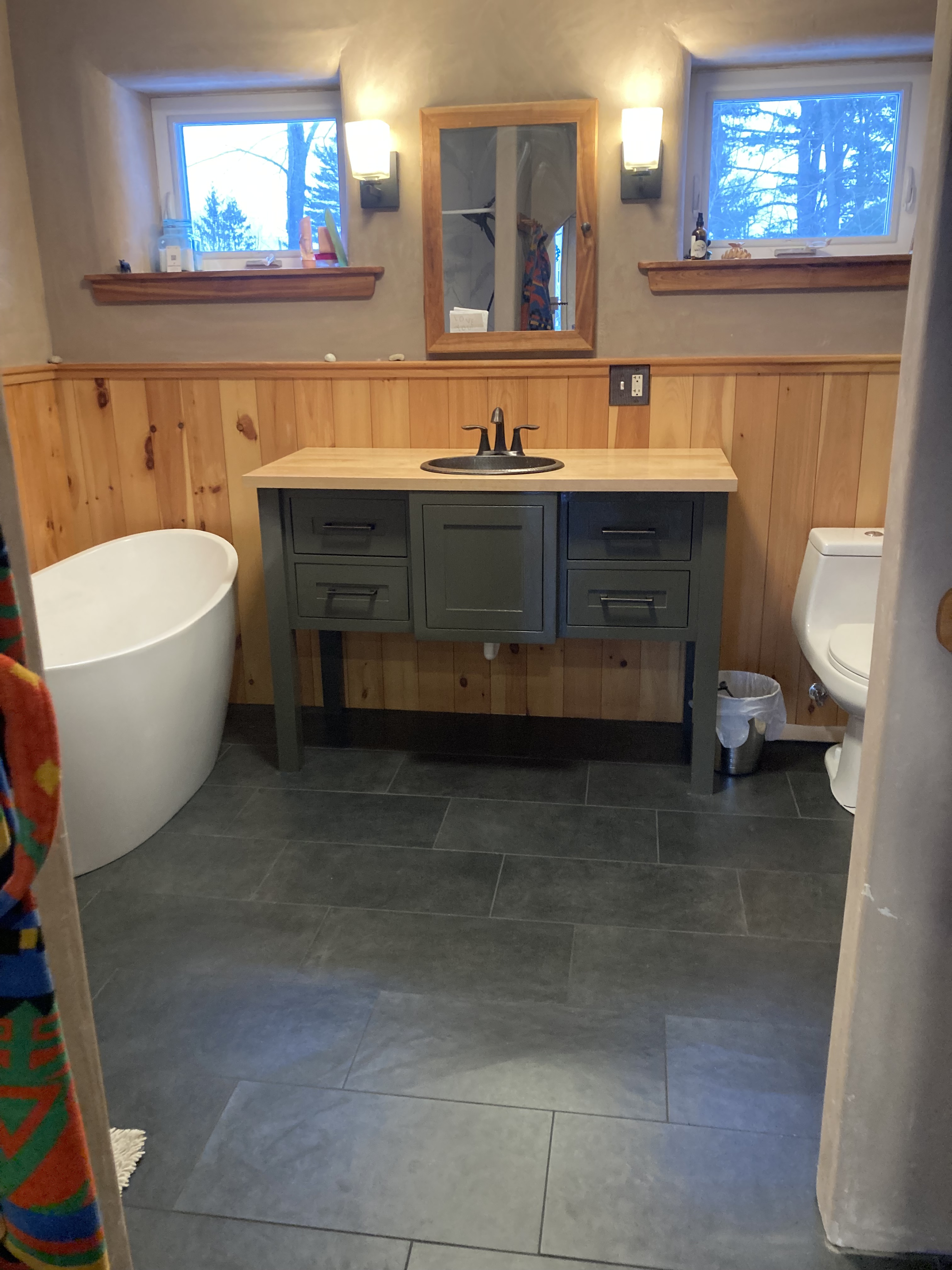
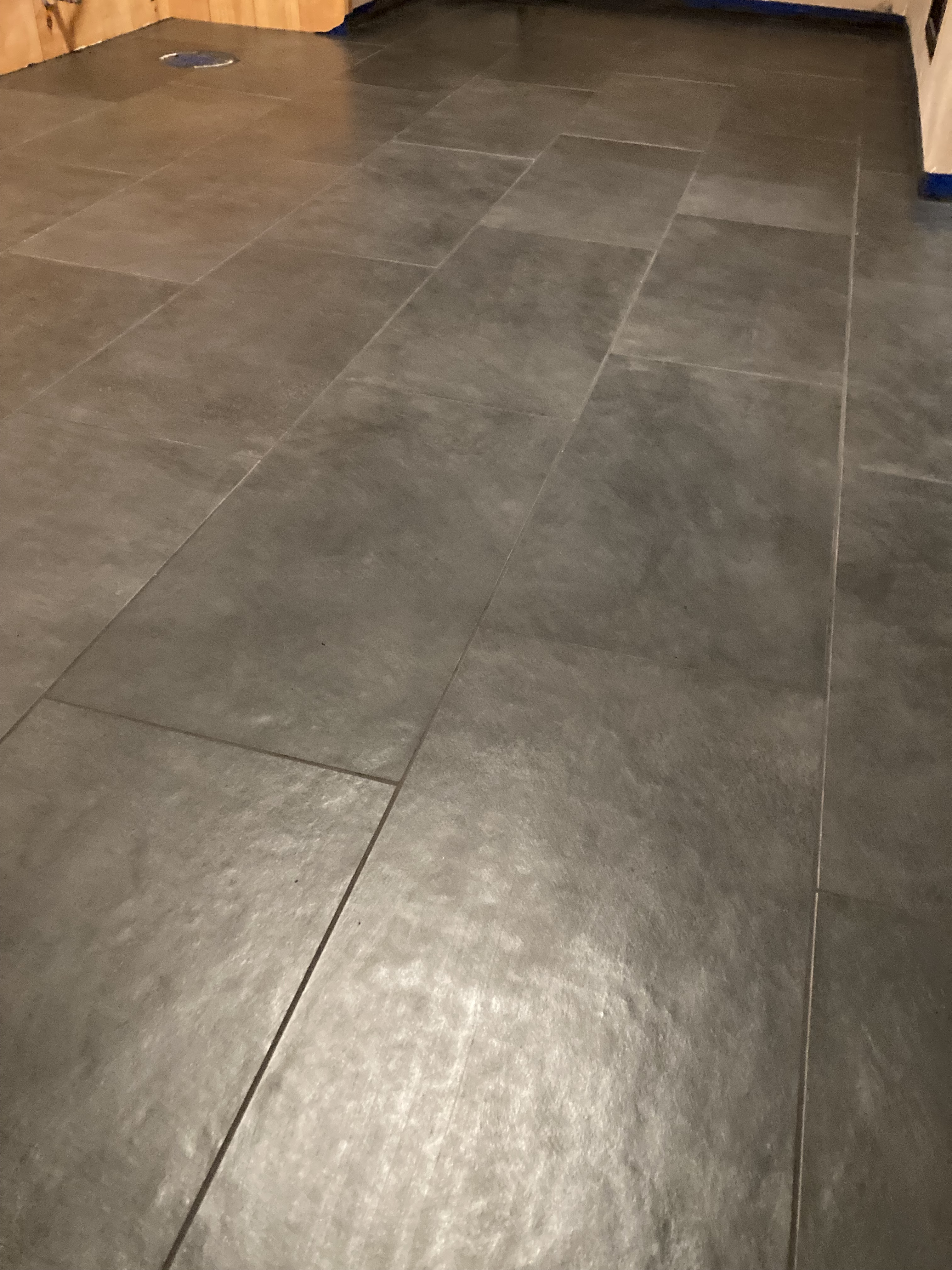
At our Art Farm Homeschool Academy we study surface area in the conventional way, using worksheets and word problems. But, on hands and knees, we examine the floor closely, teaching math as tactile, not just conceptual. Last week we discussed electric currents and Ohms. This week we turn to tiling, which is a form of applied geometry and chemistry, using hand tools to spread mortar and setting tiles to create one continuous surface.
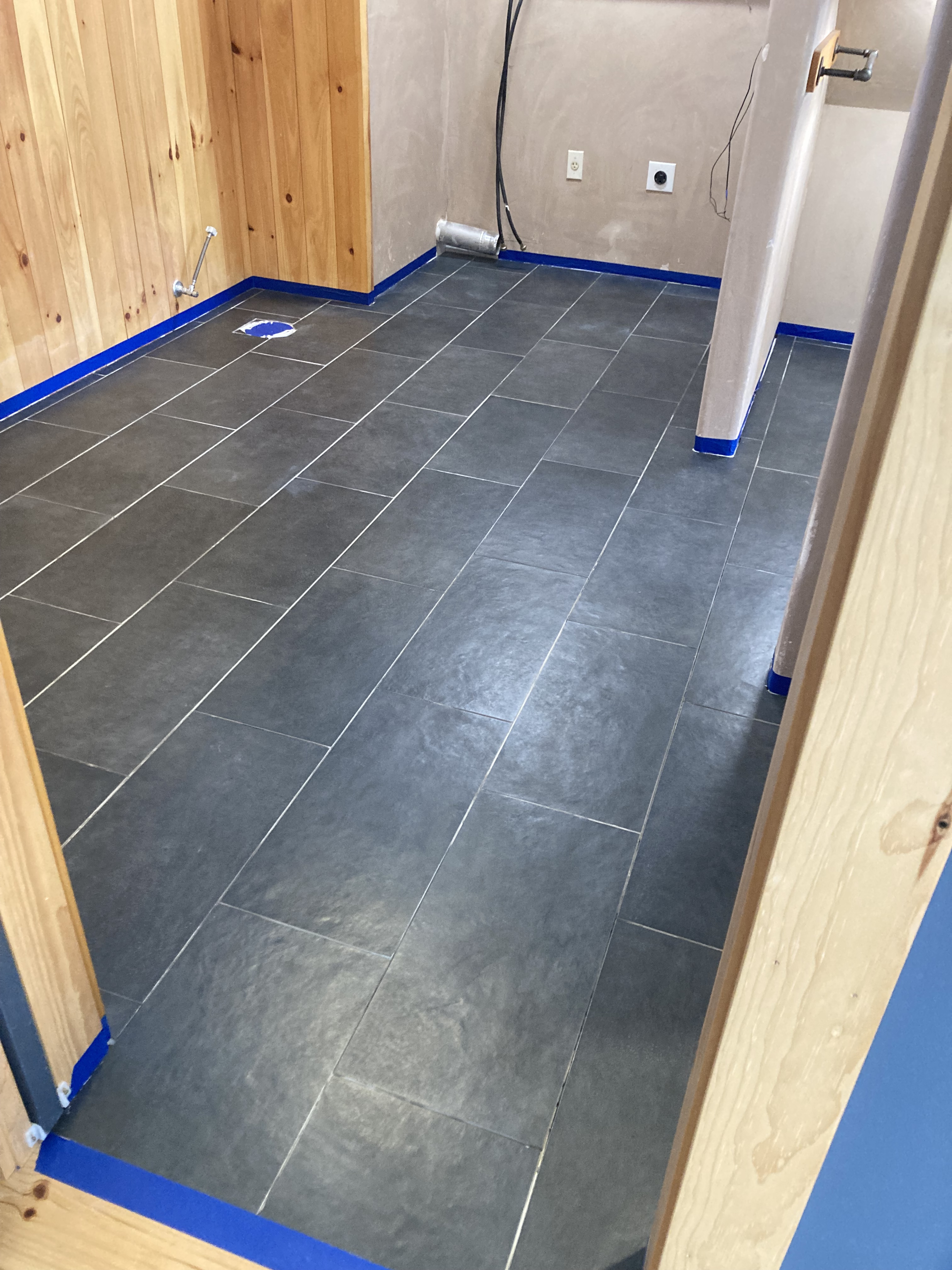
We began with Pythagorus. To establish the layout, we needed to determine the exact right angle to the exterior wall, so the warhorse a2 + b2 = c2 was used. After marking the right angle, the center line was snapped and the layout became clear. We used tiles 12” x 24” (2 square feet each) and my son quickly calculated the bathroom surface area was 136 square feet.
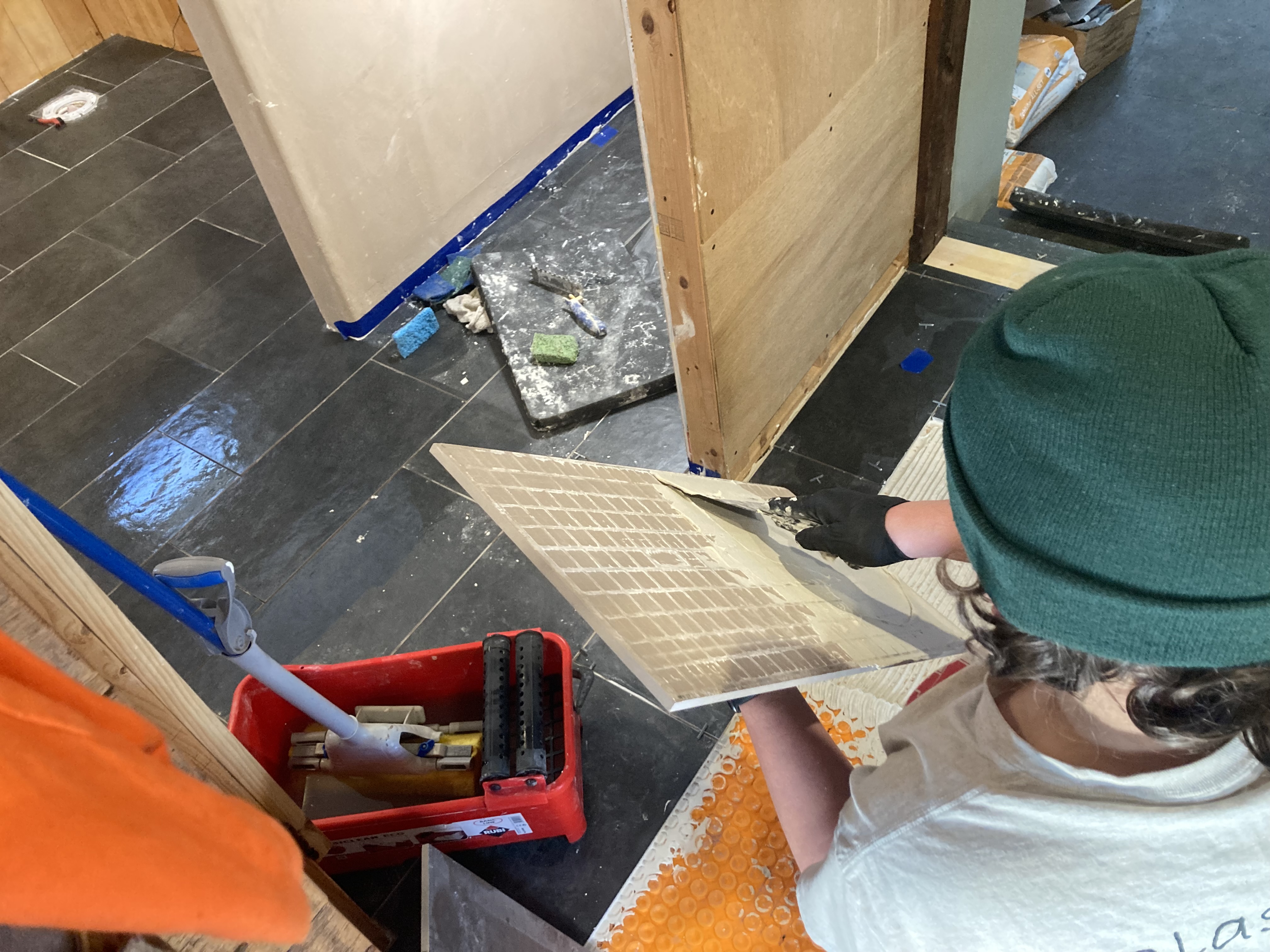
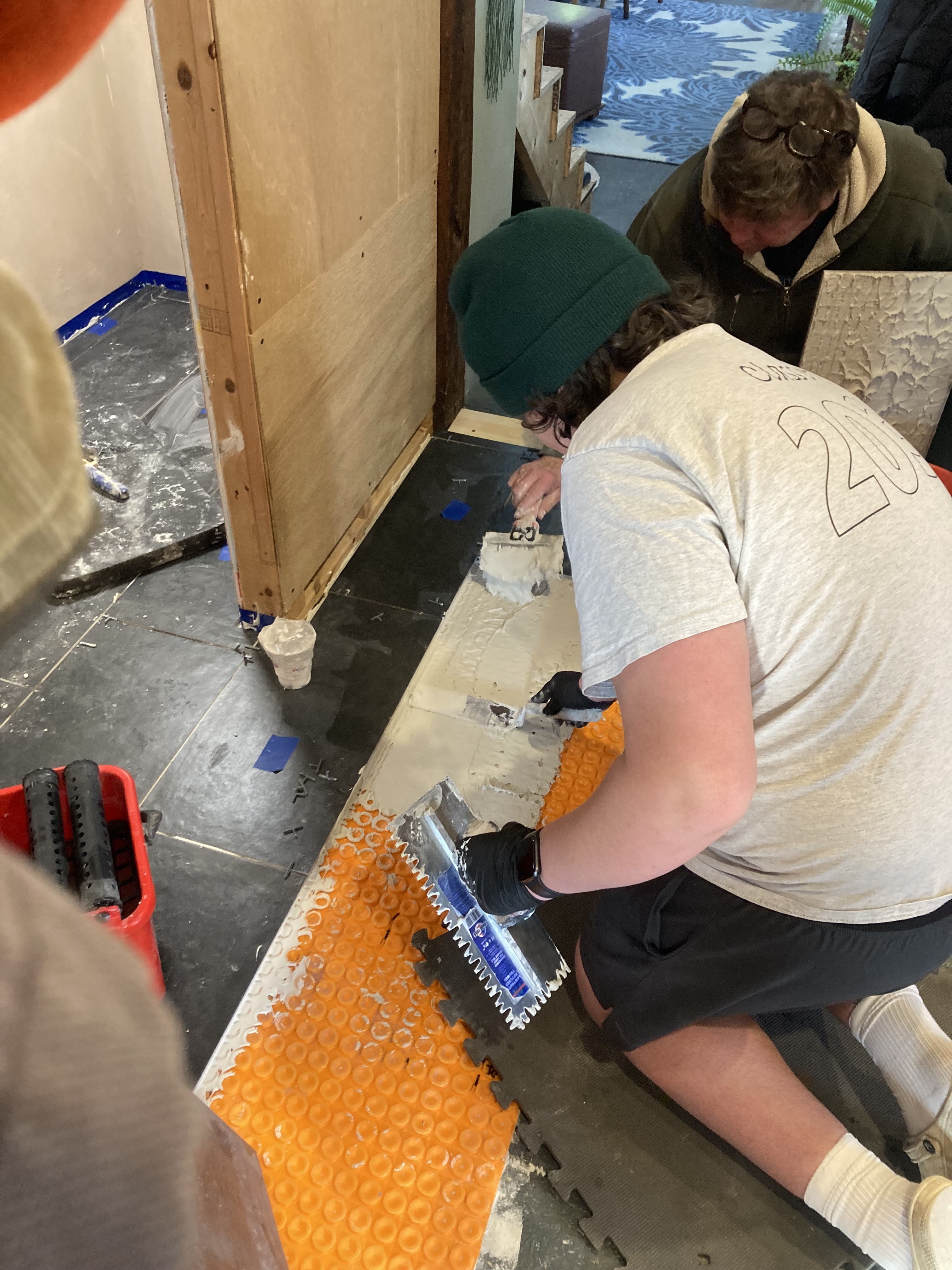
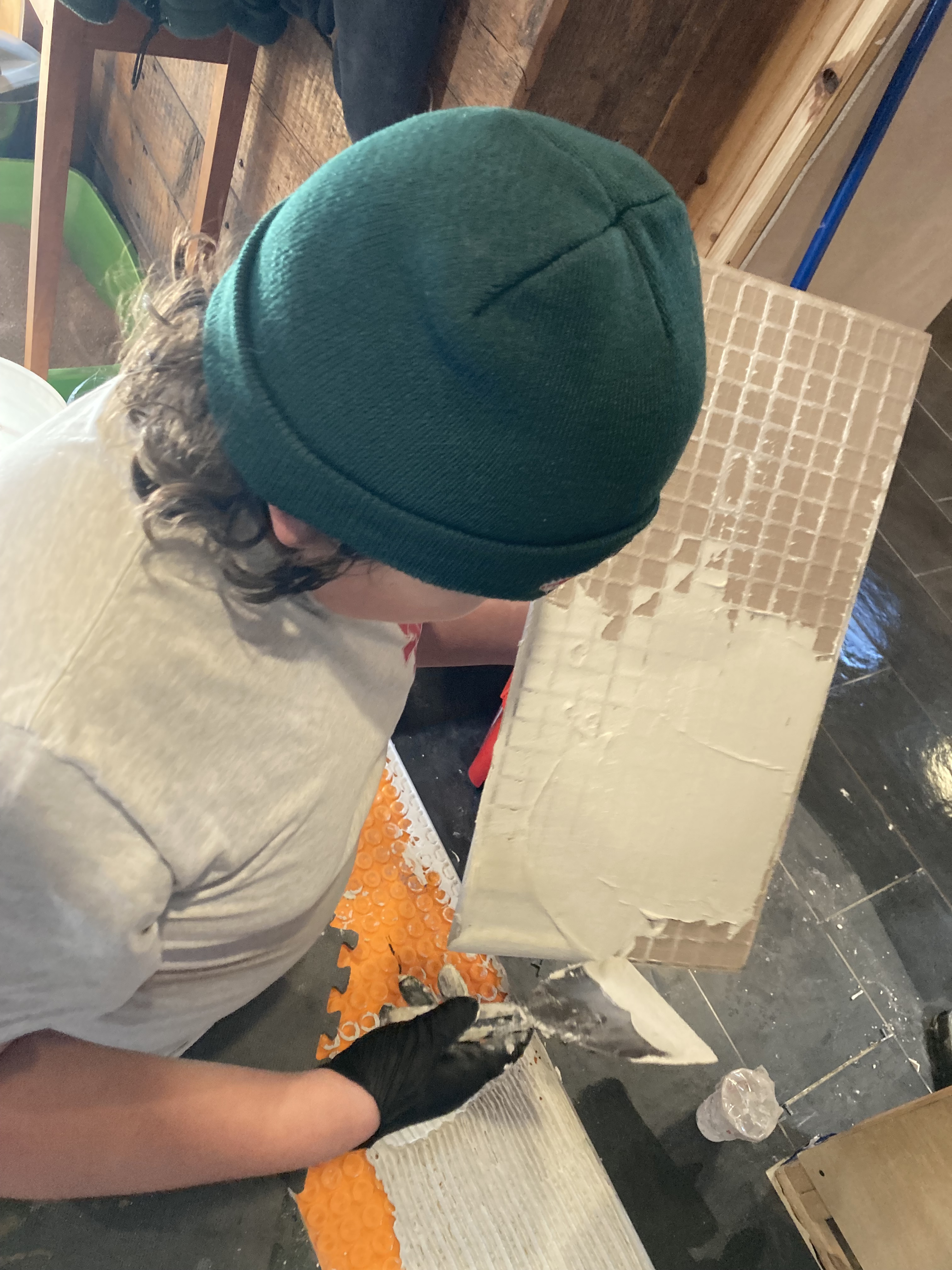
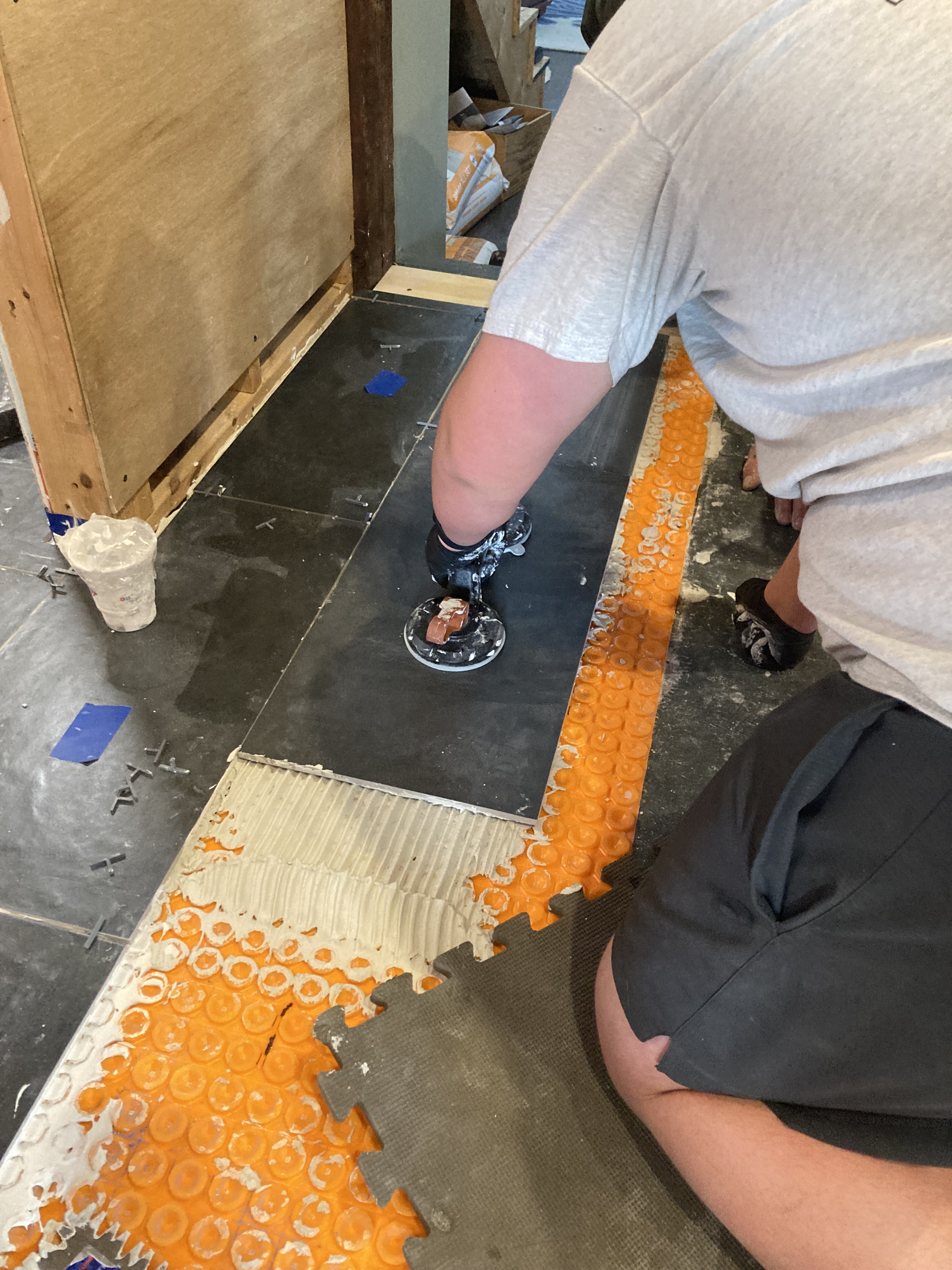
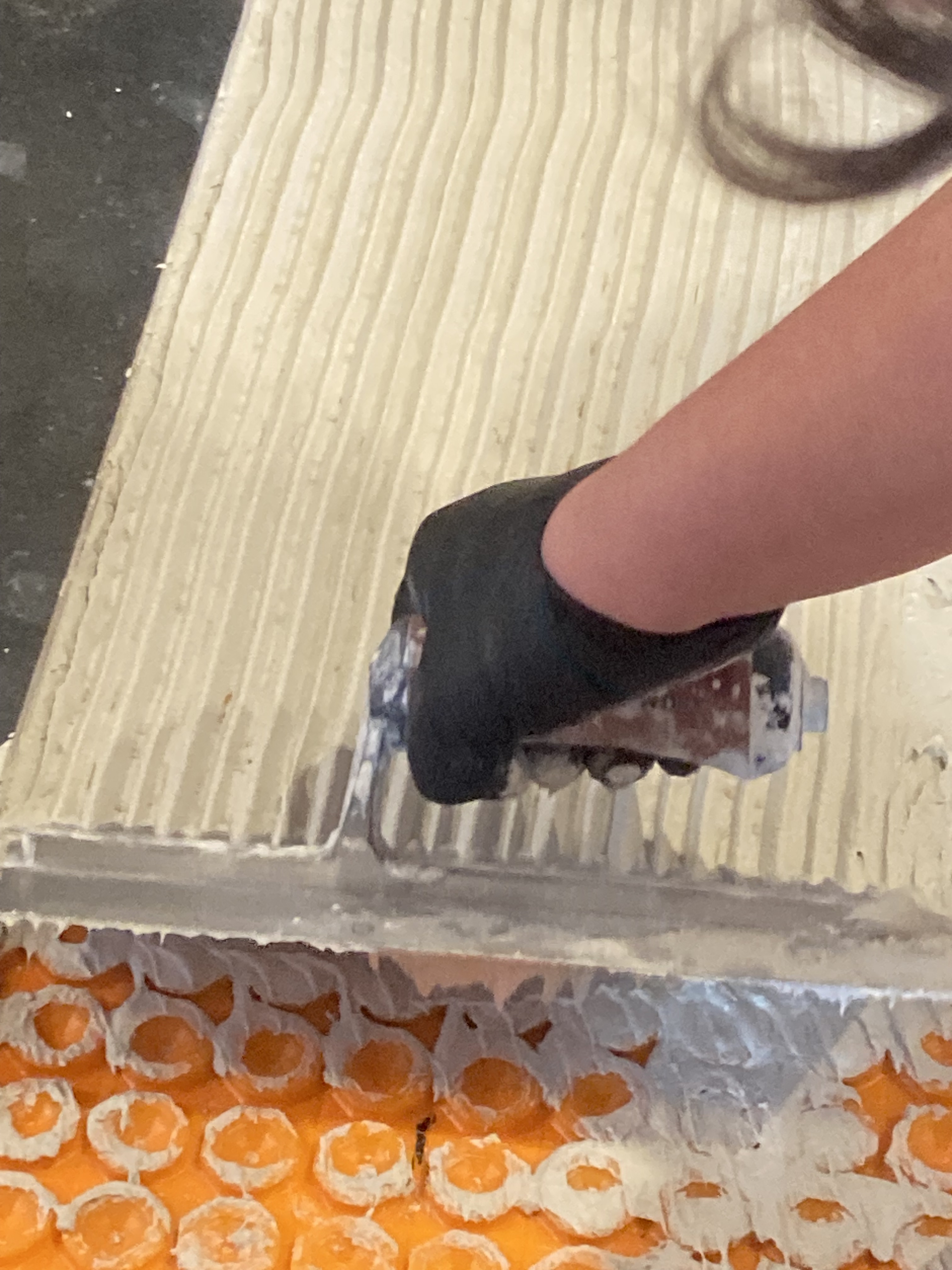
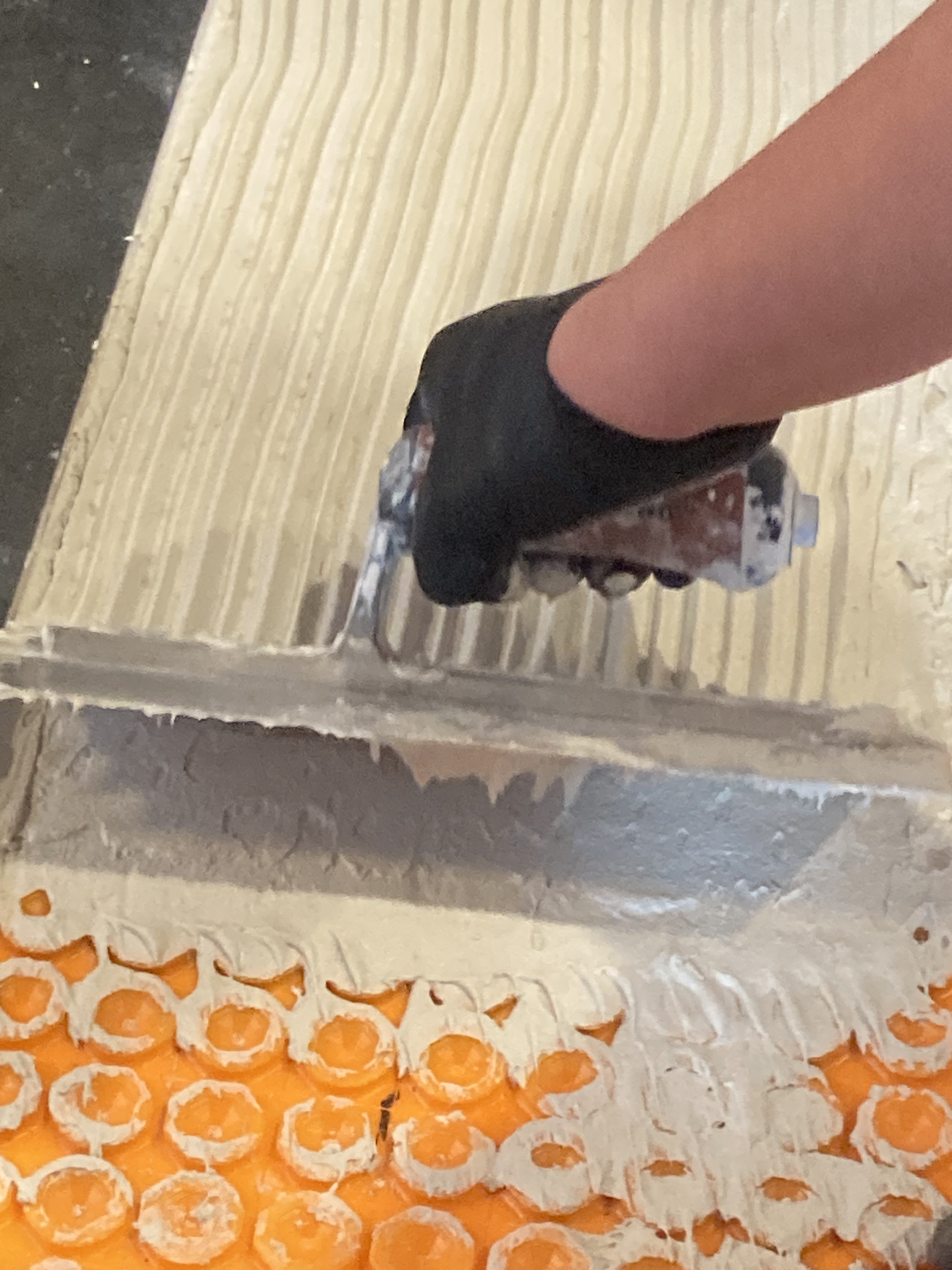
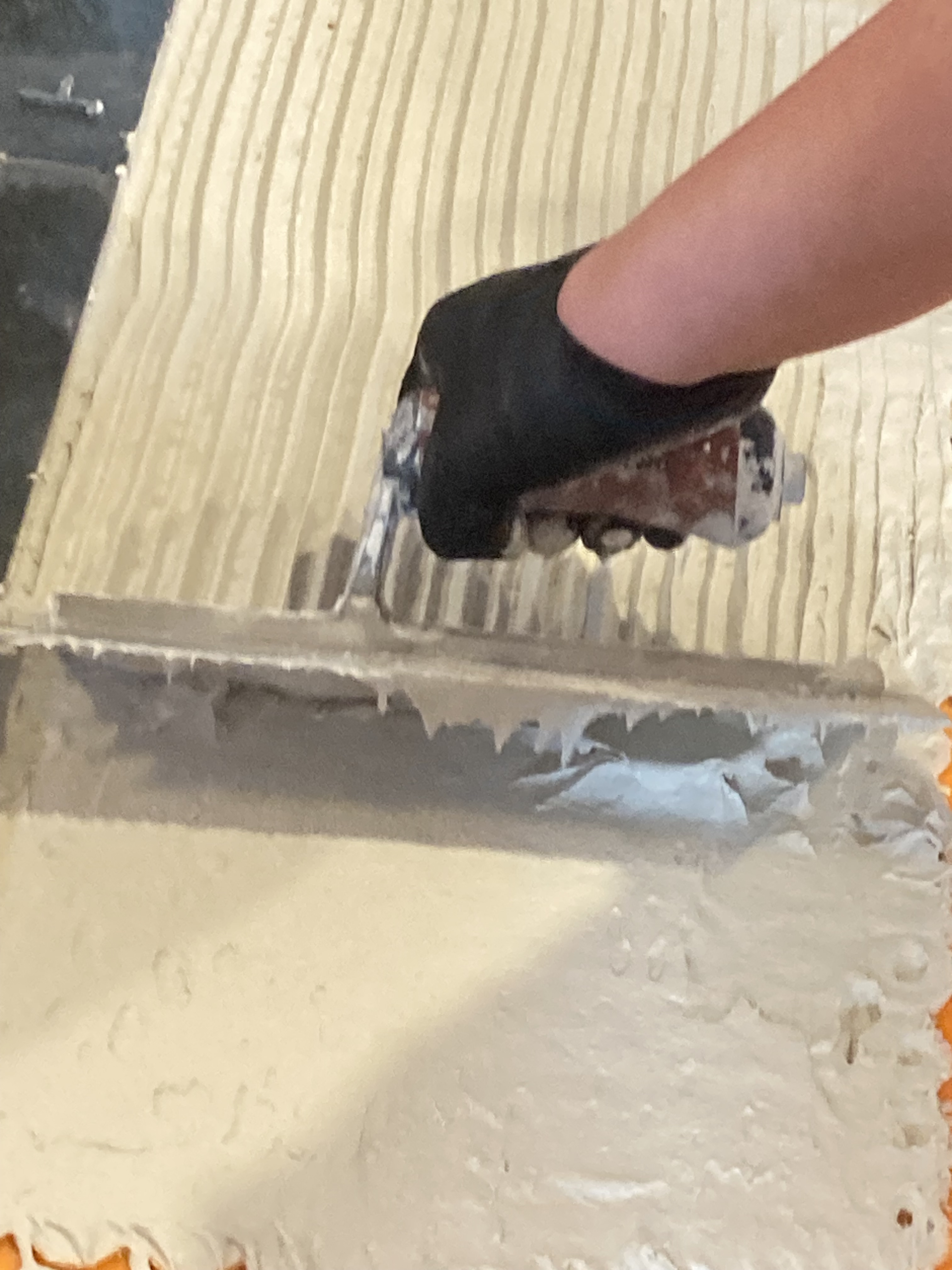
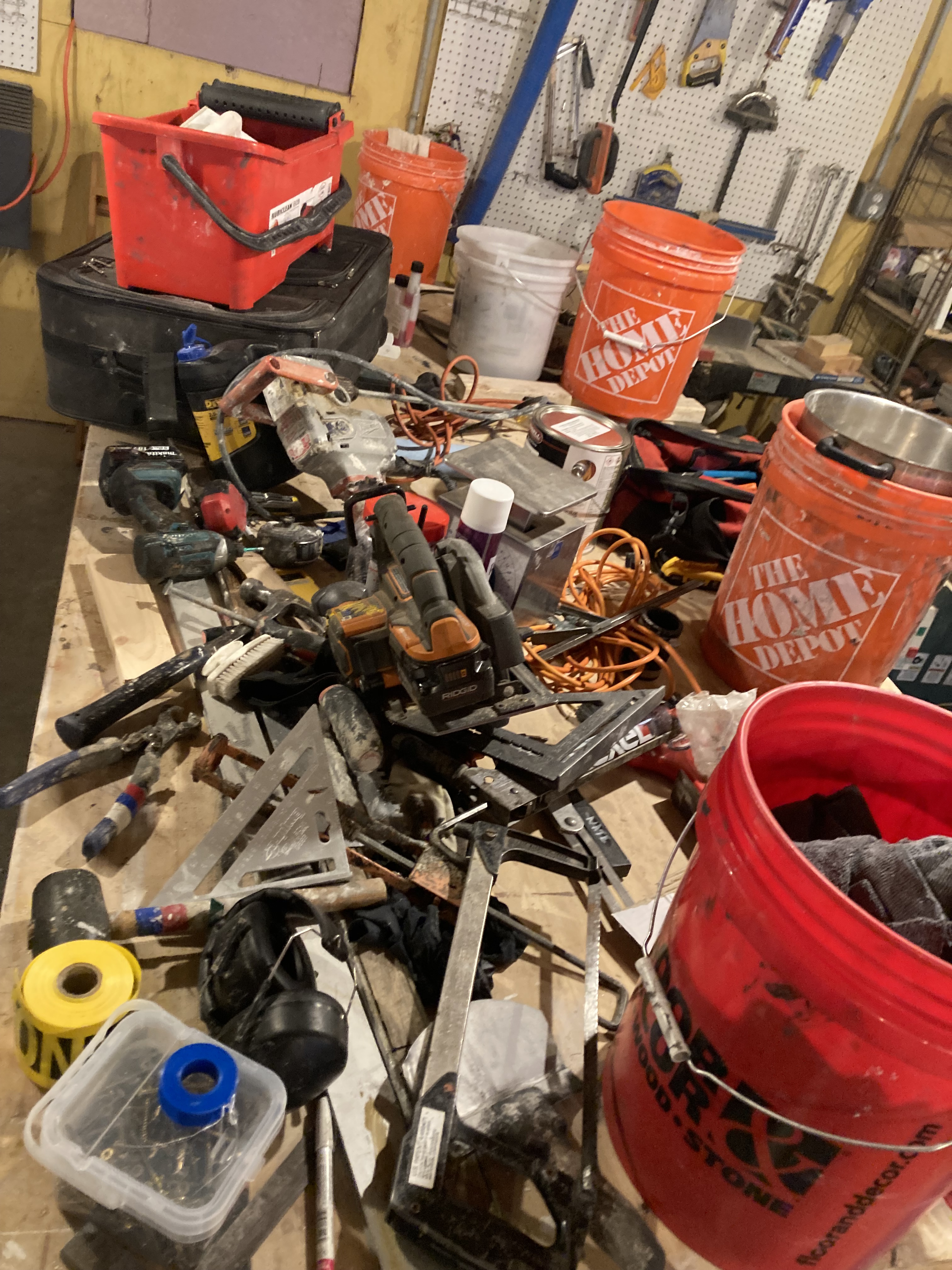
Tiling is about surface, not volume; each tile must be flush at all four corners. My son learned how to spread mortar, which again is about geometry. A notched trowel is the tool, and depending on the size of the notch – 1/8” or 1/4” or 1/2” – the amount of mortar spread will vary greatly. More importantly, the angle of the trowel impacts the thickness of the mortar, which is to say the volume. The Professor used a sawtooth trowel and he taught that the proper angle was just below 45 degrees.
To spread mortar is “to butter the tile.” We “double buttered,” applying mortar both to the floor, as well as to the back of the tile, in order to create a stronger bond. The tile is then set in place and gently pushed back and forth, to eliminate any gaps from the sawtooth troweled mortar, and to set the tile firmly and evenly in place.
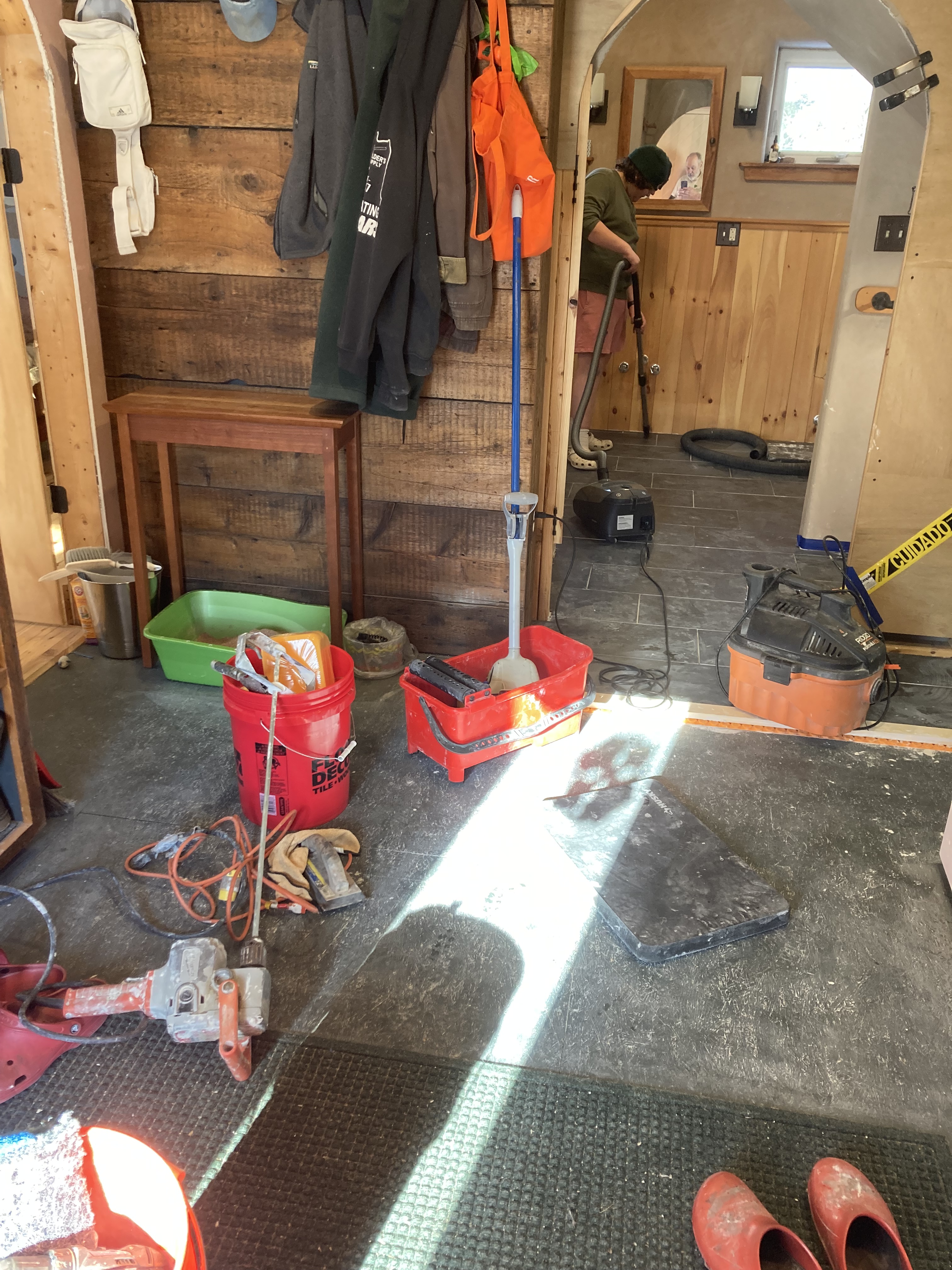
Tiling a bathroom floor is immensely disruptive. We had to pull the toilet and bathtub, there was no laundry for more than a week, showers were intermittent. When an object fell down the drain line we had to vacuum it out. For anyone with obsessive tendencies, the process is like chasing, or being chased by, the dragon. It was a long hard week.
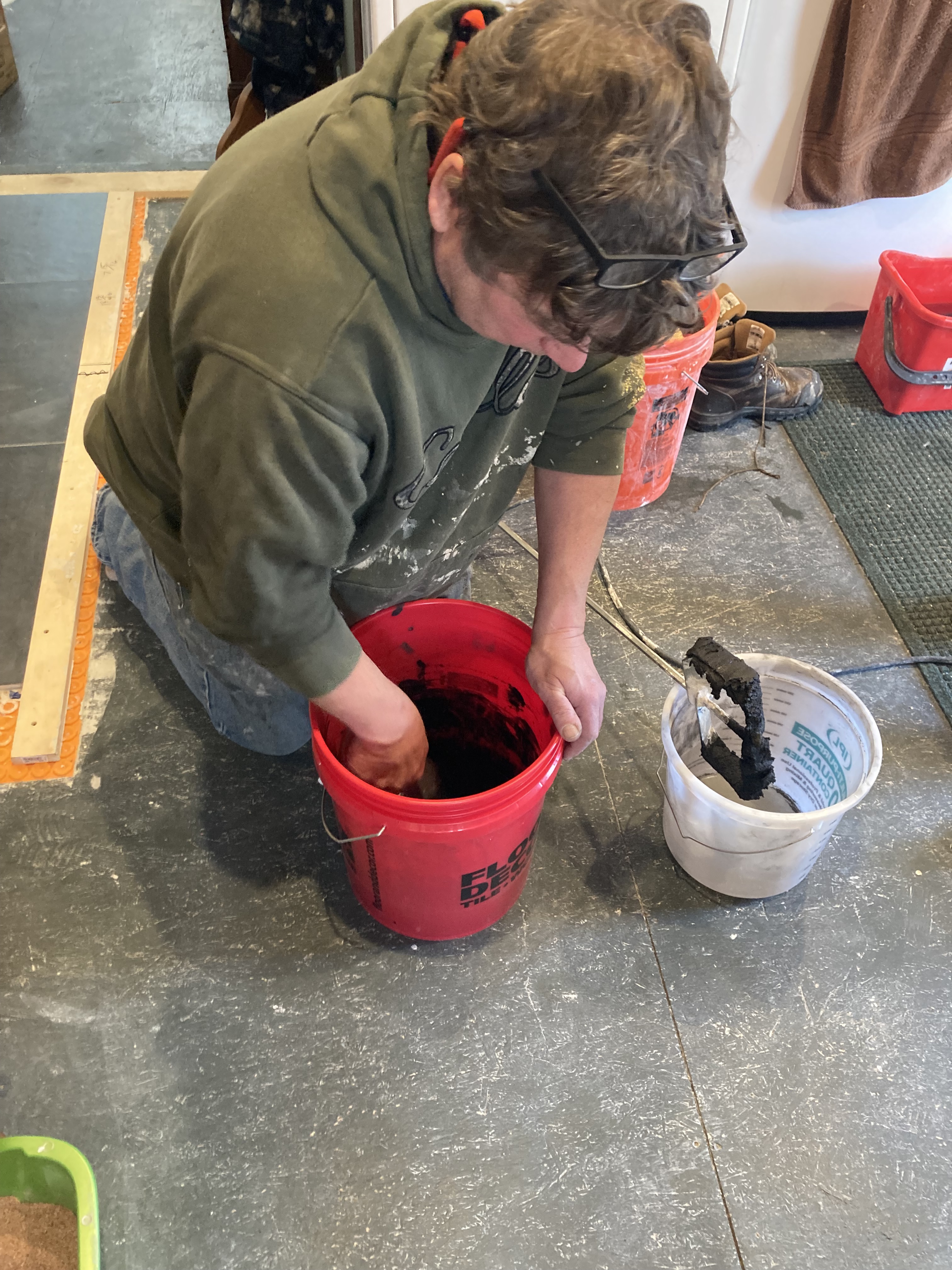
On the final day we set the grout, but the instructions wildly under stated the area covered by one bag. Mid-way through we had to mix a second bag – which meant cleaning the tools and the bucket, getting fresh water, mixing more – but the working time was a factor for the grout already set. If the grout cures before it is all set then you have a major problem. We were racing the clock. What we thought would be smooth teamwork became a gauntlet. Like a farm boy, my son hustled, taking orders in real time.
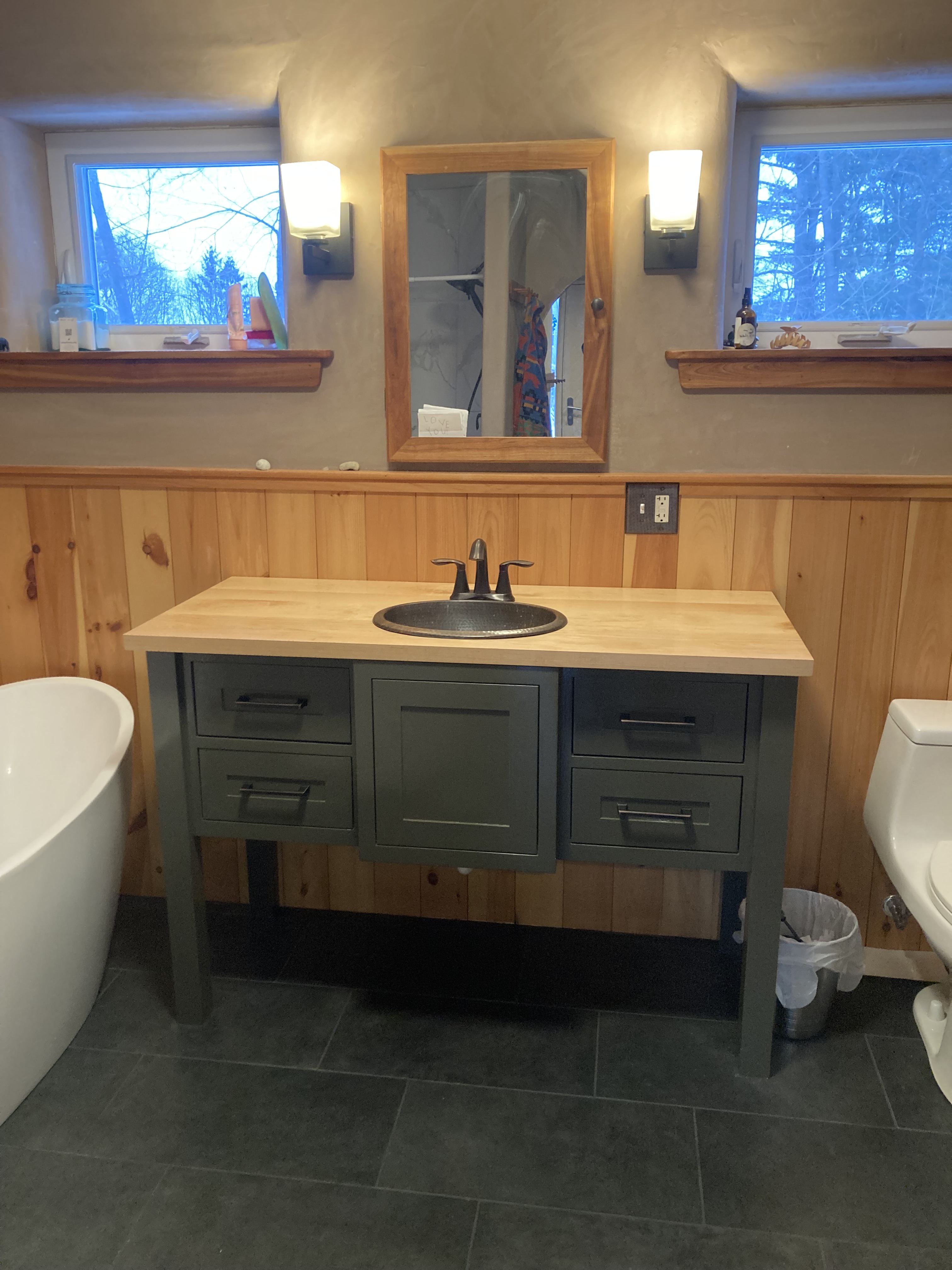
The marathon was grueling. Our teamwork was successful, the timing worked out, the end result wonderful, the washer and dryer in place and operating again. The radiant heat is working, programmed to 74 degrees at 5:30am, cooler to 62 during the day, and then reheat for the evening, back to 60 for the night hours. Verily, verily, I say unto thee, our blessings abound!
Through this gauntlet of fire my son is learning what the Greek sage said, so long ago, “Number rules the universe.”
Ohm, not om
Posted: February 6, 2026 Filed under: Child Centered Activities, Chronicles of a First Time Parent, Portfolio - David's work 3 Comments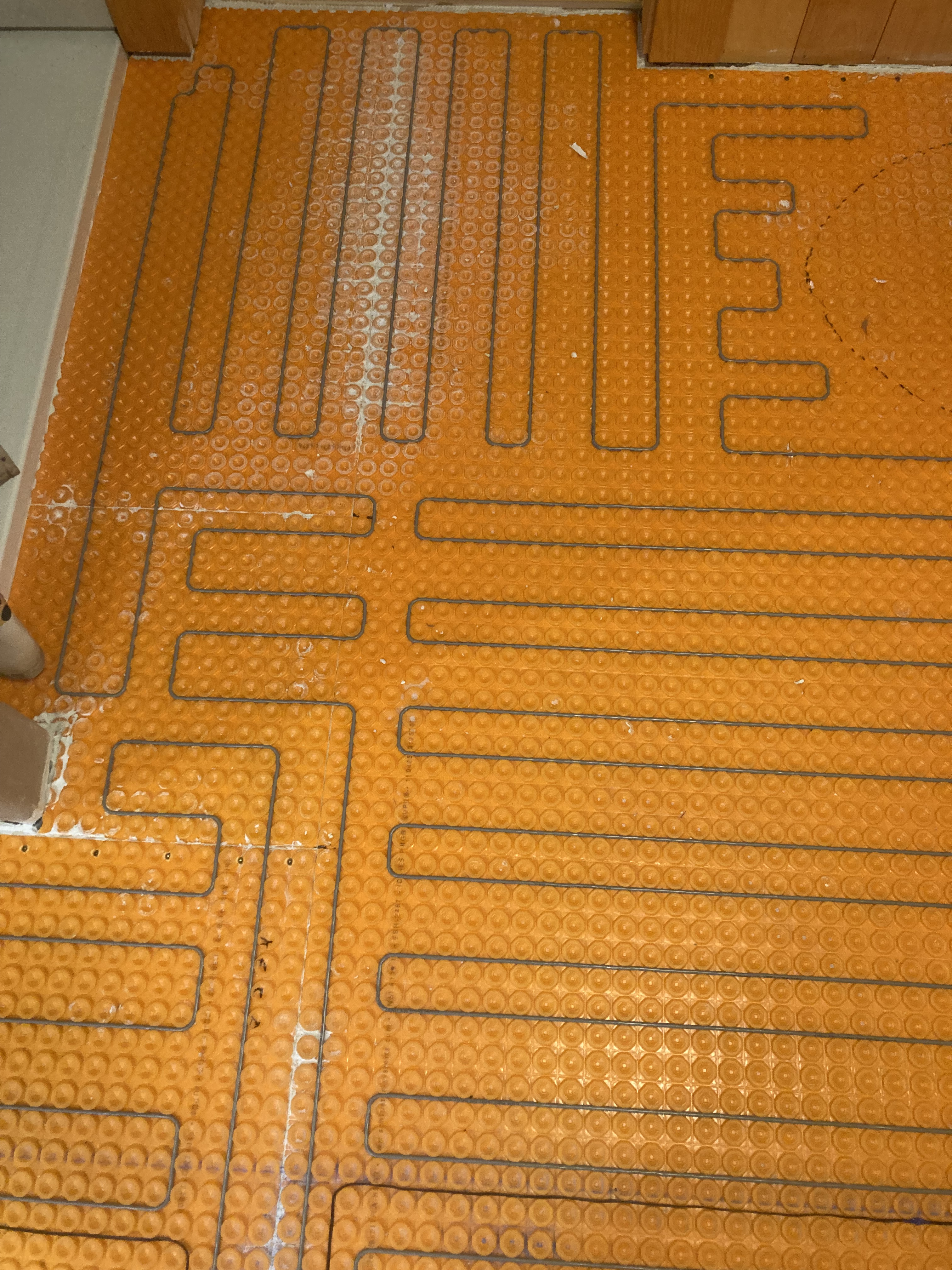
The Professor makes house calls.
His full title is the “Pema Professor,” to honor Pema Chödrön, the American-born Tibetan Buddhist. The Professor came to our house and held class in the bathroom, not about Om – the sacred syllable – but about Ohms, the measurement of electrical resistance in circuits or conductors.
We are doing the finish work, finally, in the bathroom we added onto our house back in 2017. For nine years that room has had the basic plumbing but no heat, and a subfloor painted grey. Immense is our blessing to be able to do this finish work now, when masked jackels rampage our community, when our brown skinned neighbors stay indoors afraid to leave their house, more than 200 people having been arrested and absconded during “Operation Catch of the Day,” while so many homeless still live on street corners begging for coins; that we are able to afford such luxury now is a privilege not lost upon us. But still, our addition needs to be finished.
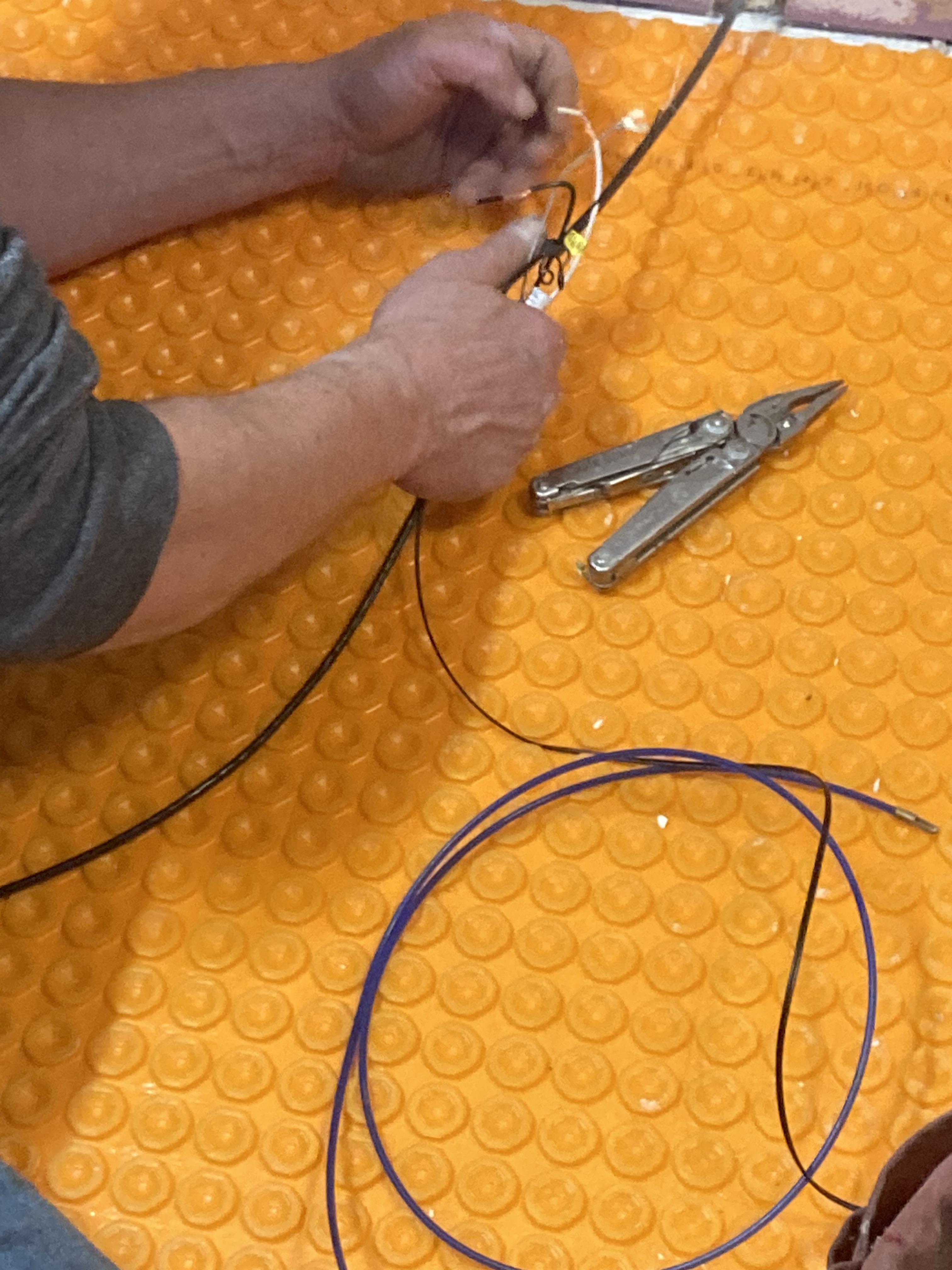
We are laying electric radiant heat on the bathroom floor, and then tiling. The Cadillac approach. The process begins by laying a waterproof uncoupling membrane which prevents tiles from cracking if the wooden subfloor moves. Into the membrane’s grid, we snapped in place 84 square feet of heating cable. That wire connects to a 15 amp Ground Fault Circuit Interrupter circuit breaker. Before laying tile, we needed to test both the Ohm resistance in the cable and its ground fault continuity, to ensure the integrity of the cable and circuit.
An Ohm is the measure of resistance, an object’s opposition to a flow of electric current. That resistance to flow creates friction, which friction creates heat, which is what we desire in the floor of the bathroom. We need to test this before laying tile.
Ohm’s formula is R = V/I, where V is voltage – the push driving the flow of electric charge – and I is current – the electric charge that flows past a specific point in a complete electric circuit. The formula for resistance was discovered by George Ohm, a high school teacher in Cologne, Germany, who published his theory and formula in 1827. The academics rejected his idea, but in 1841 Ohm was recognized and received the Royal Society’s Copley Medal. The unit of electrical resistance, the Ohm, is named in his honor.
In Language Arts my son has been learning the Greek alphabet. By happy coincidence, the Greek letter omega (Ω) is the symbol for ohms, chosen because its sound is similar to Ohm’s last name. Everything seems concordant here at the art farm.
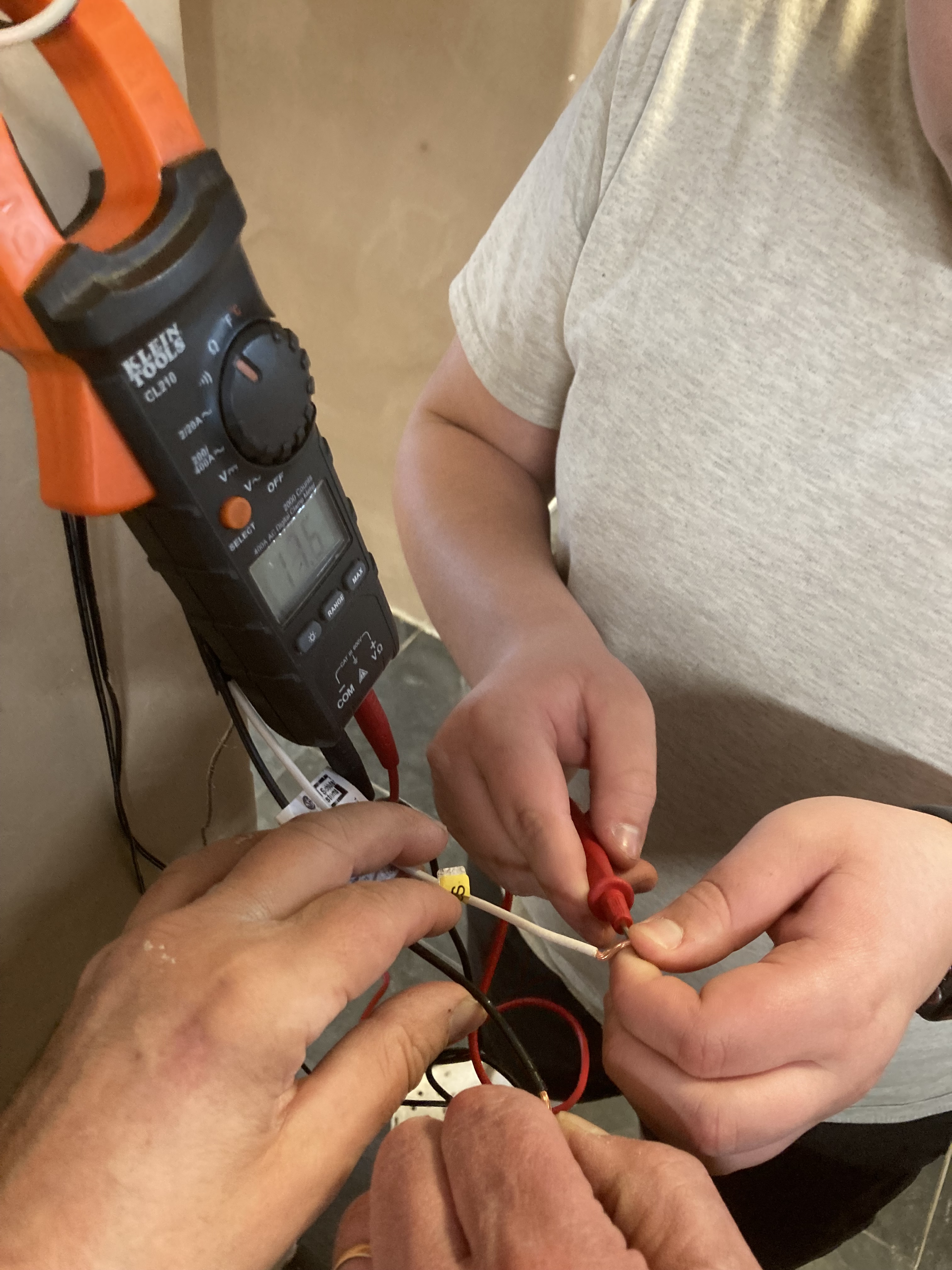
To install the radiant floor heating cable, we made multiple tests of “conductor resistance” to ensure the circuit was functional. We used the Professor’s megohmmeter to take an ohms reading between the two power leads. At the factory the cable tested 14.8 ohms, but our test before installation was 14.1, after cable installation was 14.2, and after tile installation was 13.4. The manufacturer allows a 10% variance, so we remain within that range. Our test was positive and we proceed.
Of note, if the tester uses his fingers to press the megohmmeter leads against the copper lines, then the resistance reading shows the resistance through his body; he has become a part of the circuit. As a homeschool experiential, my son tested the resistance that way and got a reading of 4.3 ohms. The Professor did same and had a 4.7 ohm reading. The lower the ohms the easier electricity flows through a circuit. The circuit breaker was off so he was not at risk. Salt and magnesium in my son’s body can account for the difference because they are conductive electrolytes which increase the flow of electricity. My son does take a magnesium supplement so there is a line of reasoning here.
And so life goes here at an art farm. Ohms not om, our homeschool tutorial was one step the toward tiling the new bathroom. Updates to follow, as this journey continues.
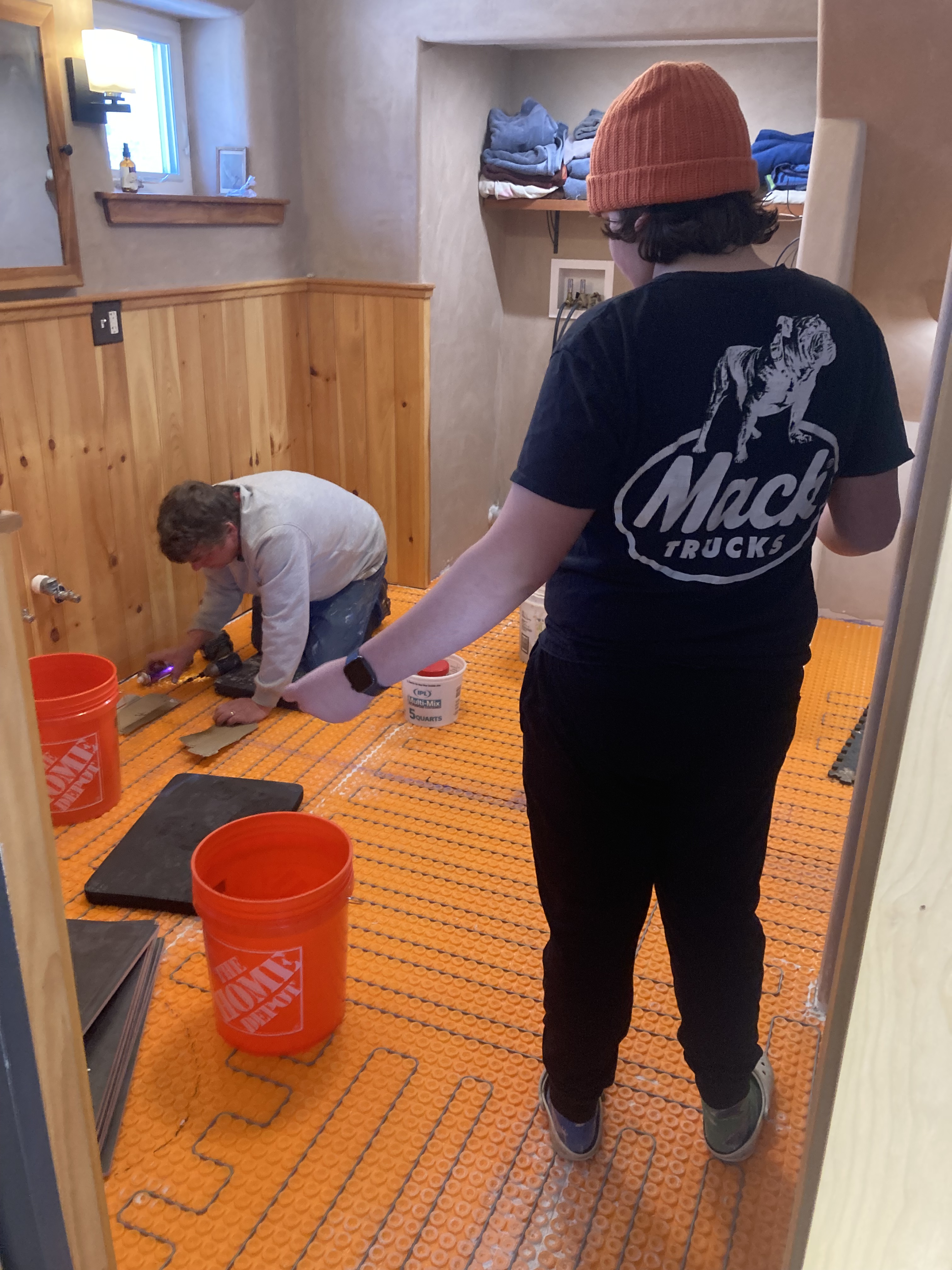
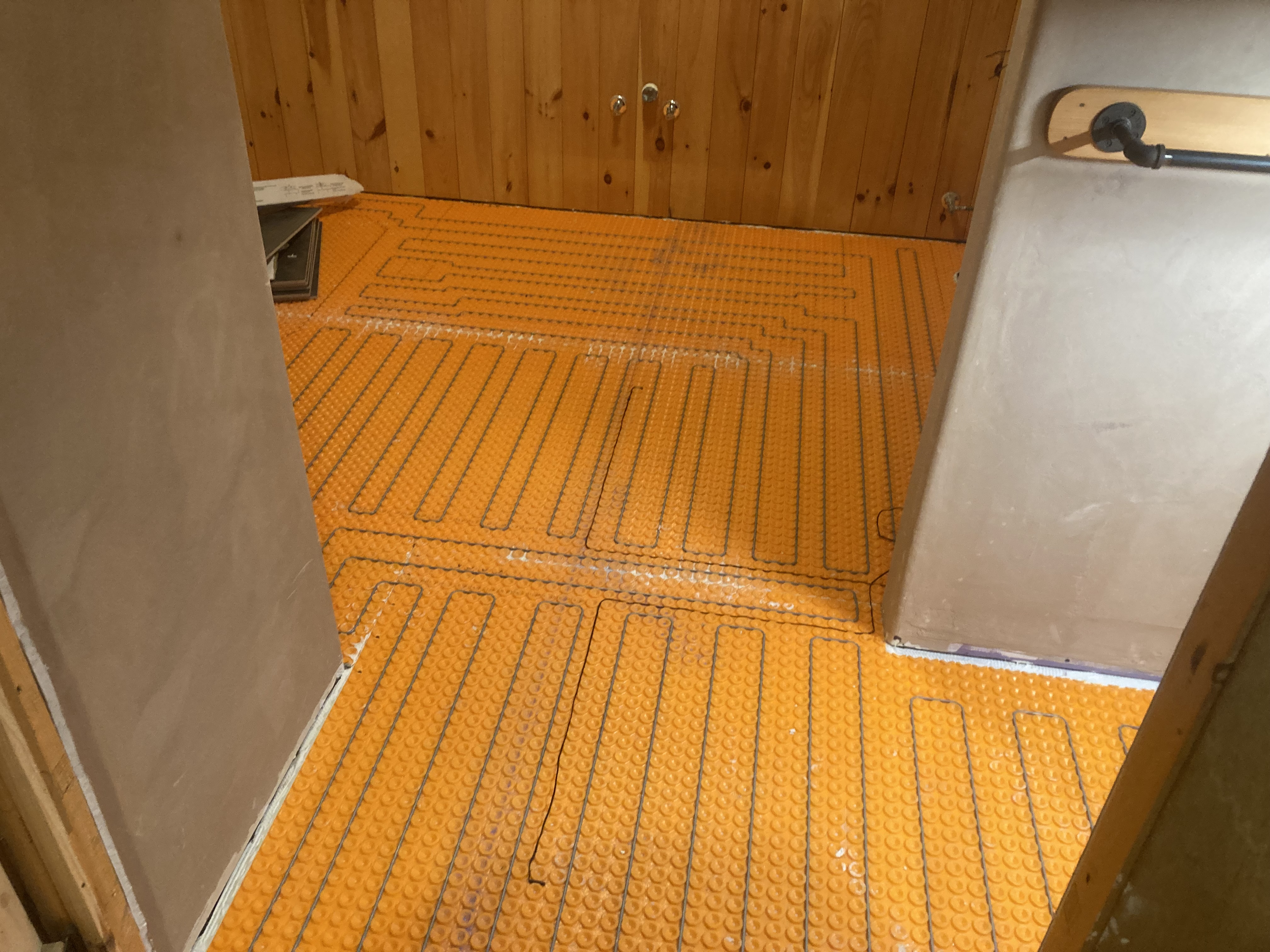
The log splitter
Posted: January 30, 2026 Filed under: Portfolio - Elena's work, What is an Art Farm 1 Comment
Growing up in Illinois, a “log splitter” was not a tool but a moniker for the young man downstate who later became the “Great Emancipator.” Honest Abe, known by many names, did in fact work as a young boy clearing fields and splitting logs by hand.
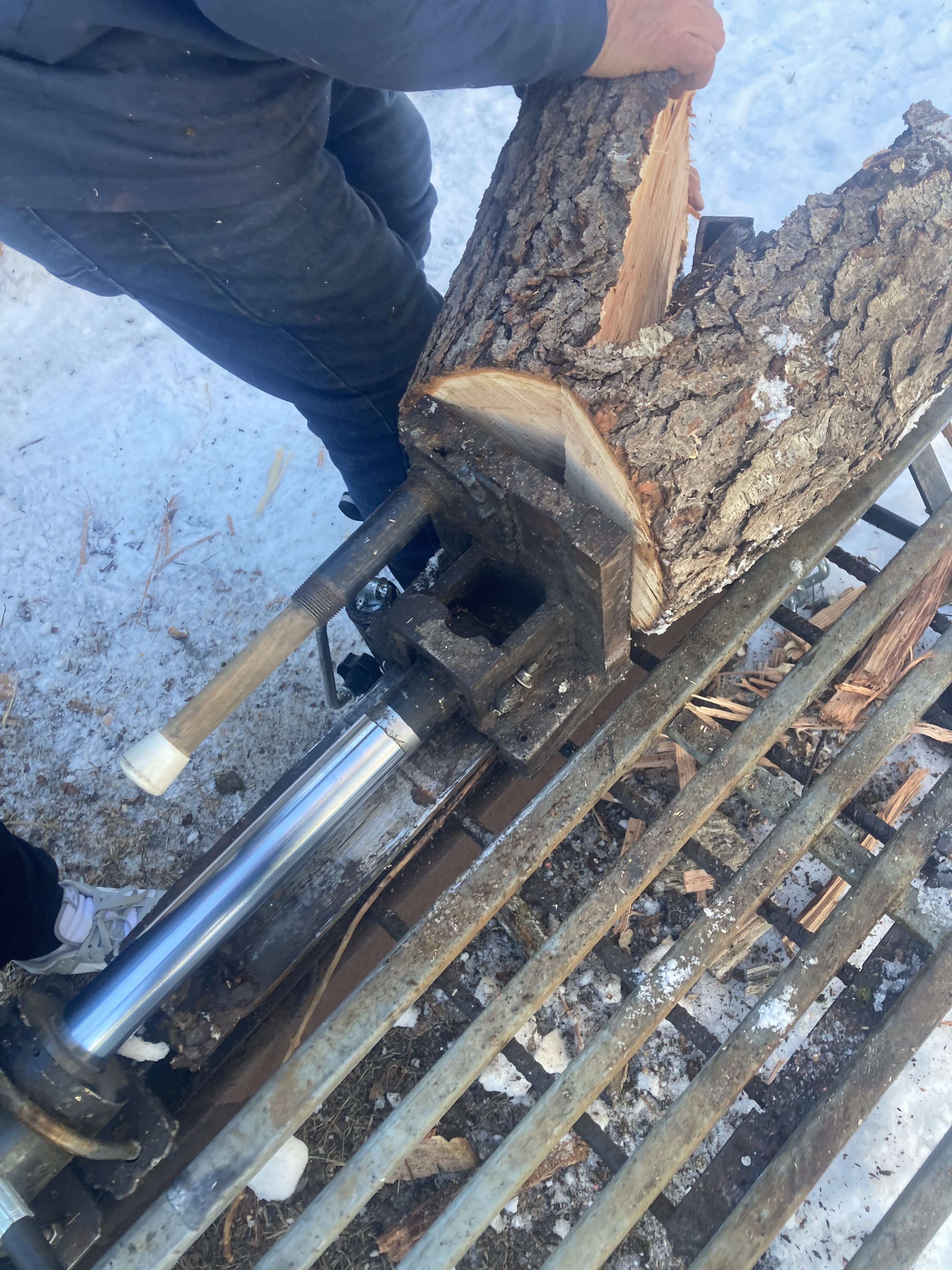
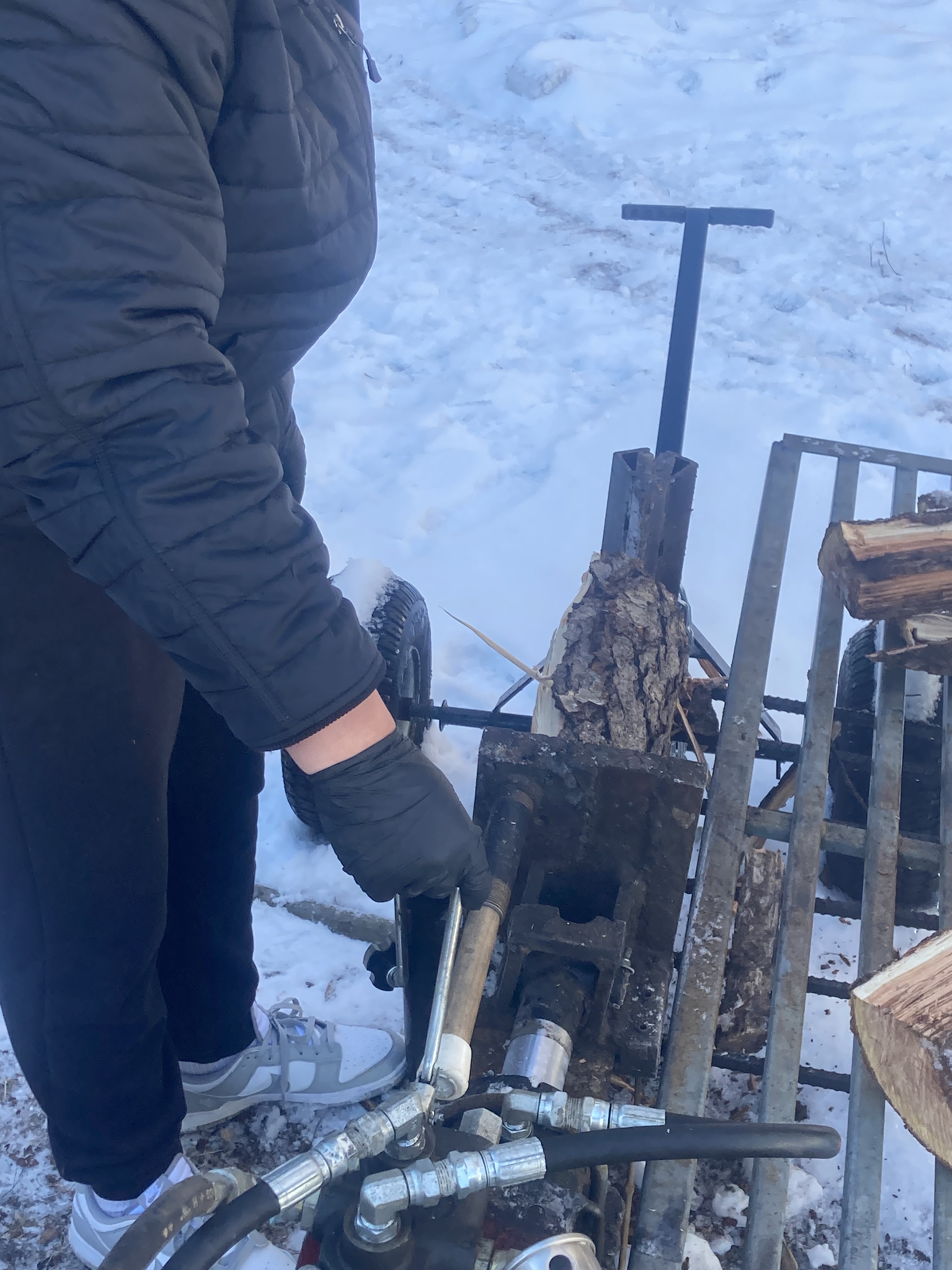
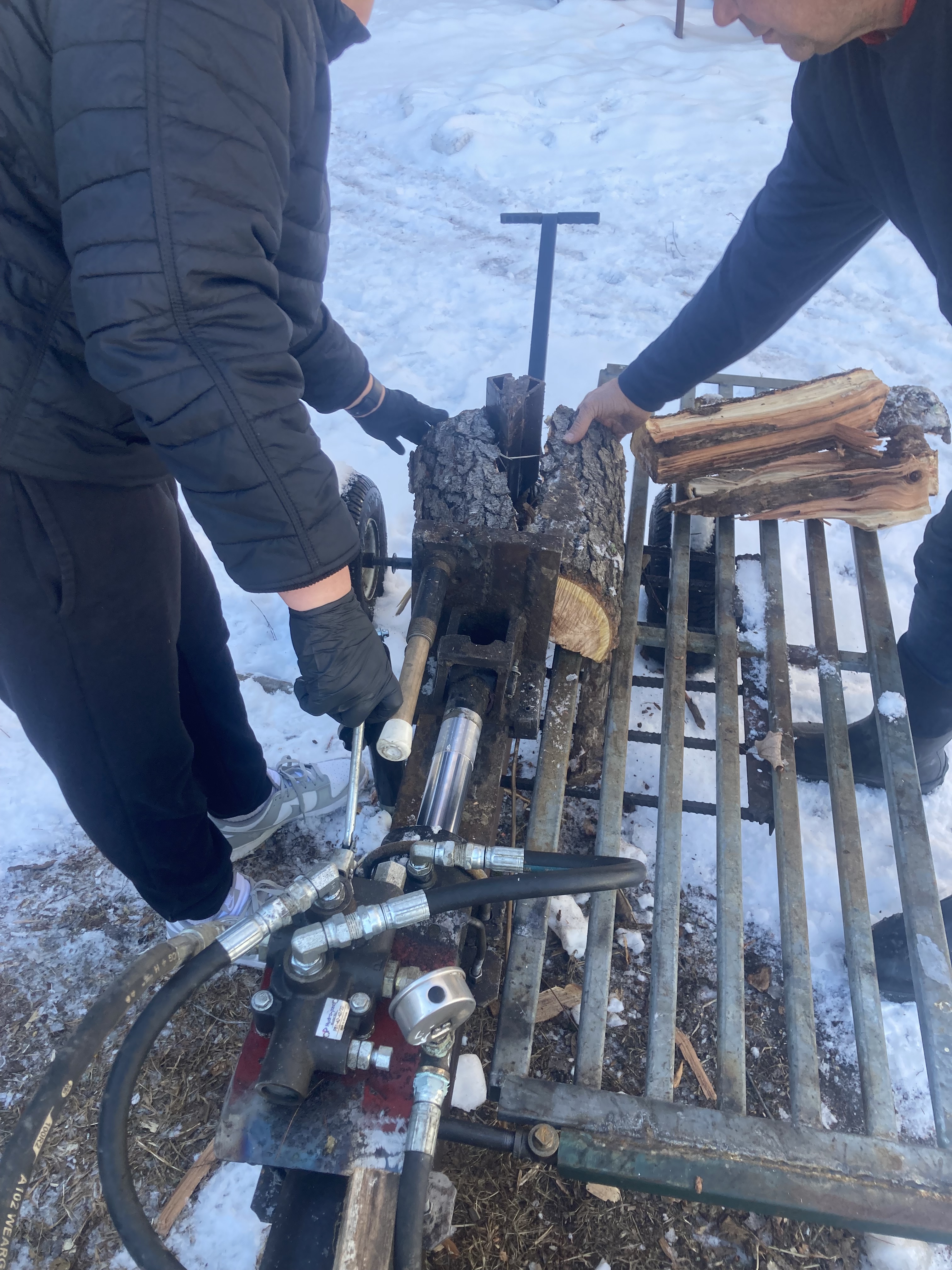
Here in Maine almost half of the homes are heated by wood stoves so log splitters are a tool – not a nickname – used everywhere. My son has learned how to swing an axe, and in homeschooling he has been learning the hydraulics of a log splitter.
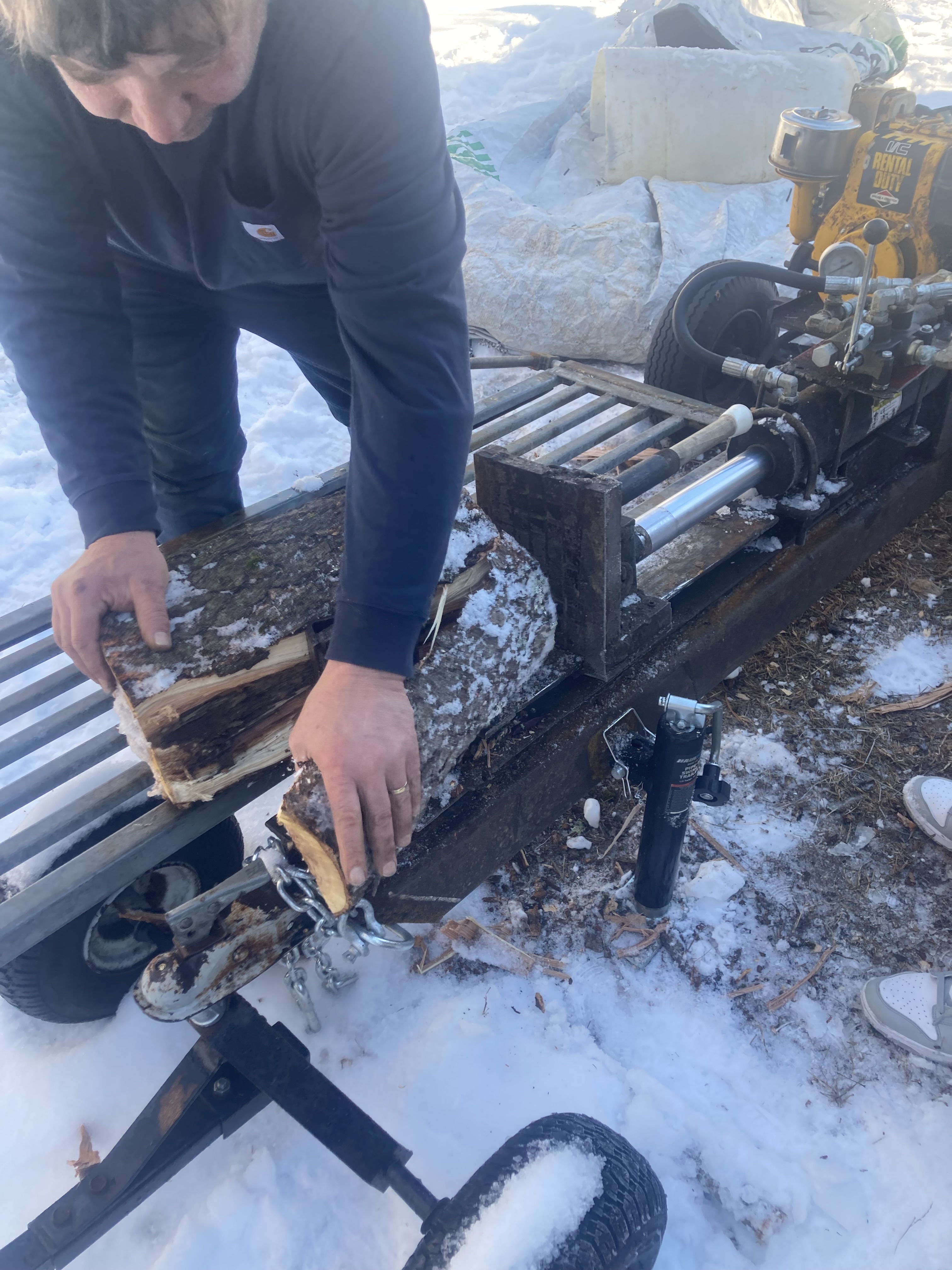
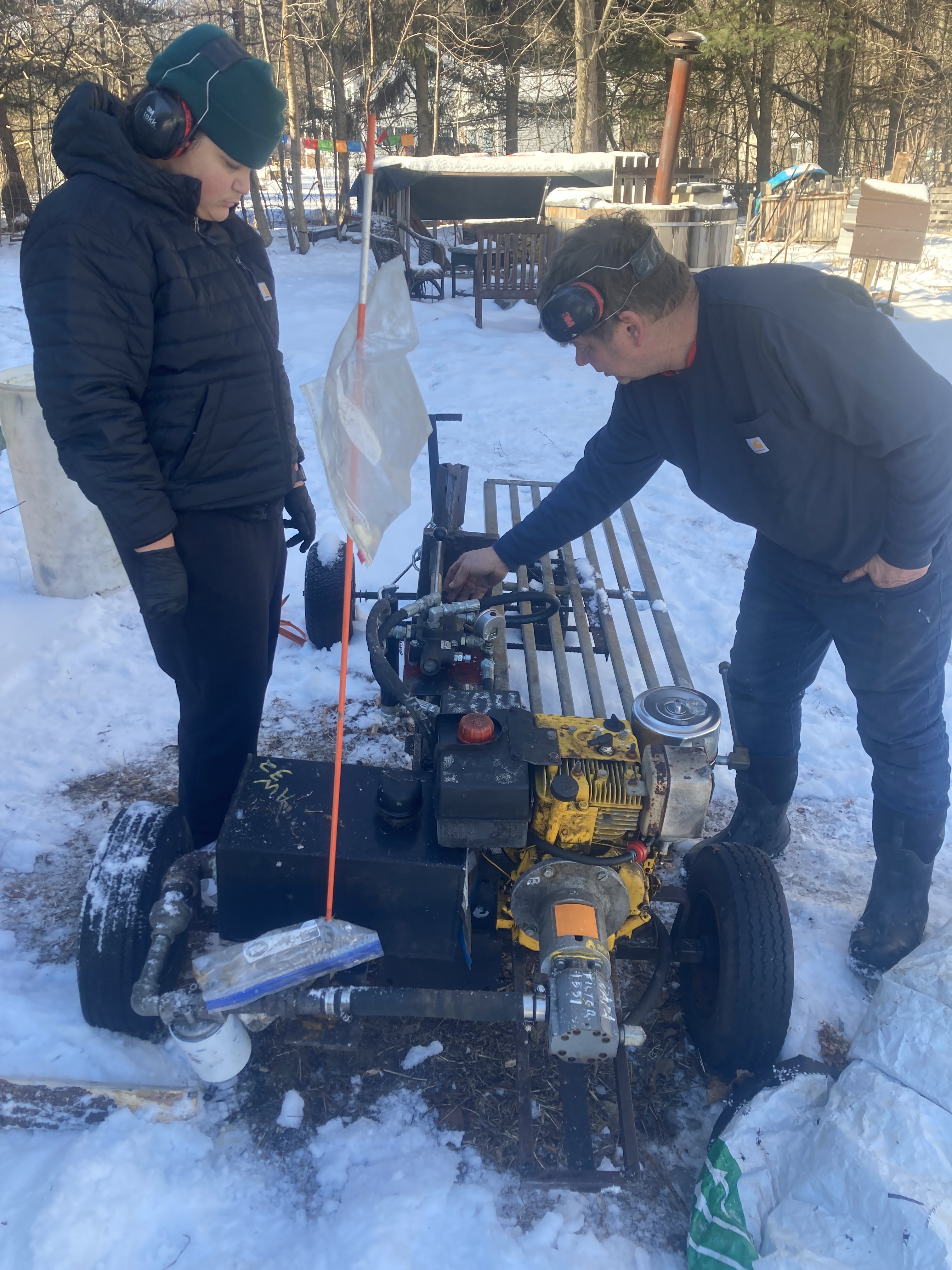
The Professor built his log splitter with a hydraulic ram able to push 30 tons, enough to move a semi-trailer. That power proved too strong for a weld on the chassis and so, when splitting a black elder log, the weld cracked before the log split. Black Elder is a hardwood indeed!
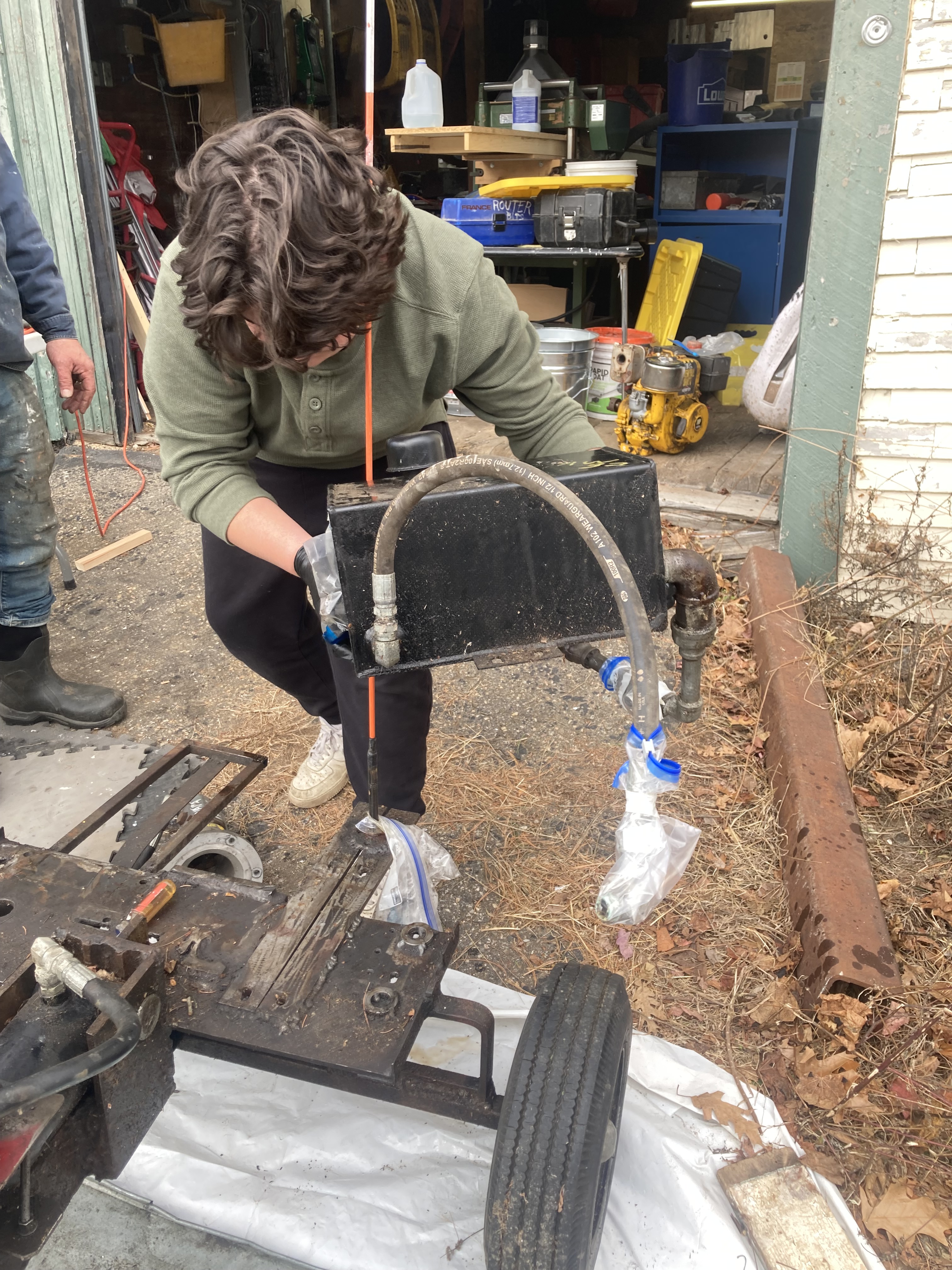
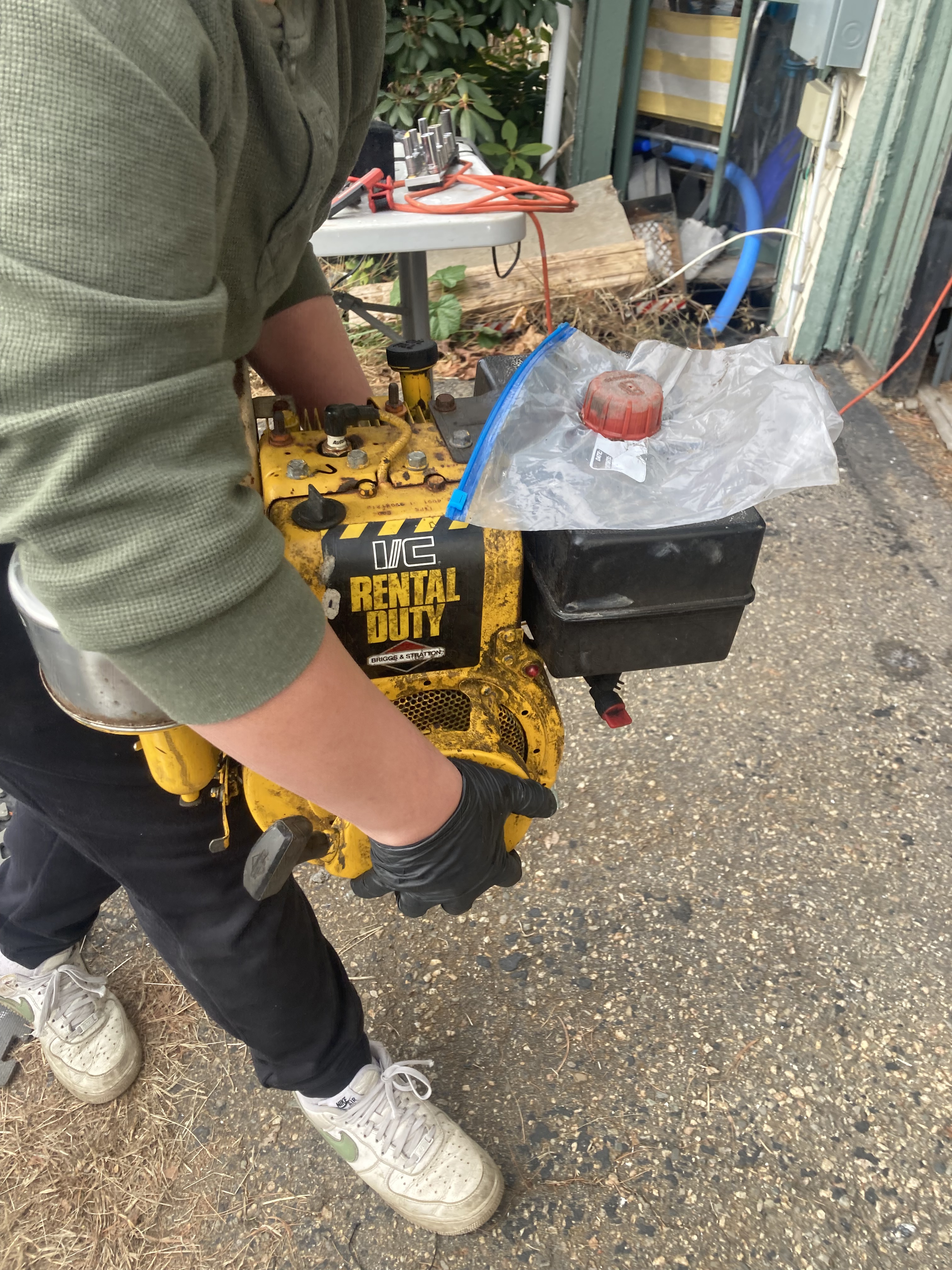
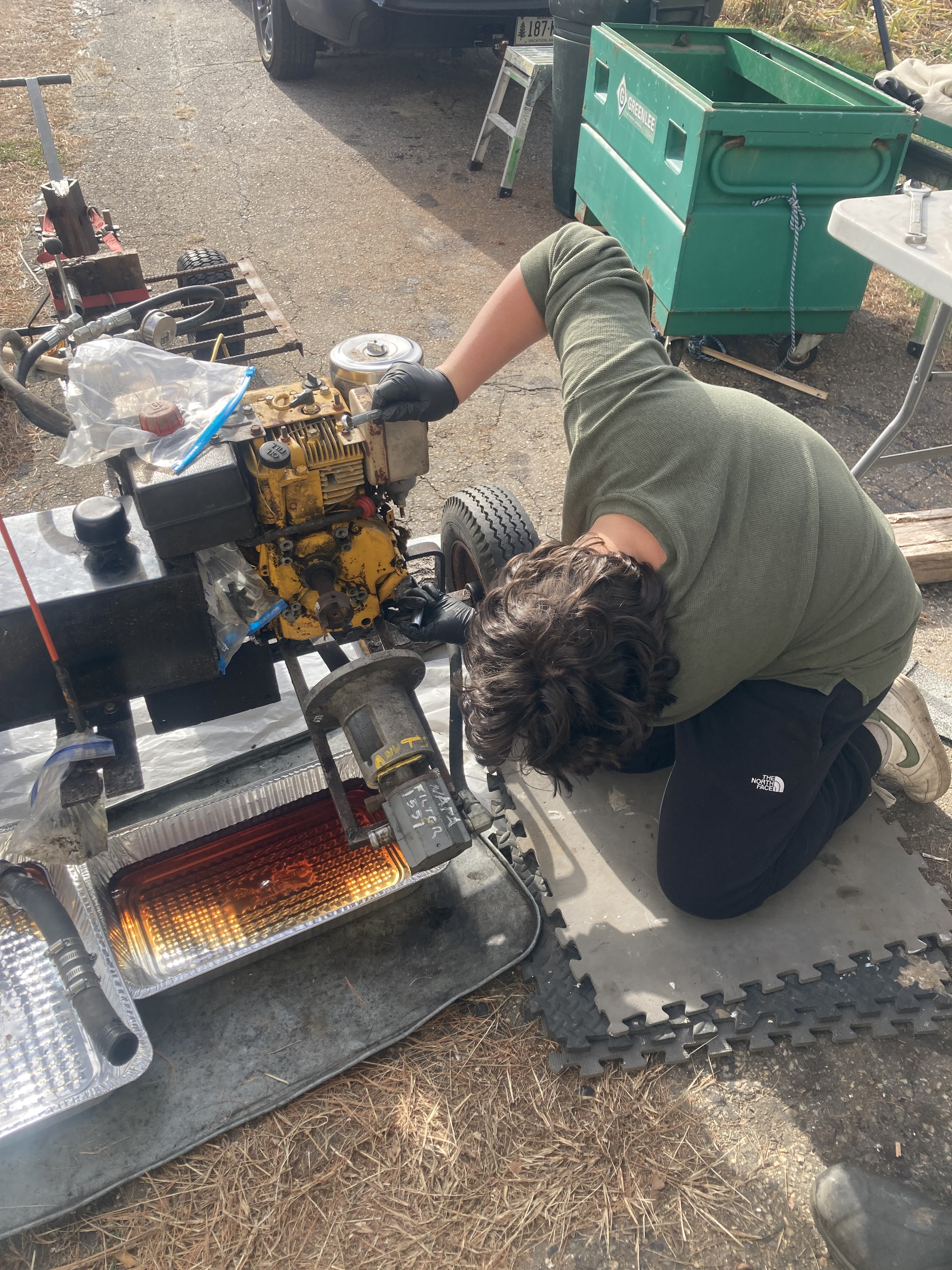
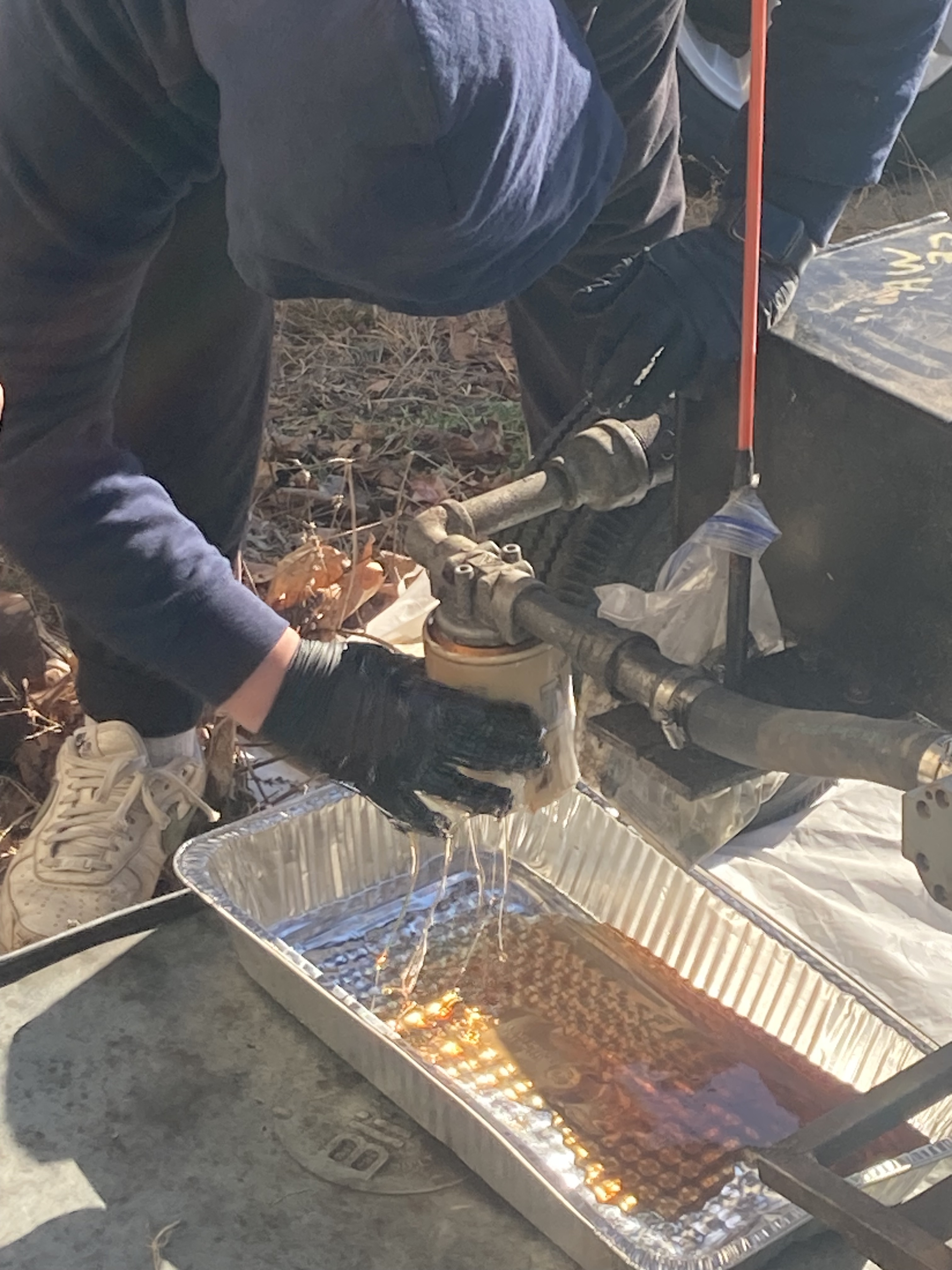
The Professor invited my son to disassemble the log splitter; a “shade tree science class” on small engines and fluid mechanics. The math of fluid dynamics gets very complex quickly, so we focused on the basic principles and how hydraulics work.
The motor is a 4-stroke internal combustion engine, which means the piston completes four rotations while turning the crankshaft. The four strokes are (1) intake, (2) compression, (3) combustion, (4) exhaust. The 4-stroke offers higher fuel efficiency, lower emissions and better durability.
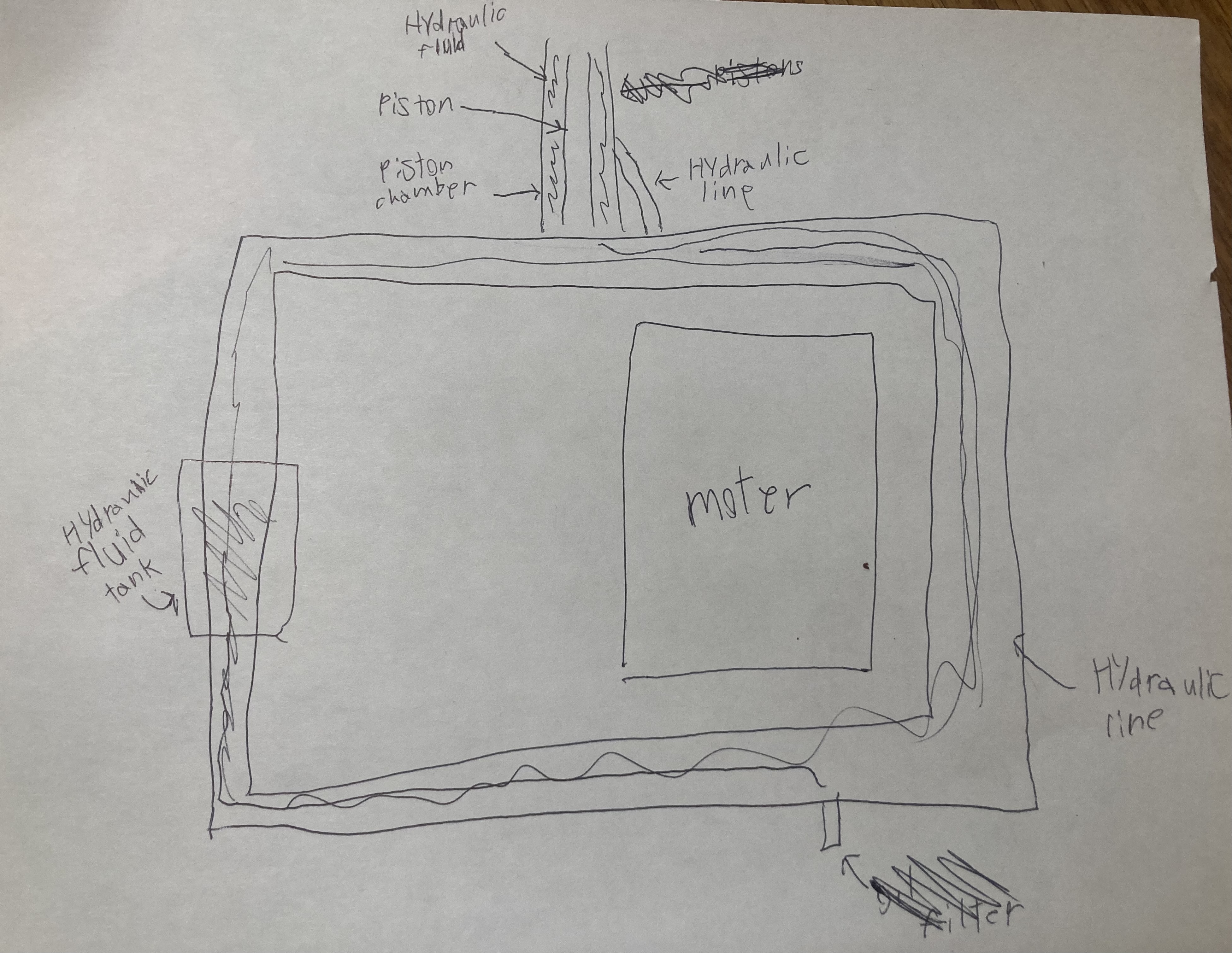
To explain how the hydraulics work my son drew a diagram then described the hydraulics like this: “It is like a big rectangle. When you turn the motor on, the hydraulic fluid moves through the lines…around the edge of the rectangle, and then it goes into the piston chamber with a diameter about 5”. As you open the lever, the fluid fills the chamber, where the piston is centered, and the piston begins to move forward, in the path of least resistance. When you toggle the switch back, the piston retreats. It is something like that.”
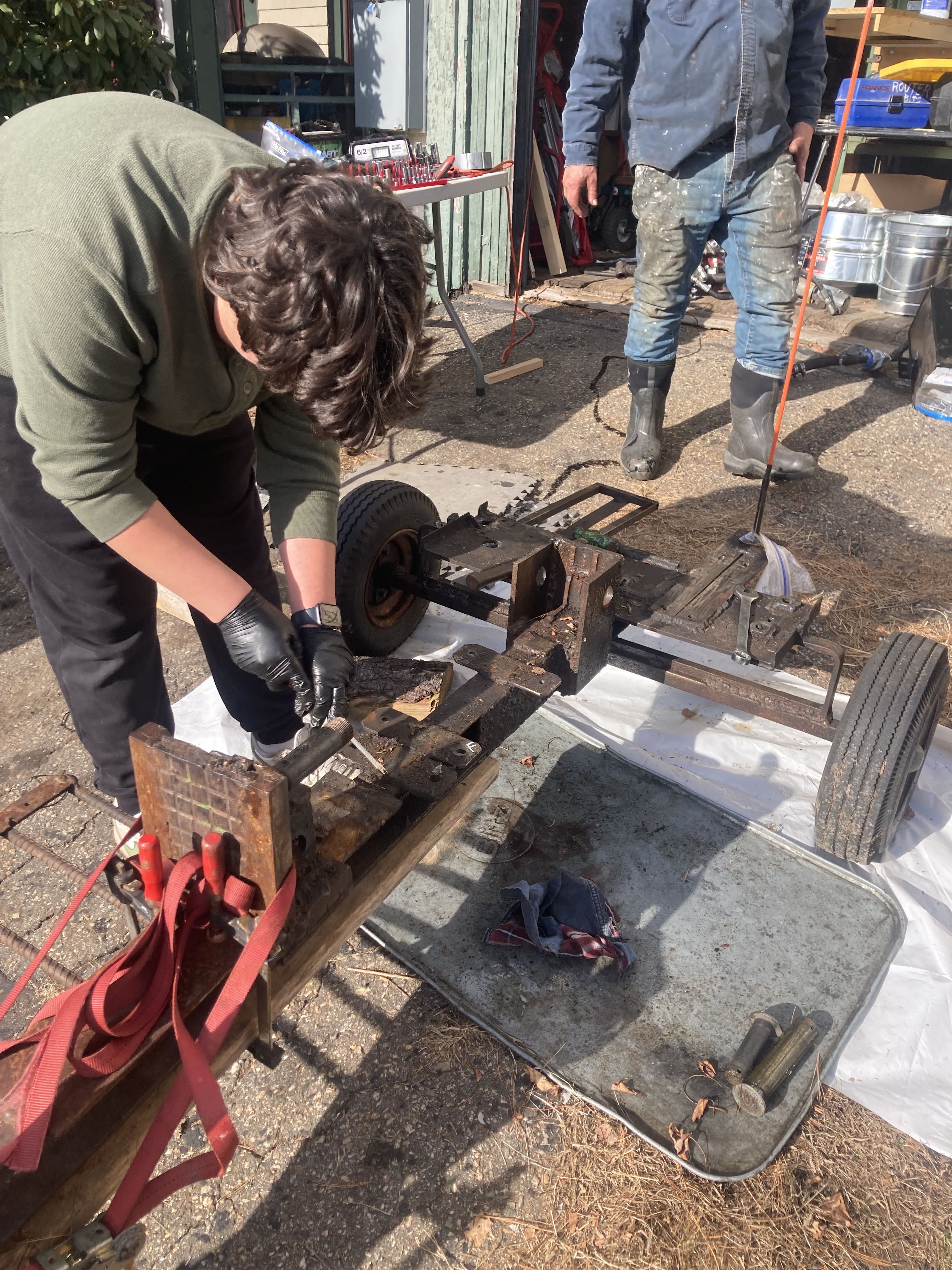
The process was for my son to reverse engineer the log splitter, taking it apart and carefully numbering every part in the process. The Professor taught my son how to measure the size of a nut by using your finger. My son’s finger is about 1/2”. My finger is about 3/4”. When looking for a socket, you can use your finger as a rough gauge. My son mastered this quickly.
After the chassis was stripped bare, the Professor welded a new metal frame beneath the old chassis. He doubled the strength. He then reassembled the machine following my son’s carefully numbered plan.
In early January we drove to his house, and beneath the shade tree split wood using the log splitter. We had come full circle. And the Professor has split wood to heat his home during this bitter cold winter.


________________________________________________
Credit where credit is due: Lead photo, “Black bird, White snow” by Elena.
the Why Cheap Art? manifesto
Posted: January 23, 2026 Filed under: Art & Healing, What is an Art Farm | Tags: bread & puppet theatre Leave a comment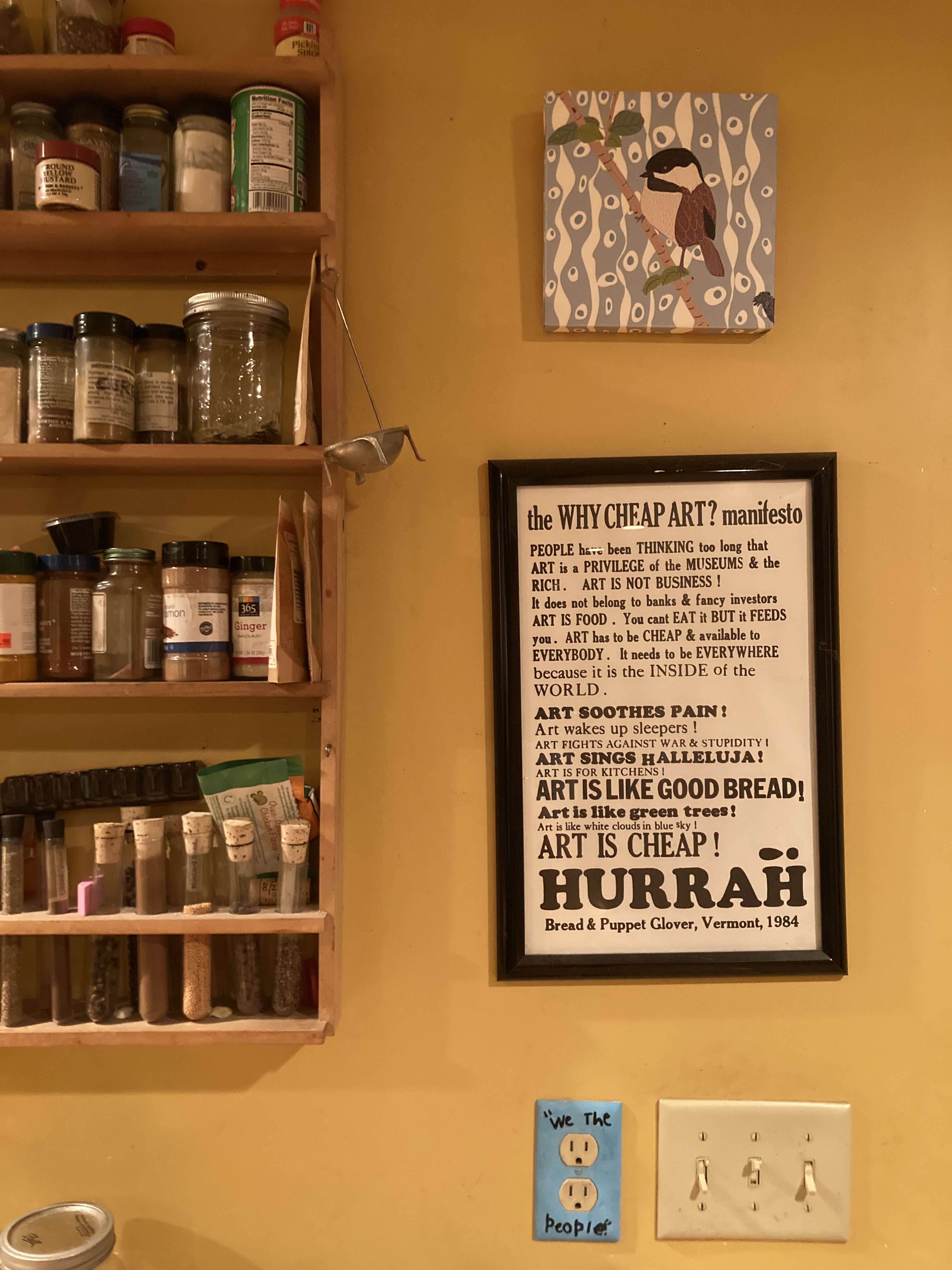
McSweeney’s Manifesto contains 25 manifestos, two of which were penned in the hamlet of Glover, Vermont. Statistically that is a “non-zero probability” meaning that is incredibly unlikely to occur. And yet Glover, Vermont ranks among the titans of 20th century Manifestos!
Clare Dolan set down “The First Manifesto of the Museum of Everyday Life” which is (a) a theoretical museum, (b) celebrating “…mundanity, and the mysterious delight embedded in the banal but beloved objects we touch every day…the secret, ordinary objects that make up the vocabulary of common lives!” (c) heralds “its mission of glorious obscurity!” while (d) located in Glover, of the Northeast Kingdom of Vermont.
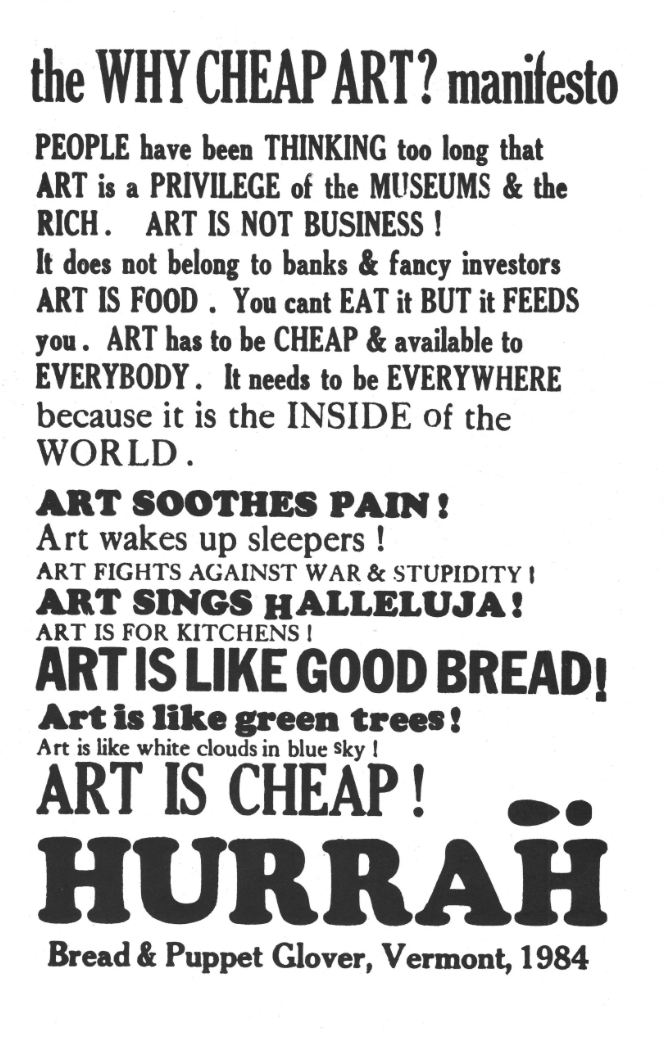
The Bread & Puppet Theatre was founded in 1963 on Manhattan’s Lower East Side kingdom of overcrowded tenements, that housed the dense wave of immigrants during the late 19th and early 20th century. The puppeteers embraced sculpture, music, dance and language as well as baking sourdough bread to share with (to break bread with) their audience. In 1974 the company moved to a 140-year old hay barn in Glover. In 1984 the founder, Peter Schumann wrote the “Why Cheap Art?” manifesto.
Shortly after moving to Maine, I was given a copy of the manifesto, which hangs prominently in our kitchen. For this week, I present the manifesto in its full graphic glory.
Manifesto #1
Posted: January 16, 2026 Filed under: Art & Healing, consciousness | Tags: McSweeneys, Zoe Leonard 1 Comment
The history of the 20th century was declared largely by manifesto: The Manifesto of Futurism 1909; Dada Manifesto 1918; Manifesto of Surrealism 1924; John Cage’s Manifesto 1952; The Russell-Einstein Manifesto 1955; Second Declaration of Havana by Fidel Castro 1962; The Ten-Point Program of Huey Newton (Black Panthers) 1966; The Gay Manifesto 1970.
Derived from the Latin manifestus which means “plainly apprehensible, clear, evident” by the 1640s in the Italian it had come to mean “public declaration explaining reasons or motives.” At its root it is derived from manus which means “hand” and a manifesto arguably is a physical object – words on paper – easily grasped or held, say, nailed upon the doors of a 16th century church or plastered on store fronts or tenement homes of 20th century inner cities.
McSweeney is a nonprofit publishing house founded in 1998 by Dave Eggers. To honor its 25th anniversary, the house published Manifesto, a hard bound compendium of the 20th century as declared by bold forward-thinking authors. The book was given to me over the holidays, a cherished gift, which I am devouring slowly.
The Introduction states, “[Manifestos] are often strange, ill-considered, and regrettable. They are just as often brilliant and pivotal in changing government, art, and the direction of the human animal. But always manifestos are passionate, always they command attention and use language for perhaps its most urgent purpose – the rattling of complacent minds.”
The books presents twenty-five manifestos. “I want a president,” written in 1992 by Zoe Leonard, is strikingly powerful and refreshing, especially in these times where power is exercised as domination, in a culture increasingly split between the Have Much and the Have Nots.
“I want a dyke for president. I want a person with aids for president and I want a fag for vice president and I want someone with no health insurance and I want someone who grew up in a place where the earth is so saturated with toxic waste that they didn’t have a choice about getting leukemia. I want a president that had an abortion at sixteen and I want a candidate who isn’t the lesser of two evils and I want a president who lost their last lover to aids, who still sees that in their eyes every time they lay down to rest, who held their lover in their arms and knew they were dying. I want a president with no air conditioning, a president who has stood on line at the clinic, at the dmv, at the welfare office and has been unemployed and laid off and sexually harrassed and gaybashed and deported. I want someone who spent the night in the tombs and had a cross burned on their lawn and survived rape. I want someone who has been in love and been hurt, who respects sex, who has made mistakes and learned from them. I want a Black woman for president. I want someone with bad teeth and an attitude, someone who has eaten that nasty hospital food, someone who crossdresses and has done drugs and been in therapy. I want someone who has committed civil disobedience. And I want to know why this isn’t possible. I want to know why we started learning somewhere down the line that a president is always a clown: always a John and never a hooker. Always a boss and never a worker, always a liar, always a thief and never caught.”
 an Art Farm